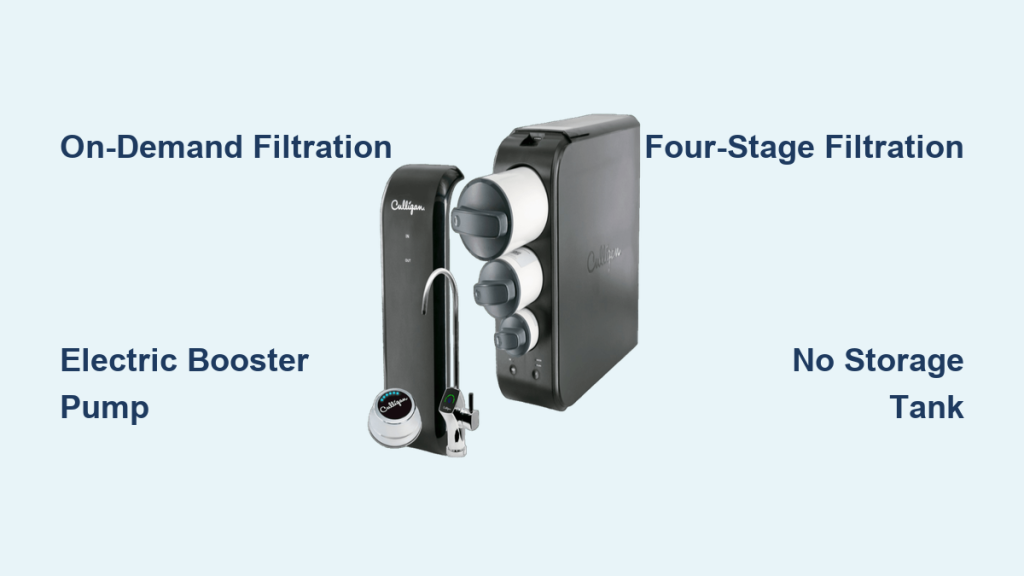
If your tap water leaves a metallic aftertaste or you are tired of replacing bulky water filters, a tankless reverse osmosis (RO) system might be the upgrade you have been waiting for. Unlike traditional RO units that store purified water in a pressurized tank, tankless models filter water on demand, delivering fresh, ultra-pure drinking water the moment you open the faucet. Understanding how does tankless reverse osmosis work unlocks a modern solution that combines multi-stage filtration, electric booster pumps, and smart flow management to eliminate contaminants without sacrificing under-sink space or water quality. These compact systems are revolutionizing home water purification by removing the risk of stagnant water, reducing waste, and ensuring every glass tastes as clean as the first.
In this guide, you will learn exactly how these advanced systems operate, what makes them different from traditional RO units, and whether one is right for your home. We will walk through the filtration process, key components, installation requirements, and maintenance needs so you can make an informed decision.
Core Operation: On-Demand Filtration
Tankless RO systems activate only when you need water, eliminating idle time and stored supply. This real-time process is what sets them apart from traditional units.
Instant Activation via Flow Sensor
When you open the dedicated RO faucet, a flow sensor detects water movement and triggers the system. Within seconds, a 24-volt electric booster pump powers up, drawing cold tap water from your main line. This immediate response ensures no pre-filled reservoir is needed, as water is purified the moment you turn on the tap. The system responds instantly to your water demand without any delay or pre-fill requirement.
Real-Time Pressurization for RO Efficiency
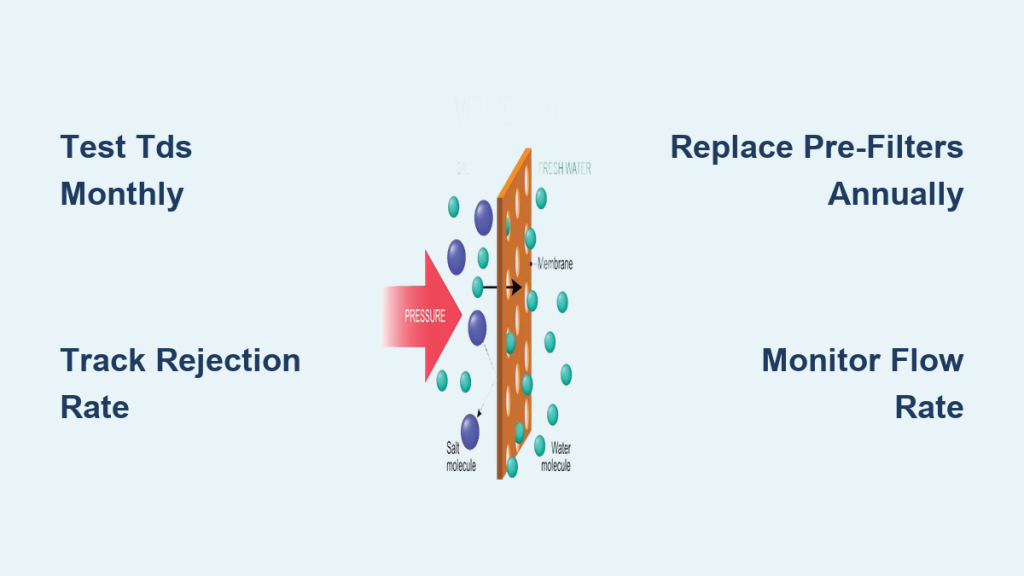
Municipal water pressure, typically 40 to 60 PSI, is not enough for optimal reverse osmosis. That is why tankless systems use a booster pump to increase pressure to 75 to 90 PSI, the ideal range for forcing water through the ultra-fine RO membrane. Without this boost, contaminant removal would be inefficient, especially in homes with low water pressure. The electric pressurization is essential for the membrane to function at peak efficiency.
Automatic Shutdown and Flush Cycle
Once the faucet closes, the system does not just stop. It cleans itself. Most models initiate a 10-second automatic flush using untreated city water to rinse the membrane surface. This prevents scaling, biofilm formation, and concentration polarization, extending membrane life and maintaining performance over time. This self-cleaning feature distinguishes tankless units from traditional systems.
Four-Stage Filtration Process
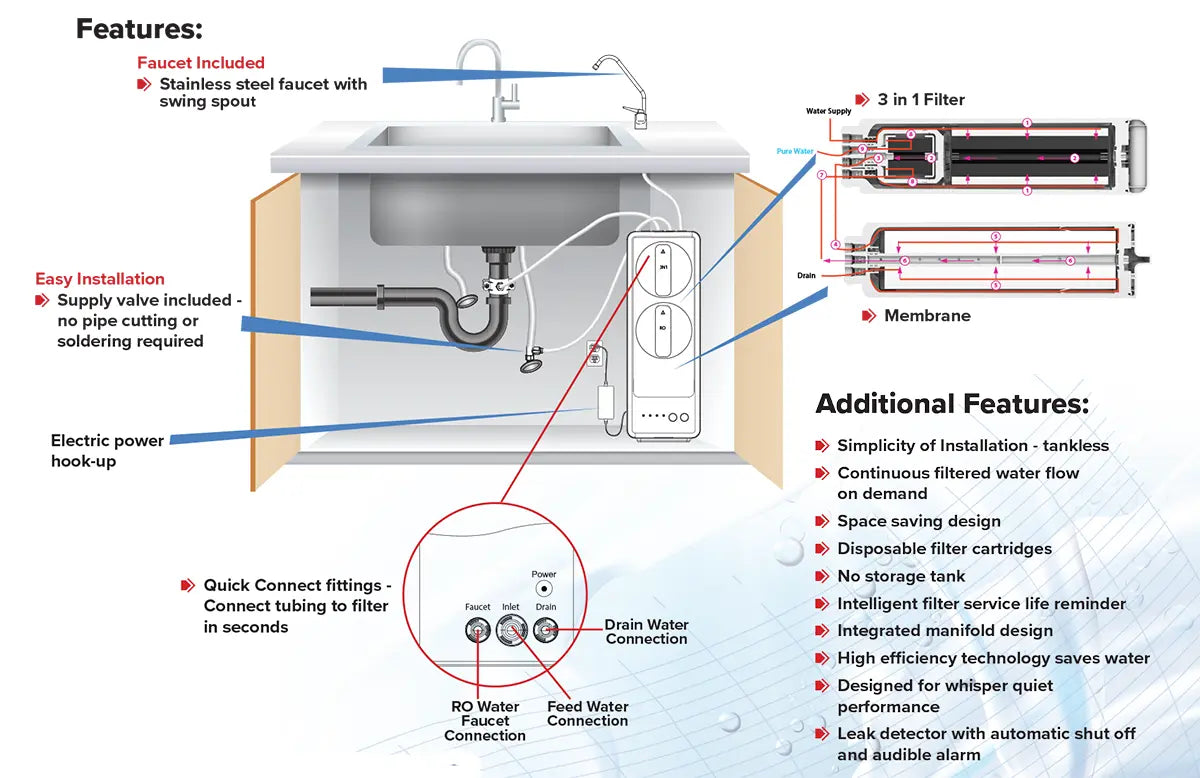
Every drop passes through a precise sequence designed to protect the membrane and maximize purity. The four-stage process ensures comprehensive contamination removal.
Sediment Pre-Filter
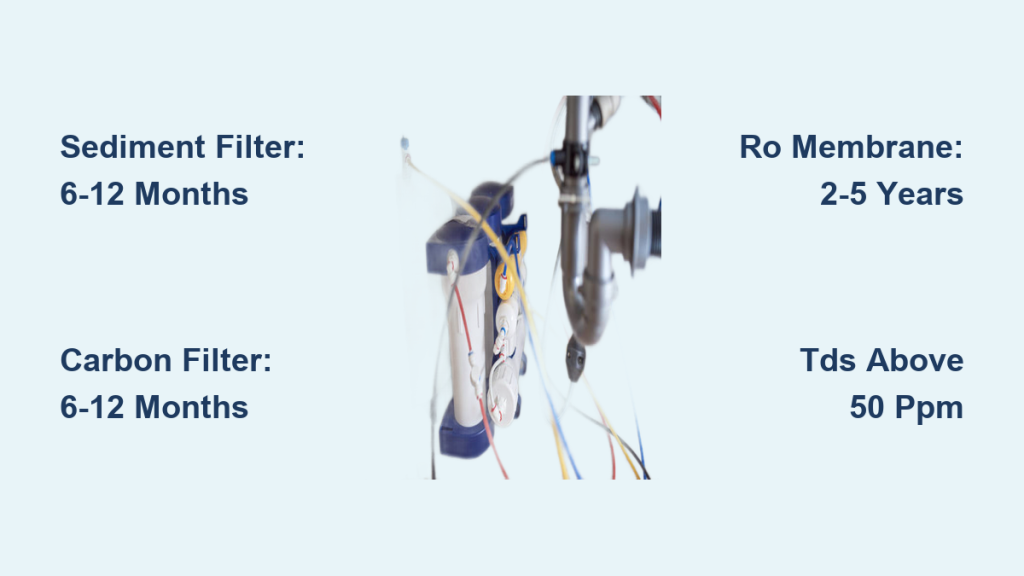
The first stage captures visible particles like sand, rust, silt, and dirt. With a pore size of 5 microns or smaller, this filter prevents clogs and abrasion in downstream components. It is essential for protecting the delicate RO membrane and should be replaced every 6 to 12 months, depending on your water quality. If your water looks cloudy or your faucet aerator clogs frequently, this filter is working hard and may need earlier inspection.
Carbon Pre-Filter
Next, water flows through a carbon filter that removes chlorine, chloramine, VOCs, and hydrogen sulfide. These chemicals not only affect taste and odor but can damage the RO membrane over time. Granular activated carbon works best for chlorine reduction, while carbon block offers superior performance for chloramine and volatile organic compound removal. This stage ensures the membrane stays intact and your water starts tasting clean before reaching the core filtration stage.
Reverse Osmosis Membrane
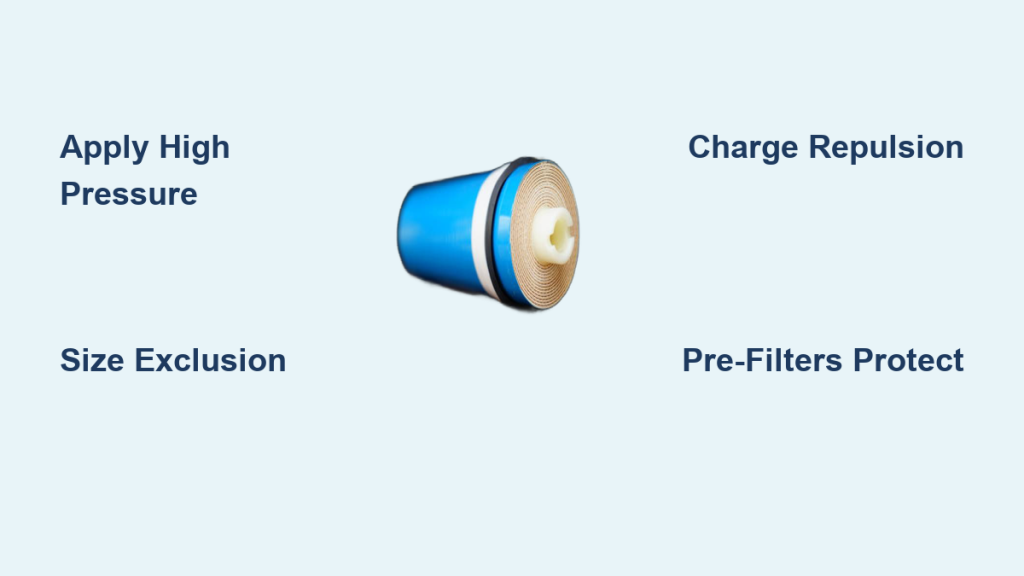
This is where the magic happens. The semi-permeable RO membrane has pores so small, 0.0001 microns, that they block nearly all dissolved solids and microorganisms. Contaminants removed include lead, arsenic, cadmium, fluoride, nitrates, sulfates, PFAS forever chemicals, bacteria, viruses, and cysts. In testing, one unit reduced TDS from 270 ppm to just 7 ppm, demonstrating 95 to 99 percent efficiency. Some high-end models use dual membranes in parallel to double output up to 1,000 gallons per day without increasing size.
Polishing Post-Carbon Filter
The final stage uses an activated carbon filter to refine taste and odor. Even trace organics or volatile compounds that slip through earlier stages are captured here. The result is water that meets bottled water quality standards, crisp, neutral, and ultra-pure. This final polishing ensures every glass tastes refreshing.
Key Components Enabling Tankless Design
Without a storage tank, these systems rely on smart engineering to deliver consistent performance. The components work together seamlessly to produce clean water on demand.
Electric Booster Pump
Powered by a standard 110V or 120V outlet under the sink, the booster pump is the engine of the system. It activates via flow sensor, delivers 75 to 90 PSI to the membrane, emits a low hum during operation, and shuts off automatically when not in use. No power means no water, so these systems do not work during outages unless equipped with a battery backup.
Integrated Control Valve
This central hub manages water routing between stages, drain line activation, flush cycle timing, and pressure regulation. Its compact design reduces leaks and simplifies installation, with fewer connections meaning fewer failure points. The control valve is the brain that coordinates all system functions.
Real-Time Flow Management
Smart sensors monitor water draw and adjust flow instantly. When demand stops, so does the system. This on-when-needed approach reduces energy use, wear, and water waste, making tankless RO both efficient and sustainable. The system only works when you need it, eliminating wasted energy and water.
Water Pressure Requirements
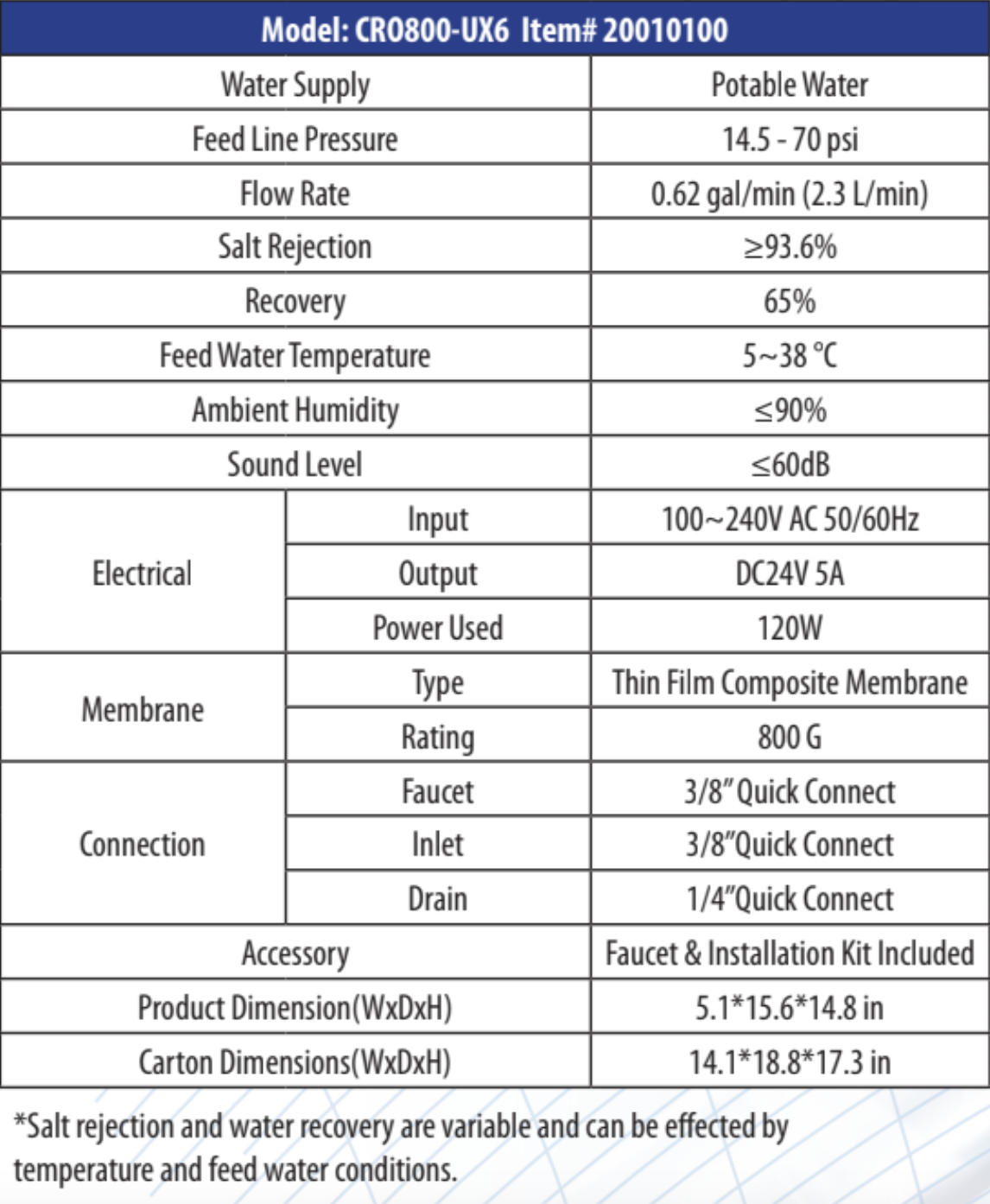
Your home water pressure determines whether a tankless RO will perform well. Understanding these requirements is essential before purchasing.
| Requirement | Value |
|---|---|
| Minimum | 15 to 40 PSI (model-dependent) |
| Ideal | 50 to 80 PSI |
| Optimal | Up to 90 PSI |
Units like NU Aqua work with as little as 15 PSI, ideal for low-pressure apartments. Models like GE Merlin require 40 PSI minimum, so homes with well water may need an external booster pump. Some systems include a built-in pressure gauge for easy monitoring. Always measure your sink water pressure before buying, as low pressure equals slow filtration or system shutdown.
Wastewater Efficiency
Tankless RO systems are more water-efficient than traditional models. This efficiency translates to lower water bills and environmental benefits.
| System Type | Waste:Pure Ratio |
|---|---|
| Traditional RO | 3:1 to 5:1 |
| Tankless RO | As low as 2:1 |
The improvement comes from no standby waste, no overfilling cycles or tank refills, and continuous brine flow that prevents solute buildup. Some budget models claim 1:1 ratios but do not deliver, so look for third-party test data to verify efficiency. This efficiency matters most in drought-prone areas or homes with high water costs.
Water Quality Output
Tankless RO delivers laboratory-grade purity straight from your tap. The water meets or exceeds bottled water standards.
| Parameter | Performance |
|---|---|
| TDS Reduction | From 200+ ppm to less than 10 ppm |
| Contaminant Removal | Greater than 95 to 99 percent for lead, fluoride, PFAS, microbes |
| Taste and Odor | Neutral, bottled-water quality |
| Microbial Safety | Removes bacteria and viruses effectively |
One important note: RO water is aggressive. Avoid copper lines and use plastic tubing for ice makers or fridge connections to prevent metal leaching. The water is so pure it can actually pull minerals from metal pipes.
Compact Design and Space-Saving Layout
No tank means 50 to 75 percent less under-sink space used. This makes tankless ideal for apartments and small kitchens.
Horizontal Systems
Horizontal systems measure approximately 8 by 8 by 12 inches and lie flat under the sink. They are best for shallow cabinets. Models like NU Aqua Efficiency Series feature front-loading filters for easy access. These compact units fit where traditional systems simply would not work.
Vertical Systems
Vertical systems measure approximately 17 by 6 by 14 inches and require at least 16 inches of vertical clearance. Waterdrop models offer this design with front or top-loaded filter access. Both designs use molded plastic housings with built-in gaskets to minimize leaks and simplify maintenance.
Installation Essentials
Getting your tankless RO up and running requires a few key elements. Proper installation ensures optimal performance and prevents leaks.
Must-Have Connections
You will need a cold water supply valve, quick-connect fittings (no Teflon tape or wrenches needed), a drain line (air-gap or non-air-gap), a grounded 110V or 120V outlet under the sink, and a shut-off valve (built-in on some models). These basic requirements must be met for successful installation.
Common Installation Hurdles
No outlet under the sink may require an electrician. Air-gap faucets can cause hissing or dripping sounds. Drain routing must comply with local plumbing codes. Choose a model with tool-free installation and color-coded parts to simplify setup. Professional installation may be worth the cost for complex situations.
Filter Replacement and Maintenance
Maintenance is simple with no tools required for most models. Regular maintenance ensures consistent water quality.
How to Replace Filters
To replace filters, open the front or top cover, push the cartridge out, insert the new filter, and close the housing. Gaskets seal automatically, making the process quick and mess-free. Most homeowners can handle this task without professional help.
Replacement Schedule
| Stage | Filter | Interval |
|---|---|---|
| 1 | Sediment | Every 6 to 12 months |
| 2 | Carbon Pre-Filter | Every 6 to 12 months |
| 3 | RO Membrane | Every 2 to 5 years |
| 4 | Polishing Carbon | Every 6 to 12 months |
Flush the system after each filter change and clean the faucet aerator monthly for best performance. Smart models may alert you when replacement is needed.
Advantages Over Traditional RO
Tankless RO is not just smaller. It is smarter in multiple ways.
Space and Hygiene Benefits
These systems offer no storage tank equals more under-sink space, no stagnant water equals reduced biofilm and bacterial risk, and fresh every time equals no taste degradation. The hygiene advantages are significant for health-conscious households.
Efficiency and Convenience
You get less water waste than traditional systems, unlimited supply with no waiting for tank refill, tool-free filter swaps for easier maintenance, and quiet operation that is only active when in use. These conveniences make daily use more pleasant.
Limitations to Consider
Tankless RO is not perfect for every home. Understanding these limitations helps you make the right choice.
Power Dependency
These systems require electricity and will not work during outages. There is no backup water supply unless paired with a battery system. Consider this carefully if you live in an area with frequent power interruptions.
Cost and Complexity
Upfront costs range from $100 to $500 or more. You need an electrical outlet under the sink, which may require professional installation. There are fewer add-on options like UV sterilization or remineralization compared to traditional systems.
Flow and Pressure Sensitivity
Flow rate is approximately 0.5 to 1 GPM, slower than tanked systems. Performance drops below 15 to 40 PSI depending on the model. Proprietary fittings on budget models may leak over time.
Integration with Home Systems
Tankless RO can power more than just a single faucet. Multiple configuration options exist.
Refrigerator and Ice Maker
Use plastic tubing only to avoid metal leaching. Ensure flow rate meets ice maker demand. This connection provides filtered ice and water directly from your refrigerator.
Whole-House Compatibility
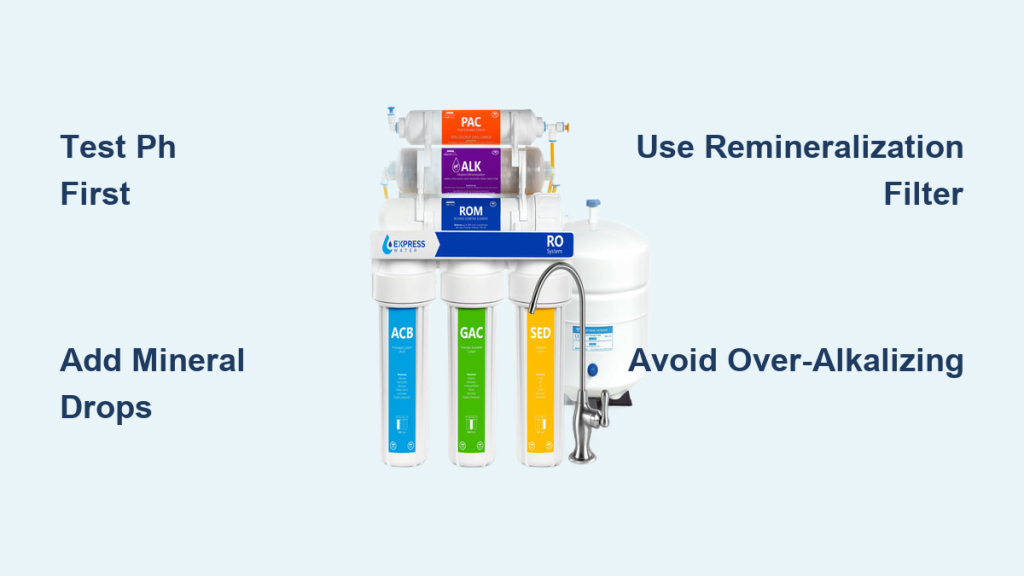
Pair with a water softener to prevent scale in hard water areas, a whole-house filter to extend RO life, and an alkaline or remineralization filter for taste enhancement. These combinations create comprehensive water treatment solutions.
Who Should Buy a Tankless RO
Ideal For
Tankless RO systems work best for small kitchens and apartments with limited space, eco-conscious users reducing water waste, high-use families who drain tanks daily, modern homes with minimalist under-sink layouts, and urban dwellers with high water costs. These scenarios benefit most from tankless technology.
Not Recommended For
These systems are not ideal for homes without under-sink power, areas with frequent blackouts, buyers on a tight budget, or users wanting UV sterilization or alkaline water features. Traditional RO may better serve these needs.
Final Thoughts on Tankless Reverse Osmosis Systems
Tankless reverse osmosis works by combining electric pressurization, multi-stage filtration, and smart automation to deliver ultra-pure water on demand, with no tank, no waste, and no stagnation. While it requires power and has a higher upfront cost, the benefits of space savings, continuous flow, and superior hygiene make it a top choice for modern homes. The system filters water only when you need it, ensuring every glass is freshly purified.
If you value freshness, efficiency, and clean design, a tankless RO system is more than just a filter. It is the future of home water purification. Consider your water pressure, available space, and budget before making a decision, and enjoy the benefits of pure water for years to come.
Frequently Asked Questions About Tankless Reverse Osmosis
How does tankless reverse osmosis differ from traditional RO systems?
Tankless RO systems filter water on demand without a storage tank, while traditional RO units store purified water in a pressurized bladder tank. Tankless models use an electric booster pump to pressurize water in real time, offering continuous flow, reduced water waste, and better hygiene by eliminating stagnant water storage.
Do tankless RO systems require electricity to operate?
Yes, tankless reverse osmosis systems require electricity to power the booster pump that pressurizes water for the RO membrane. Without power, the system will not produce water. Some models offer battery backup options for use during outages.
How often do filters need replacement in a tankless RO system?
Sediment and carbon pre-filters need replacement every 6 to 12 months. The RO membrane typically lasts 2 to 5 years, and the polishing carbon filter should be replaced every 6 to 12 months. Replacement frequency depends on water quality and usage volume.
Can tankless RO systems work with low water pressure?
Most tankless RO systems require a minimum of 15 to 40 PSI, depending on the model. Some units like NU Aqua can operate with pressure as low as 15 PSI, while others may need 40 PSI or higher. Homes with very low pressure may need an external booster pump.
Is tankless RO water safe for refrigerators and ice makers?
Yes, tankless RO water is safe for refrigerators and ice makers, but you should use plastic tubing instead of copper lines. RO water is highly purified and aggressive, which can leach metals from copper or other metal plumbing connections.