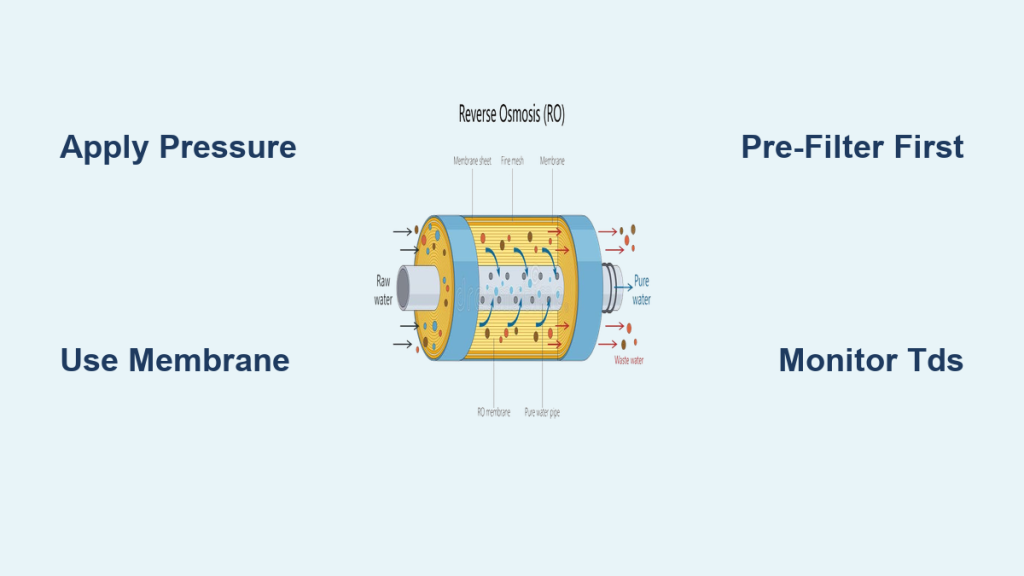
If your tap water tastes off, leaves spots on dishes, or comes from a well with high mineral content, you’ve likely considered a filtration solution. Among the most effective options is reverse osmosis filtration, a technology that removes up to 99% of contaminants—including lead, arsenic, fluoride, and microplastics—producing water so pure it rivals laboratory-grade quality. But how does reverse osmosis filtration work? It’s not just another filter; it’s a precision process that manipulates water at the molecular level.
Unlike basic carbon filters that trap chlorine or sediment, reverse osmosis uses a semi-permeable membrane to separate pure water molecules from dissolved solids, ions, and pathogens. By applying pressure to overcome natural osmotic forces, it reverses the flow of water, pushing it through a microscopic barrier that blocks nearly all impurities. This process is used everywhere from under-sink home units to massive desalination plants turning seawater into drinking water.
Reverse Osmosis Core Mechanism
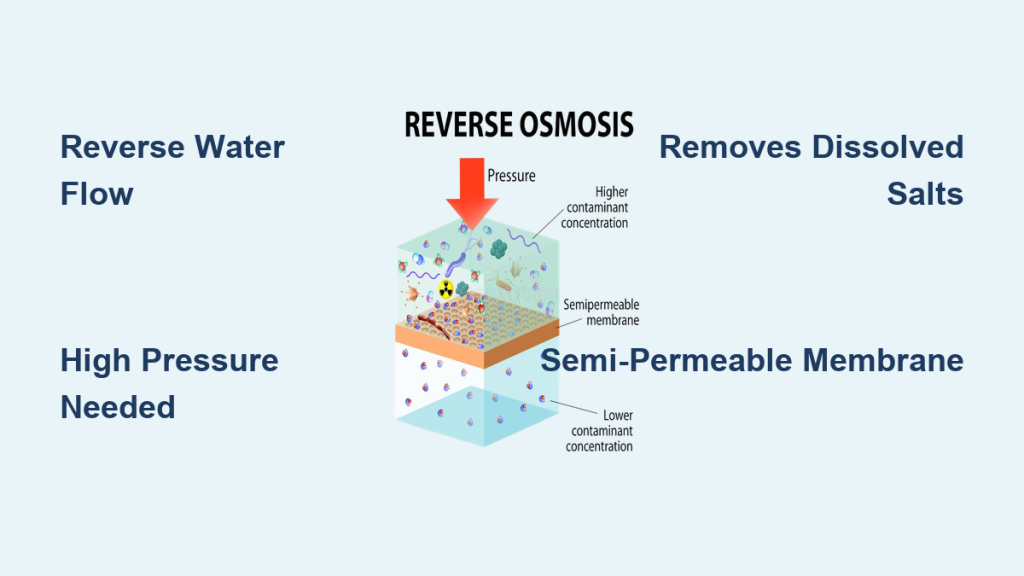
Reverse osmosis works by applying external pressure to force water through a semi-permeable membrane, separating clean water from contaminants. In nature, osmosis moves water from a dilute solution to a concentrated one through a membrane—like roots absorbing water from soil. Reverse osmosis flips this process.
How Pressure Reverses Natural Osmosis
When pressure exceeds the natural osmotic pressure, clean water called permeate emerges on one side, while contaminants are concentrated and flushed away as brine or reject water. This physical separation works without chemicals, relying instead on size exclusion, charge repulsion, and solubility differences.
For brackish water, pressures of 200–400 psi are typical. Seawater requires 800–1,000 psi. Most home systems need at least 40 psi feed pressure to function—below that, production drops sharply. Without sufficient pressure, even a pristine membrane cannot perform.
Low water pressure does not just slow output—it reduces contaminant rejection. A membrane operating below its design pressure may allow more dissolved salts and metals to slip through. That’s why homes with well water often need a booster pump to maintain 40–100 psi, ensuring consistent flow and high purity.
Cold water also reduces performance. At temperatures below 50°F, water viscosity increases, slowing diffusion through the membrane. Systems produce up to 50% less water in winter unless compensated with higher pressure or pre-heating in commercial setups.
The RO Membrane Explained
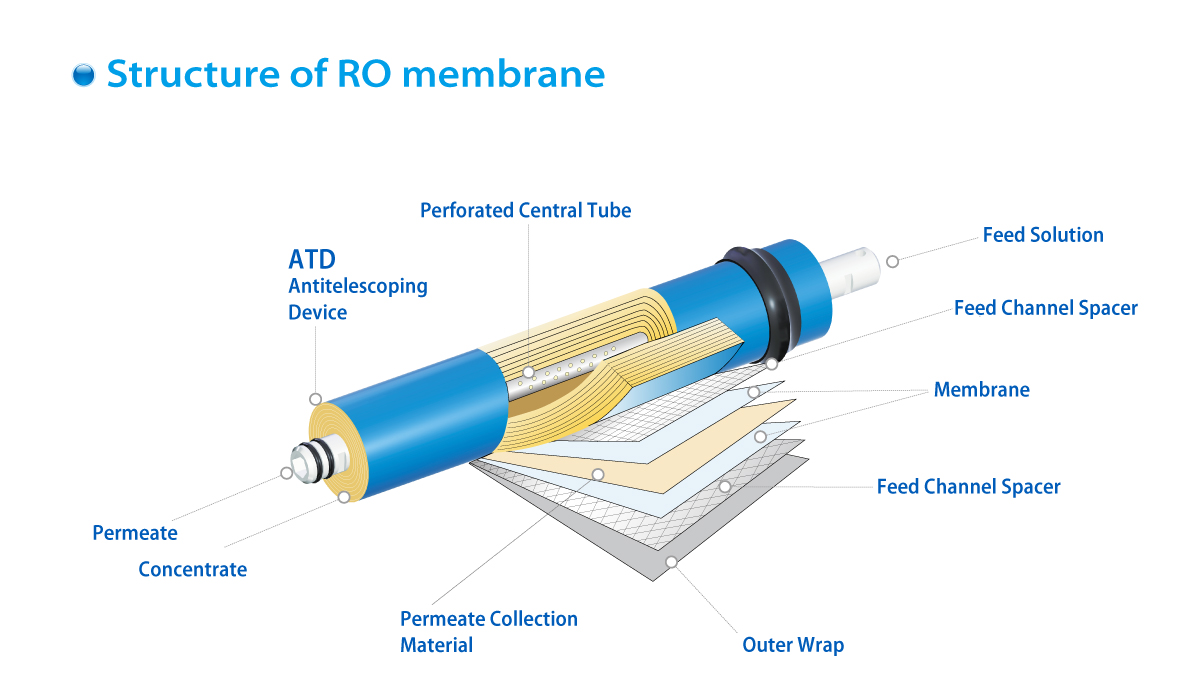
The reverse osmosis membrane is the heart of the system, with pores around 0.0001 to 0.001 microns—smaller than viruses, bacteria, and individual ions. Despite their tiny size, dissolved ions like sodium or chloride are blocked not just by size, but by hydration shells and charge repulsion.
Semi-Permeable Barrier Structure
Most modern membranes are thin-film composite, made of three layers. The polyester support provides strength. The micro-porous interlayer offers stability. The polyamide barrier layer performs the actual filtration.
This polyamide layer has a negative surface charge, repelling anions like nitrate and sulfate, enhancing removal beyond size-based filtration alone. The active layer is only 0.2 microns thick yet blocks nearly all dissolved contaminants.
Spiral-Wound Design Maximizes Efficiency
RO membranes are not flat panels—they are engineered into spiral-wound elements. A flat sheet of membrane is glued to a permeate spacer and rolled around a central core tube. This design packs up to 400 square feet of surface area into a single 40-inch element, fitting inside a compact pressure vessel.
Water flows tangentially across the membrane surface in a cross-flow configuration, continuously sweeping away rejected contaminants. This reduces fouling and allows the system to run longer between cleanings. Multiple elements can be linked in series or parallel to increase capacity or purity.
Multi-Stage RO Filtration Process
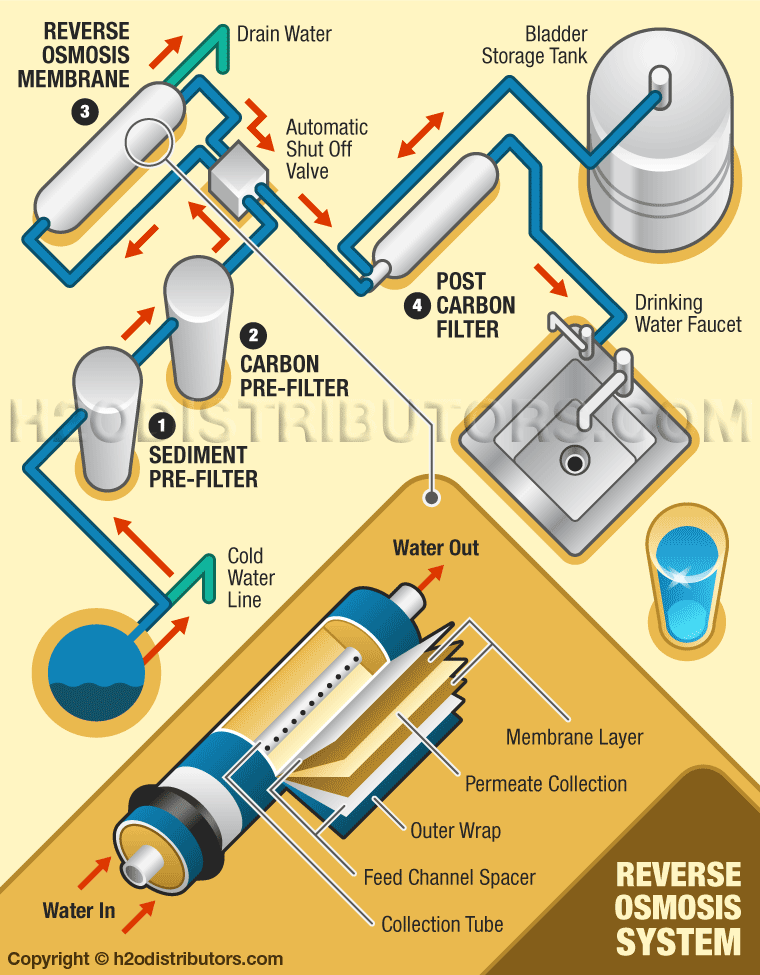
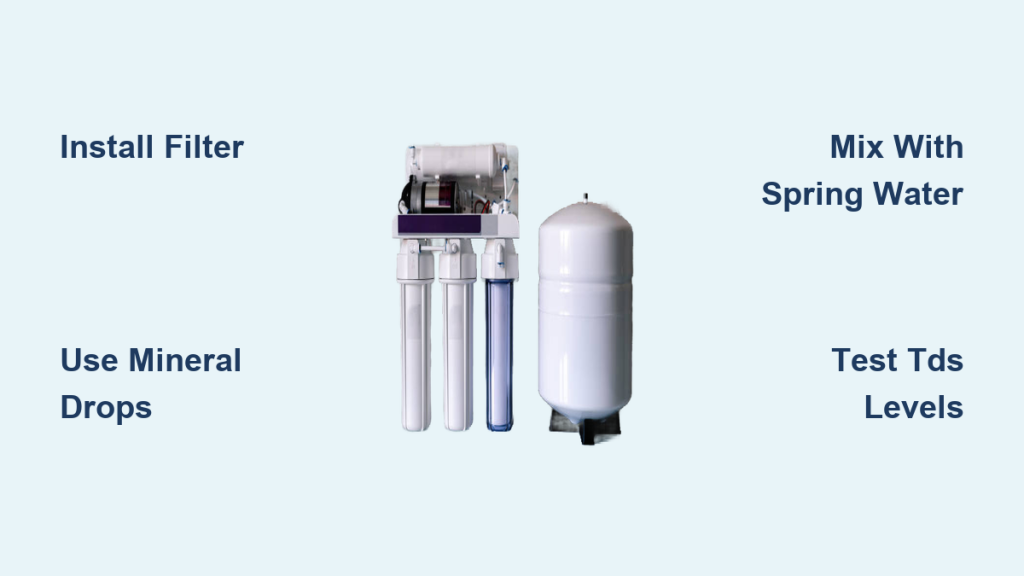
Most reverse osmosis systems employ multiple filtration stages to protect the delicate RO membrane and ensure high-quality output. Each stage serves a specific purpose in the purification journey.
Pre-Filter 1: Sediment Removal
Before water reaches the RO membrane, it passes through a 5–20 micron sediment filter. This removes dirt, rust, sand, and silt that could scratch or clog the delicate membrane. Think of it as a shield—without it, even tiny particles can cause irreversible damage.
A human hair is about 70 microns wide, so this stage captures particles invisible to the eye. In homes with well water or older plumbing, this filter may need replacement every 3–6 months. Always install a 5-micron cartridge after any water softener or multi-media filter to catch media breakthrough.
Pre-Filter 2: Carbon Block Eliminates Chlorine
Next, water flows through a carbon block filter that removes chlorine, chloramines, pesticides, and VOCs. This step is critical: chlorine destroys thin-film composite membranes over time, leading to premature failure.
Granular activated carbon works, but solid carbon blocks offer better contact time and reduce the risk of channeling. Some systems use two carbon stages for maximum protection. This also reduces organics that feed bacterial growth, lowering the risk of biofouling on the membrane.
Stage 3: RO Membrane Performs Primary Separation
Now pressurized water hits the semi-permeable membrane. Under ideal conditions—40+ psi and 77°F—95–99% of total dissolved solids are rejected. This includes heavy metals like lead and arsenic, fluoride and nitrate, microorganisms, and PFAS.
The output splits into two streams. Permeate is clean water stored in a tank. Concentrate is the waste stream carrying rejected contaminants to the drain. Flow rate depends on membrane size—common residential units produce 50–100 gallons per day, or about 2–3 ounces per minute.
Post-Filter Polishes Final Taste
After storage, water passes through a final carbon filter before the faucet. Even though the RO membrane removes chlorine, water sitting in the tank can absorb odors from plastic linings. A post-filter ensures crisp, odor-free taste every time you pour.
Use a carbon block, not granular carbon, to avoid releasing fine particles into the water. Replace this filter every 6–12 months, along with the pre-filters, to maintain peak performance.
Wastewater and Recovery Rates
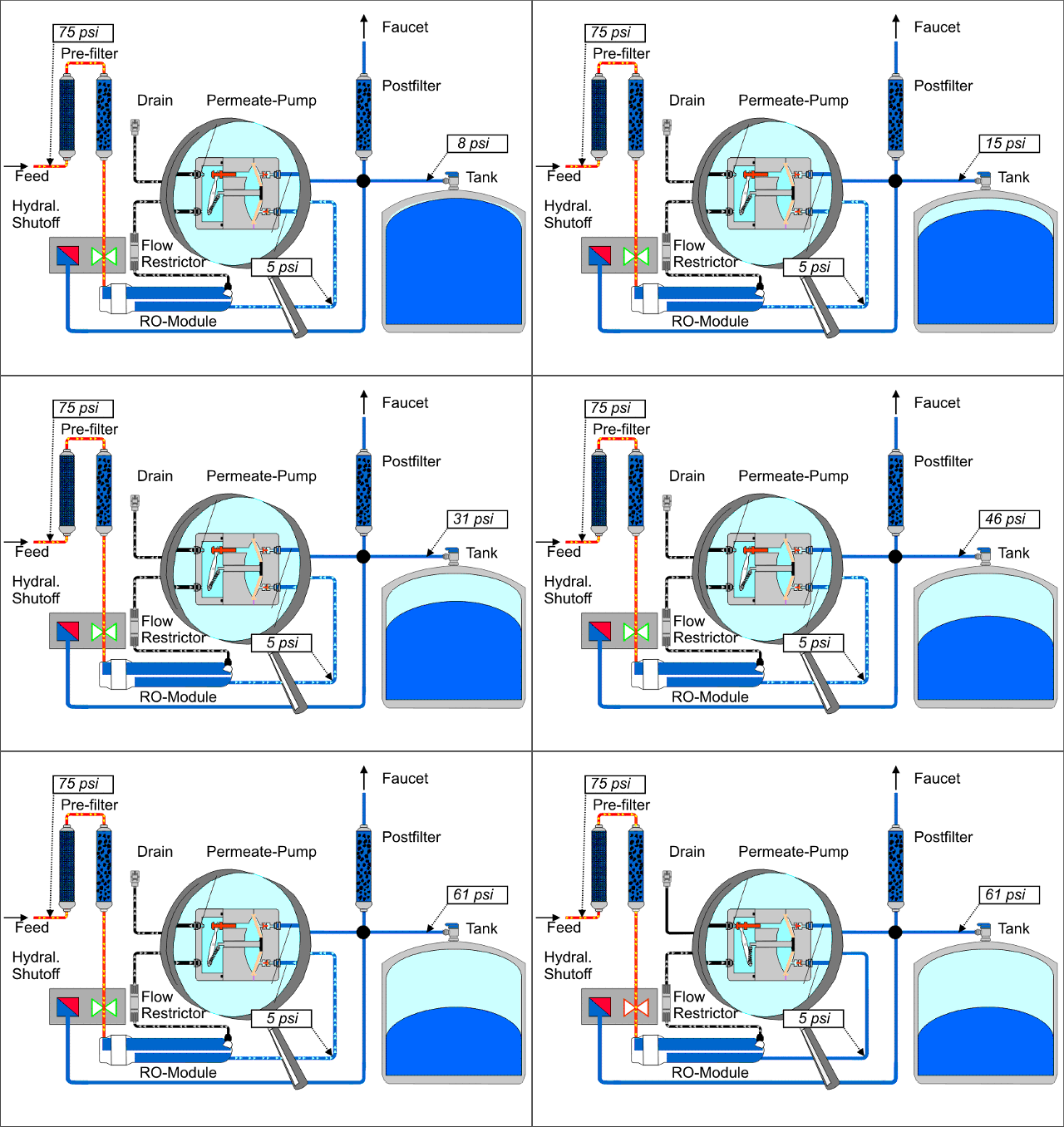
Home RO systems produce two output streams: clean permeate and contaminated concentrate. Understanding this ratio helps you manage water efficiency and costs.
The 4:1 RO Waste Ratio
Most home RO systems operate at 20–30% recovery, meaning for every gallon of pure water produced, 3–4 gallons go down the drain. This 4:1 waste ratio is standard—but not fixed. Industrial systems achieve 50–85% recovery using recirculation and energy recovery devices.
The reason for waste is that higher recovery concentrates minerals in the reject stream. At 80% recovery, contaminants are five times more concentrated than in the feed—increasing the risk of scaling on the membrane.
Reducing Waste with a Permeate Pump
You can cut wastewater by 75–80% with a permeate pump—a mechanical device that uses the energy from the brine stream to push purified water into the storage tank. It requires no electricity and balances system pressure naturally.
Permeate pumps are compatible with most under-sink RO units and pay for themselves in water savings over time. For homes concerned about efficiency, this add-on is essential.
Reusing Brine Water Safely
While not drinkable, reject water is still relatively clean—just higher in TDS. Safely reuse it for irrigation or landscaping, toilet flushing, car washing, or cleaning driveways.
Never connect the drain line directly to a sewer without an air gap to prevent backflow into your potable water supply.
What Reverse Osmosis Removes
RO is one of the most comprehensive water treatment technologies available, capable of removing a wide range of contaminants across multiple categories.
Contaminant Removal by Category
| Contaminant Type | Examples | RO Removal Rate |
|---|---|---|
| Dissolved Salts | Sodium, chloride, calcium | 95–99% |
| Heavy Metals | Lead, arsenic, chromium-6 | >95% |
| Microorganisms | Bacteria, viruses, cysts | >99% |
| Organics | Pesticides, PFAS, VOCs | >90% |
| Nitrates and Fluoride | Common in well water | 85–95% |
| Microplastics | Synthetic particles | 100% complete removal |
RO is one of the few filters certified to remove PFAS forever chemicals and hexavalent chromium, making it ideal for areas with industrial contamination.
Gases and Small Molecules That Pass Through
RO membranes are less effective against carbon dioxide, which passes through and dissolves into carbonic acid, lowering pH. Hydrogen sulfide causes rotten egg smell. Radon is a radioactive gas that also passes through.
These require aeration or specialty carbon filters. Also, RO does not disinfect—if your source is microbiologically unsafe, add UV sterilization after the storage tank.
RO System Types Compared
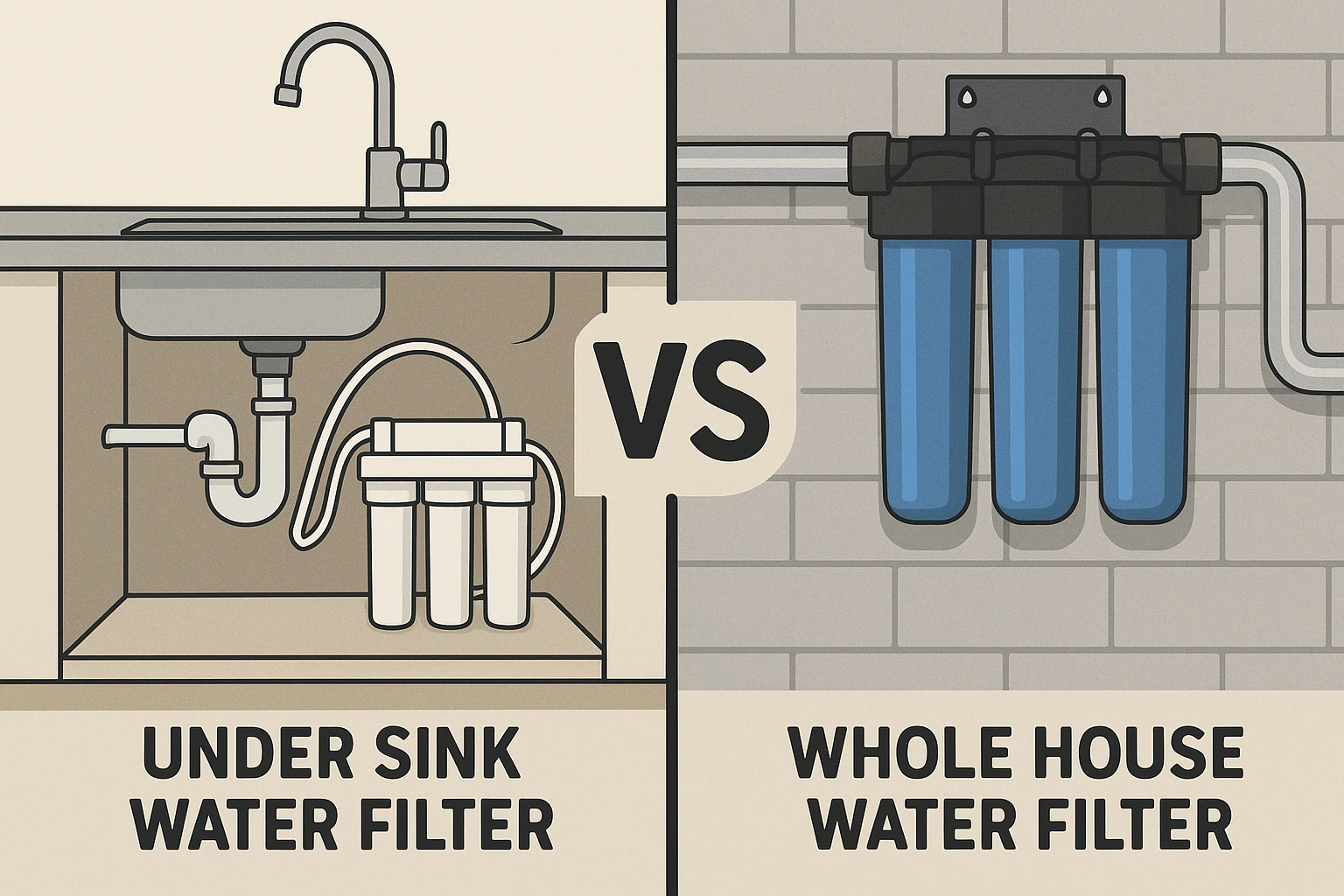
Different RO systems serve different needs, from single-sink use to whole-house treatment.
Under-Sink Point-of-Use Systems
Point-of-use RO units install under the sink and serve one faucet. They are perfect for drinking and cooking water, especially in homes with high lead or arsenic levels, water softeners adding sodium, or concerns about PFAS or nitrates.
Most cost $150–$500, produce 50–100 GPD, and include 3–6 stages. Easy to DIY-install, they are the most popular residential choice.
Whole-House Point-of-Entry Setups
Point-of-entry systems treat all water entering the home. These are rare due to high cost and water waste but are used when arsenic or saltwater intrusion affects the entire supply, plumbing corrosion is a concern, or whole-house purified water is needed.
They require booster pumps, water softeners, large storage tanks, and UV disinfection post-storage. Expect costs from $1,000 to $5,000+.
Commercial and Industrial RO Units
Factories, labs, and desalination plants use multi-stage or multi-pass RO systems. A two-pass setup sends permeate through a second RO system for ultrapure water used in pharmaceutical manufacturing, semiconductor rinsing, and boiler feedwater.
These systems include antiscalants, automated cleaning cycles, and energy recovery to minimize operating costs.
Pretreatment Prevents Membrane Damage
Without proper pretreatment, RO membranes fail quickly. Understanding common threats helps you protect your investment.
Common Membrane Problems
Fouling occurs when organic buildup or biofilm clogs pores. Scaling happens when calcium carbonate or sulfate precipitates on the membrane surface. Chlorine attack degrades thin-film composite membranes. Mechanical damage from water hammer or backpressure can rupture seals.
Each problem reduces flow, increases pressure needs, and shortens membrane life significantly.
Essential Pretreatment Solutions
| Solution | Purpose | When to Use |
|---|---|---|
| Multi-media filter | Removes silt, turbidity | SDI > 3 or turbid water |
| Water softener | Eliminates calcium, magnesium | Hard water >7 gpg |
| Antiscalant injection | Keeps minerals soluble | High recovery systems |
| Sodium bisulfite | Neutralizes chlorine | After GAC or municipal supply |
| 5-micron cartridge | Final polish before membrane | Always required post-softener |
Even with city water, a sediment plus carbon pre-filter combo is non-negotiable for protecting your membrane.
Performance Monitoring Tips
Regular monitoring ensures your RO system continues delivering pure water. Several indicators signal when attention is needed.
Tracking TDS for Effectiveness
Use a TDS meter to test both tap and RO water. A healthy system should reduce TDS by 95–99%. Replace the membrane when RO output exceeds 30–35% of feed water TDS.
Example: If tap water is 300 ppm, replace the membrane when RO water reaches 90–105 ppm. Test monthly, especially if taste changes or flow slows.
Watching Flow Rate and Tank Pressure
A drop in faucet flow often means clogged pre-filters, a failing membrane after 2–3 years, or low tank pressure. The storage tank should hold 7–8 psi when empty.
Check tank pressure annually with a bicycle pump and gauge. Recharge if below 7 psi to maintain proper dispensing.
Normalizing Data for Accurate Diagnosis
RO output varies with temperature and pressure. To assess true membrane health, normalize performance data to 77°F. If normalized flow drops 15% from baseline, clean or replace the membrane.
Maintenance Schedule
Consistent maintenance keeps your RO system performing at peak efficiency for years.
Replace Filters on Time
Sediment and carbon pre-filters need replacement every 6–12 months. Post-filters follow the same schedule. RO membranes last 2–3 years. Storage tanks typically last 5–7 years if the bladder fails. UV lamps require replacement every 9–12 months.
Set calendar reminders. Skipping changes risks contamination and voids warranties.
Clean Membranes When Needed
Clean membranes 1–4 times per year if normalized flow drops 15%, salt passage increases 15%, or pressure rise is noticeable. Use low-pH cleaners for scaling and high-pH cleaners for organics or biofouling.
Some systems have clean-in-place capability; others require professional servicing.
Who Should Use RO?
RO delivers the purest drinking water available at point-of-use, but it’s not always the right choice.
Ideal Candidates for Reverse Osmosis
RO is best for homes with well water containing arsenic, nitrates, or iron. City water with lead pipes or PFAS responds well. Users with water softeners adding sodium benefit. Aquarium owners needing precise mineral control and health-conscious users reducing plastic bottle use all see major benefits.
Consider Alternatives If
RO may not be ideal if tap water is already safe and low-TDS, water pressure is below 30 psi and cannot be boosted, wastewater is a major concern and reuse is not possible, or budget is tight.
In these cases, a high-quality carbon filter or distiller might suffice.
Limitations and Health Notes
Understanding what RO does not remove helps you ensure truly safe drinking water.
RO Removes Beneficial Minerals Too
Reverse osmosis strips calcium, magnesium, and other minerals, producing water with 10–50 ppm TDS. While nutritionists agree diet—not water—is the primary source of minerals, some prefer remineralization for better taste, neutral pH to prevent pipe corrosion, and enhanced hydration perception.
Add a remineralization filter after the tank to restore calcium and magnesium safely.
Not a Standalone Disinfection Method
RO removes microbes by size exclusion—but if the membrane is damaged or seals fail, pathogens can pass. For well water or unsafe sources, always pair RO with UV disinfection after storage to ensure safety.
Frequently Asked Questions About Reverse Osmosis Filtration
How long does an RO membrane last?
RO membranes typically last 2–3 years with proper maintenance. Lifespan depends on water quality, pressure, and filter replacement consistency. High-TDS water or neglected pre-filters can shorten membrane life significantly.
Can RO remove bacteria and viruses?
Yes, RO membranes remove >99% of bacteria and viruses due to their size. However, RO is not considered a disinfection method. If your source water is microbiologically unsafe, always add UV sterilization after the storage tank for reliable pathogen kill.
Why does RO wastewater smell bad?
Reject water is concentrated with dissolved solids but should not smell strongly. Foul odors typically indicate biofouling in the membrane or pre-filters. Regular filter changes and occasional membrane cleaning resolve most odor issues.
Does RO remove lead?
RO removes >95% of lead, making it highly effective for lead contamination. This performance exceeds many other filtration methods, which is why RO is recommended for homes with lead pipes or known lead exposure concerns.
Is RO water safe to drink every day?
RO water is safe to drink daily. The removal of minerals does not pose health risks since nutrition comes primarily from food. For those concerned about mineral loss, adding a remineralization filter restores beneficial calcium and magnesium.
How much water does a home RO system waste?
Most residential RO systems waste 3–4 gallons for every gallon of purified water produced. This 4:1 ratio can be reduced to nearly 1:1 by adding a permeate pump, which recovers up to 80% of the waste stream.
Key Takeaways for Understanding Reverse Osmosis Filtration
Reverse osmosis filtration works by forcing water through a nano-scale membrane under pressure, separating pure water molecules from contaminants. The semi-permeable membrane blocks dissolved salts, heavy metals, microorganisms, and organic compounds while allowing water to pass. Multi-stage pre-filtration protects the membrane from sediment and chlorine, while post-filtration polishes the final taste.
Maintenance is essential for performance. Replace pre-filters every 6–12 months and membranes every 2–3 years. Monitor TDS levels monthly and address any flow reductions promptly. For homes with challenging water sources, proper pretreatment prevents costly membrane damage.
With the right system and care, reverse osmosis delivers the highest level of home water purification available. Consider your water quality, pressure, and budget when choosing between under-sink, whole-house, or commercial options.