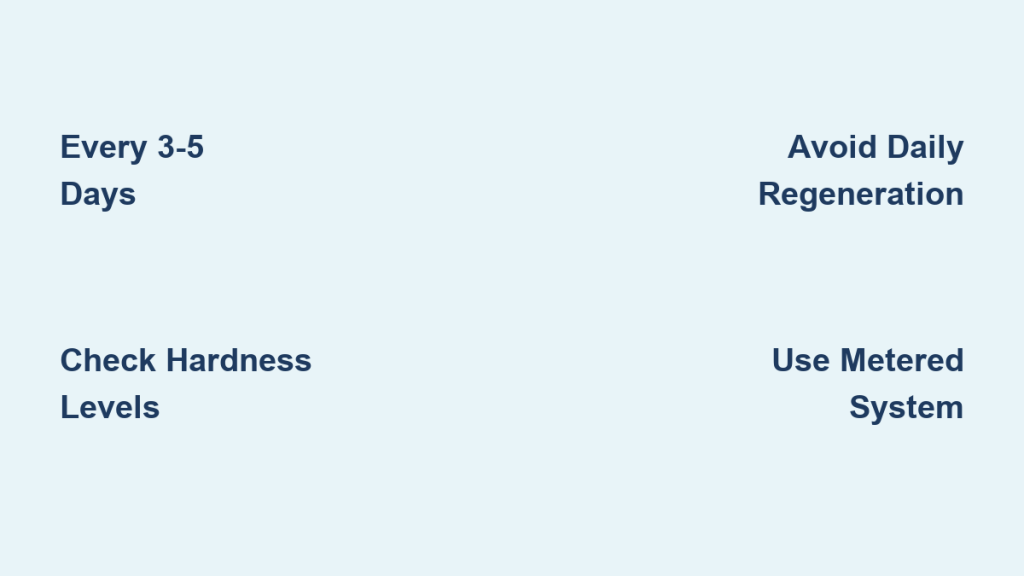
Wondering how often does a water softener regenerate to keep your water soft without wasting salt? Most residential units cycle every 2 to 14 days, with every 3 to 5 days being the sweet spot for average homes. Running daily often signals a leak or programming error, while waiting longer than two weeks risks damaging your resin bed.
This guide explains exactly how to calculate your ideal schedule based on hardness and household size. You will learn to distinguish between metered and timer systems while spotting signs that your current settings are wrong. Follow these steps to optimize efficiency and extend the life of your equipment.
Typical Regeneration Frequency Ranges

Most water softeners trigger a cleaning cycle somewhere between every 2 and 14 days depending on demand. The optimal window for balancing performance with resource usage is typically every 3 to 5 days for standard households. Systems that wait longer than 14 days risk resin degradation and salt bridging issues.
Why Daily Regeneration Signals a Problem
If your unit regenerates every single night, it usually means the system is undersized or misprogrammed. Common culprits include a running toilet leaking water continuously or a flow meter registering phantom usage. You should also check if the hardness setting was accidentally programmed too high for your actual water supply.
Minimum Frequency to Prevent Resin Damage
Even low-use homes must regenerate at least once every 14 to 28 days to maintain system health. Modern units often include a built-in 28-day override feature specifically to prevent resin stagnation. Skipping this minimum cycle allows bacteria to grow and causes the resin beads to clump together.
How the Regeneration Cycle Works
Your water softener removes hardness through an ion exchange process where resin beads trap calcium and magnesium. Once these beads become saturated with hardness minerals, they can no longer soften water until they are recharged. The regeneration cycle flushes out the trapped minerals and replenishes the sodium supply on the beads.
The Five Stages of Cleaning
1. Fill: Water enters the brine tank to dissolve salt into a concentrated solution.
2. Backwash: Water flows upward through the resin to flush sediment and expand the bead bed.
3. Brine Draw: The salty solution pulls through the resin to strip away calcium and magnesium.
4. Fast Rinse: Fresh water rinses remaining brine and hardness minerals out of the tank.
5. Refill: The brine tank refills with water to prepare for the next cleaning cycle.
Time and Resource Requirements
The entire process typically takes between 70 and 120 minutes to complete fully. Most homeowners schedule this event between 2:00 AM and 4:00 AM to avoid disrupting daily water usage. A standard cycle consumes roughly 35 to 70 gallons of water and 6 to 12 pounds of salt.
Factors That Determine Your Schedule
Water hardness levels act as the primary driver for how frequently your system must clean itself. Higher concentrations of calcium and magnesium saturate the resin beads much faster than soft water does. You can convert parts per million (PPM) to grains per gallon (GPG) by dividing the PPM number by 17.
Household Water Consumption Impact
Average daily water usage ranges from 40 to 75 gallons per person in most homes. A family of four using 75 gallons daily consumes 300 gallons, which significantly impacts cycle timing. High usage scenarios like frequent laundry loads or long showers will force more frequent regeneration events.
System Capacity and Efficiency Rules
Residential units generally range from 32,000 to 64,000 grains in total capacity. However, you should only plan to use about 66% of that rated capacity for maximum salt efficiency. Running a unit at 100% capacity reduces its overall lifespan and increases your salt consumption rates dramatically.
Accounting for Iron and Manganese
Iron and manganese content adds extra load to the resin that requires compensation in your calculations. Multiply iron parts per million by 4 and manganese parts per million by 6 to find the total added hardness. Even small amounts of these minerals can significantly increase how often your system needs to regenerate.
Calculating Your Ideal Regeneration Schedule

You can determine your specific schedule by calculating your daily grain load against your effective system capacity. Start by finding your compensated hardness number using your local water test results. Then multiply that number by your estimated daily water usage to get your total daily grain consumption.
Step-by-Step Calculation Example
- Calculate Compensated Hardness: Add hardness grains to the weighted iron and manganese values.
- Estimate Daily Usage: Multiply the number of residents by 75 gallons for a high-use estimate.
- Determine Daily Load: Multiply compensated hardness by daily gallon usage.
- Apply Safety Buffer: Increase the daily load number by 20% to prevent running out of soft water.
- Find Effective Capacity: Multiply your unit’s total grain rating by 0.66.
- Calculate Days: Divide effective capacity by the adjusted daily load to find your cycle interval.
Interpreting Your Results
If your calculation results in 3.5 days, you should program the unit to regenerate every 3 days. This conservative approach ensures you never run out of soft water during peak usage times. Adjust the frequency up or down slightly based on real-world performance over the next few weeks.
Metered Versus Timer-Based Systems
Demand-initiated metered systems track your actual water usage with a flow sensor to trigger cleaning only when needed. These units adapt automatically to changes in household size or seasonal usage patterns without manual intervention. They are the preferred choice for efficiency and can save significant amounts of salt and water.
Advantages of Demand-Initiated Technology
Metered systems prevent unnecessary regeneration during vacations or low-use periods. They ensure the resin is always ready for high-demand events like hosting guests or doing heavy laundry. Many of these models carry EPA WaterSense certification due to their superior resource management capabilities.
Limitations of Time-Clock Models
Timer-based units regenerate on a fixed schedule regardless of how much water you actually use. This rigid approach often leads to wasted salt during slow weeks and hard water during busy periods. These older systems are becoming obsolete because they cannot adjust to real-time household demands.
When to Use Manual Regeneration
You can force a manual regeneration cycle after a power outage or a large party. This feature is also useful if you return from vacation and suspect the water has gone stale. Manual cycles help clear salt bridges or verify that the system is functioning correctly after maintenance.
Regeneration Frequency Charts
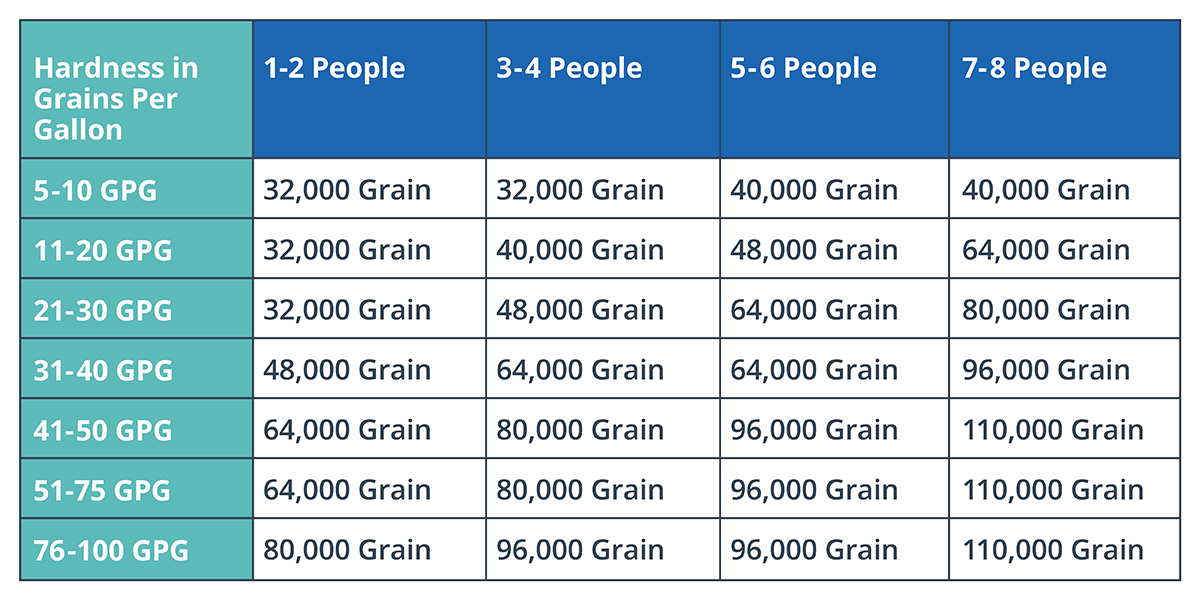
| Household Size | Hardness Level | System Type | Estimated Frequency |
|---|---|---|---|
| 1–2 People | 5–10 GPG | Timer-Based | Every 6–8 days |
| 3–4 People | 10–15 GPG | Metered | Every 3–4 days |
| 5+ People | 15–20+ GPG | High-Capacity | Every 1–2 days |
| Vacation Home | Varies | Manual/Low-Use | Every 7–14 days |
Capacity Projections for 48,000 Grain Units
A 48,000 grain unit dealing with 30 GPG hardness will behave differently based on your usage level. Low demand households using 40 gallons per person might regenerate every 7 days on high-efficiency settings. High demand homes using 75 gallons per person will likely need a cycle every 4 days.
Smaller Unit Expectations
Smaller 32,000 grain units will naturally require more frequent cycling under similar conditions. High demand scenarios for these smaller systems often result in regeneration every 2 to 3 days. Always size your unit appropriately for your family size and water hardness to avoid excessive cycling.
Adjusting Settings for New Homes

Many new construction homes come with water softeners pre-programmed to a generic 7-day schedule. While this setting prevents immediate damage, it rarely matches your specific water conditions or family size accurately. You should test your local water hardness and reprogram the grains per gallon setting immediately.
Optimizing Default Configurations
If your water tests below 10 GPG, you can safely extend the interval to 9 or 10 days. Conversely, hardness levels exceeding 15 GPG usually require shortening the cycle to 3 or 4 days. Always ensure the system is switched from “Test Mode” to “Automatic” mode after installation.
Verifying Installation Parameters
Check that the installer entered the correct grain capacity for your specific model number. Incorrect capacity settings will throw off all calculated schedules and lead to poor performance. Confirm the bypass valve is fully closed so all water passes through the resin bed.
Diagnosing Regeneration Problems
Frequent regeneration often manifests as salt disappearing rapidly or the unit running every single night. This behavior typically points to an undersized unit, a plumbing leak, or a faulty flow meter. You should inspect toilets for silent leaks and verify your programmed hardness settings match your water test.
Identifying Infrequent Cycling Issues
Infrequent regeneration results in soap scum, spotted dishes, and scale buildup on fixtures. Common causes include salt bridges blocking the brine draw or a clogged injector valve. A power outage might have also reset your timer, causing the system to miss its scheduled cleaning.
Diagnostic Testing Procedures
- Salt Level Test: Mark the salt level, run a manual cycle, and check for a 1 to 2 inch drop.
- Flow Test: Run water in the house and watch the display for activity indicators.
- Hardness Test: Use test strips to confirm water hardness at the tap after a cycle.
Salt Management and Maintenance Tips
You should refill your salt every 4 to 8 weeks depending on your household usage levels. Keep the brine tank at least half full to ensure consistent brine concentration for every cycle. Use only the salt type recommended by your manufacturer to prevent clogs and efficiency loss.
Preventing Salt Bridging
Salt bridges occur when a hard crust forms above the water line, preventing salt from dissolving. You must break these bridges manually whenever you notice the water level is low but the salt looks solid. Regular inspection every month helps catch this issue before it causes hard water problems.
Resin Bed Care Guidelines
Resin beds typically last 10 to 15 years but degrade quickly if neglected or allowed to stagnate. Infrequent regeneration causes channeling where water bypasses the resin entirely. Most modern units force a cycle every 28 days to prevent bacterial growth and keep the media fresh.
Frequently Asked Questions About Water Softener Regeneration
How often should a water softener regenerate for a family of four?
A family of four typically needs regeneration every 3 to 5 days depending on water hardness. Metered systems adjust this automatically based on actual daily usage patterns. Timer systems require manual adjustment to match your specific consumption rates.
Is it normal for a water softener to regenerate every day?
Daily regeneration is usually not normal and indicates a problem like a leak or incorrect programming. It often means the unit is undersized or the hardness setting is too high. Check for running toilets or verify your water test results immediately.
What happens if my water softener does not regenerate often enough?
Infrequent regeneration leads to hard water symptoms like scale buildup and soap scum. It can also cause permanent damage to the resin bed through channeling and bacterial growth. Ensure your system has a 28-day override to prevent stagnation.
Can I change how often my water softener regenerates?
Yes, you can adjust the frequency by changing the hardness setting or days between cycles on the control panel. Metered systems allow you to set capacity limits while timer systems let you pick specific days. Always base changes on actual water test results.
Why does my water softener regenerate at 2 AM?
Manufacturers schedule regeneration for 2 AM to avoid disrupting your daily water usage. The process takes up to two hours and renders water unusable during the cycle. You can change this time in the settings if it conflicts with your schedule.
Key Takeaways for Optimizing Regeneration Frequency
Aligning your regeneration schedule with actual water conditions ensures soft water and extends equipment life. Most homes perform best with a cycle every 3 to 5 days rather than relying on generic factory settings. Regular monitoring of salt levels and water hardness helps you catch problems before they cause damage.
Start by testing your water hardness and calculating your specific daily grain load today. Adjust your system settings to match these numbers and switch to a metered controller if you currently use a timer. Proper maintenance and accurate scheduling will save you money on salt and prevent costly repairs.