Spots on your dishes and dry skin often signal that your Dupure water softener needs immediate attention rather than replacement. Most performance issues stem from preventable maintenance lapses like salt bridging or resin clogging instead of actual system failure. Proper Dupure water softener maintenance prevents costly repairs while extending unit life for consistent soft water year-round.
This guide delivers actionable steps for seasonal protection and annual deep cleaning based on verified procedures. You will learn how to flush clogs and restore resin efficiency while avoiding winter freeze damage through specific protocols. Whether prepping for cold months or troubleshooting hard water symptoms this is your complete maintenance roadmap.
Winterize Your Dupure System Against Freezing Temperatures

Freezing temperatures can crack pipes and damage valves to disable your entire Dupure system completely. Units installed in garages or basements require non-negotiable winter preparation to survive cold snaps.
Insulate Pipes and Unit Effectively
Cold exposure risks frozen plumbing and internal component failure within your water treatment system. You must protect the system with physical insulation materials designed for plumbing.
- Wrap all exposed inlet and outlet pipes with foam pipe insulation sleeves.
- Use a water softener insulating blanket if the unit sits in an unheated area.
- Seal gaps around the room or enclosure to reduce cold air infiltration significantly.
- Avoid using heat tape directly on the softener tank and only apply to supply lines.
Pro Tip: Even brief freezing spells can cause damage so insulation is essential if temperatures drop below 32°F near the unit.
Check for Leaks and Pressure Drops
Winter conditions amplify small leaks that might go unnoticed during warmer months. Frozen water expands inside pipes to turn minor drips into burst pipes quickly.
- Visually inspect connections and valves plus the brine tank for moisture or pooling.
- Test water pressure at multiple faucets since a noticeable drop may indicate a frozen line.
- Listen for hissing or dripping sounds near the unit when it sits idle.
Act fast because a single leak can lead to flooding or system shutdown during regeneration cycles.
Clear Drains and Flush Brine Tank
Holiday water use increases clog risk throughout your entire household plumbing network. Blocked drains hinder regeneration drainage and cause damaging backups in the system.
- Use a plunger or drain snake on kitchen and laundry drains monthly.
- Install drain strainers to catch debris before it enters your plumbing system.
- Flush the brine tank before winter by draining all water from the tank.
- Remove salt sludge and residue with a damp cloth then refill with fresh softener salt.
This process prevents clogs in the brine line and ensures smooth regeneration cycles during heavy use.
Ensure Physical Access for Emergencies
You must reach the unit quickly if problems arise during freezing weather events. Blocked access delays emergency fixes when every hour counts.
- Clear 24 inches of space around the softener for service access at all times.
- Remove stored boxes and tools or snow if installed outdoors or in a garage.
- Keep the floor dry to prevent corrosion and electrical hazards near the unit.
Warning: Blocked access delays emergency fixes significantly during freezing weather events.
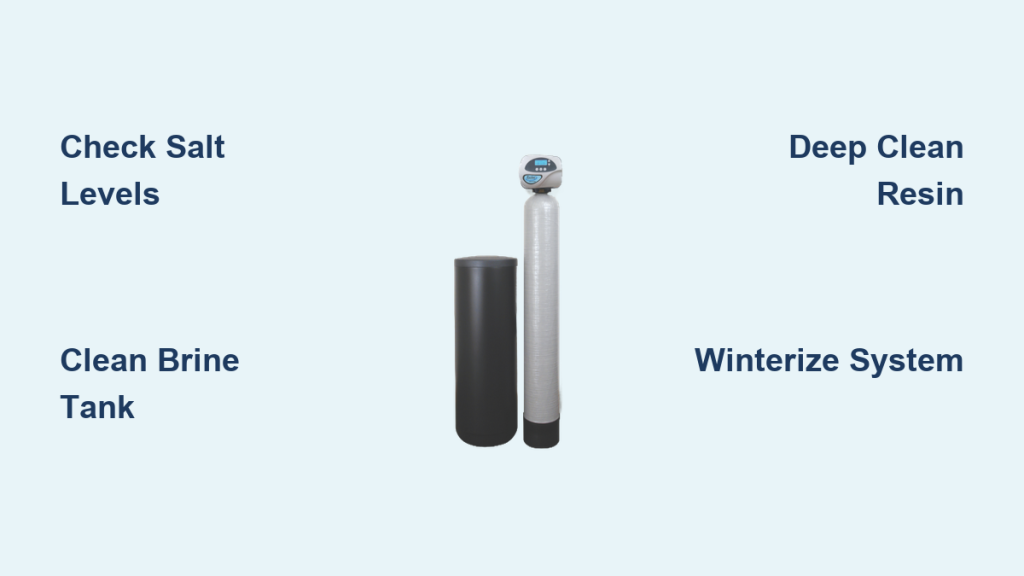
Restore Resin Beads Annually to Prevent Hard Water
Most softener failures result from caked resin beads rather than broken mechanical parts. Iron and calcium scale coat the beads over time to block the ion exchange process completely.
Why Resin Fails Without Cleaning
Resin beads remove hardness by swapping calcium and magnesium for sodium ions constantly. However they get dirty and lose effectiveness without proper chemical intervention.
- Regeneration alone does not clean beads since it only recharges them with saltwater.
- Mineral crust builds up especially in well water or high-iron areas of the country.
- Hard water symptoms return even with full salt levels if resin remains coated.
Ignoring this leads to permanent resin damage and early unit replacement costs for homeowners.
Use Super Iron Out Cleaner

Standard salt will not dissolve hardened scale that coats your resin beads effectively. You need Super Iron Out which is a resin-specific cleaner for this purpose.
- Dissolves iron and manganese plus calcium deposits from resin beads safely.
- Safe for Dupure systems when used correctly according to manufacturer guidelines.
- One bottle lasts 3–4 annual cleanings making it a cost-effective solution.
✅ Approved by manufacturers so check your manual for the recommended cleaner symbol.
Deep Clean in 3 Phases

Perform this deep cleaning procedure once per year or immediately if softening performance drops. Follow these steps precisely for best results.
1. Check and Refill Salt
Salt level should be above one-third full because below that regeneration fails completely. Use pellet or cube softener salt only for your Dupure system.
- Avoid rock salt and solar salt or table salt since impurities damage the system.
- Fill to half or near the top but do not top off daily to prevent issues.
- Frequent adding causes salt bridging which is a hard crust that blocks dissolution.
Digital models: After adding salt manually enter the amount on the control panel. This keeps regeneration scheduling accurate for your specific usage patterns.
2. Mix Cleaning Solution
Pour 0.5 gallons of cold water into a clean container for mixing your solution. Never use hot water because it destroys resin beads permanently.
- Add 1 cup of Super Iron Out to the cold water in your container.
- Stir until dissolved completely since fizzing is a normal chemical reaction.
3. Inject and Run Regeneration
Locate the brine well which is a small tube at the bottom of the salt tank. Remove the cap and pour the solution directly into the well carefully.
- Start regeneration by holding the “Recharge” button on digital units.
- Turn dial to regeneration mode on mechanical timer units manually.
- Listen for a click and flushing sound which confirms the cycle started.
The solution will circulate through the resin and break down scale over several hours.
When to Clean Beyond Annual Schedule
Do not wait a full year if you see these specific warning signs. Perform the deep clean immediately since it is often the only fix needed.
- Dishes have white spots after washing in the dishwasher regularly.
- Skin feels dry or itchy after showers despite using soap.
- Soap does not lather well during bathing or washing hands.
- Water pressure drops during regeneration cycles unexpectedly.
Monthly Maintenance Checklist for Optimal Performance
Annual cleaning is not enough to keep your system running at peak efficiency levels. Stay ahead of problems with routine checks scheduled monthly.
Monitor Salt Levels Weekly
Check the salt tank every 1–2 weeks to ensure adequate supply for regeneration. Replenish when level drops below half full to maintain consistent softening.
- Break up any crust or mush with a broom handle if bridging forms.
- Let salt drop halfway before refilling as best practice to prevent bridging.
Clean the Brine Tank Twice a Year
Sludge buildup blocks brine draw and reduces efficiency significantly over time. Drain the tank completely to remove leftover salt and water residue.
- Wipe down the interior with a damp cloth using no soap or chemicals.
- Inspect the brine line and injector for clogs that impede flow.
- Refill with fresh salt and water to restart the system properly.
Do this in spring and fall outside of peak usage seasons for best results.
Inspect the Resin Bed Condition
Open the tank if accessible and check the beads for signs of damage or clogging. Healthy resin is amber or gold and uniform in color throughout the bed.
- If beads look dark or slimy or clumped clean with Super Iron Out immediately.
- Severe discoloration may mean resin replacement is needed soon.
Verify Regeneration Cycles
Confirm the system regenerates every 7–14 days depending on your household usage. Check the display or timer settings to ensure accuracy.
- Verify the hardness setting is accurate for your local water supply.
- Ensure the time is correct since power outages can reset clocks.
- Manually initiate a cycle monthly to test function and listen for valve shift.
Listen for the valve shift because a loud click means the cycle started successfully.
Troubleshoot Common Dupure Water Softener Issues

Use symptoms to diagnose problems fast and avoid unnecessary service calls. Most issues have simple fixes you can perform yourself quickly.
No Soft Water? Check These
Run a water hardness test strip first since it reads “hard” if the softener fails. Refill salt and run a manual regeneration if levels are low.
- Break the crust and clean the tank if a salt bridge is present.
- Perform deep clean with Super Iron Out if resin is dirty.
- Re-enter hardness level and time if settings are incorrect.
Low Water Pressure
Check inlet and outlet filters for clogs that restrict water flow significantly. Inspect the bypass valve to ensure it is fully open for normal operation.
- Look for frozen lines in winter that block water flow completely.
- Verify drain line is not kinked during regeneration cycles.
Unit Not Regenerating
Check if the unit is plugged in and try a different outlet for power. Reset the clock after outages since timer errors prevent cycles.
- Listen for the click and call a technician if no sound occurs.
- Refill salt and water if the brine tank is empty.
Water Pooling Around Unit
Tighten connections or replace O-rings if a leaking fitting is the cause. Replace the brine tank immediately if it is cracked.
- Ensure proper slope and no blockages if drain line overflows.
- Urgent: Standing water risks electrical damage and mold growth.
Prevent Costly Damage Through Proactive Care
Neglect leads to expensive consequences that could have been avoided with simple maintenance. Protect your investment with regular attention.
Avoid Resin Replacement Costs
Damaged resin costs $200–$500 to replace while annual cleaning costs under $30. One deep clean per year can extend resin life to 10+ years easily.
Protect Appliances and Pipes
Hard water destroys water heaters since scale reduces efficiency by 30 percent. Dishwashers and washing machines suffer from clogged spray arms regularly.
- Showerheads and faucets develop mineral buildup without soft water.
- A well-maintained softener prevents thousands in appliance repairs.
Stop Winter Freeze Disasters
Frozen water expands and cracks valves and tanks plus pipes instantly. Repair costs exceed $500 for burst tank or plumbing damage.
- Prevention through insulation and access clearance costs under $50 investment.
- This small investment protects against catastrophic winter failures.
Final Maintenance Schedule for Long-Term Success

Stay on track with this timeline to ensure your Dupure system runs smoothly for years. Consistent Dupure water softener maintenance prevents 90% of failures effectively.
| Frequency | Task |
|---|---|
| Daily | Visual check for leaks or error lights on the unit. |
| Weekly | Check salt level and break up bridging if needed. |
| Monthly | Test regeneration and inspect for clogs in lines. |
| Biannual | Clean brine tank in spring and fall seasons. |
| Annually | Deep clean with Super Iron Out and winterize. |
Digital model owners: Recalibrate salt level input after each refill for accuracy. Focus on salt quality and annual resin cleaning plus winter prep. These steps keep your system running like new for over a decade while saving money and water. If soft water symptoms return start with a deep clean since it is the most overlooked fix.
Frequently Asked Questions About Dupure Water Softener Maintenance
How often should I deep clean my Dupure water softener?
Perform a deep clean with Super Iron Out once annually to remove mineral buildup. Clean immediately if you notice spots on dishes or dry skin before the yearly mark.
Can I use regular table salt in my Dupure softener?
No you must use only pellet or cube water softener salt specifically designed for these systems. Rock salt and table salt contain impurities that damage resin beads and internal components.
What causes salt bridging in the brine tank?
Salt bridging occurs when frequent refilling creates a hard crust that blocks salt dissolution. Let the salt level drop to halfway before refilling to prevent this common issue.
Why is my water still hard after adding salt?
Your resin beads may be coated with scale that prevents ion exchange effectively. Perform a deep clean with Super Iron Out to dissolve the mineral buildup on the beads.
How do I know if my Dupure softener is regenerating?
Listen for a loud click followed by flushing sounds when the cycle starts. Check your display or timer settings to confirm the scheduled regeneration time is correct.
What happens if my water softener freezes?
Freezing water expands and can crack pipes and tanks causing catastrophic system failure. Insulate pipes and the unit plus maintain access to prevent freeze damage in winter.
Key Takeaways for Effective Dupure Water Softener Maintenance
Consistent Dupure water softener maintenance prevents most system failures and extends unit life significantly. Focus on three critical areas including salt quality management and annual resin cleaning plus winter preparation protocols.
Start your maintenance journey today by checking your salt levels and scheduling that annual deep clean. Your appliances and skin will thank you for the consistent soft water quality.