If your faucets are crusted with white scale or your laundry feels stiff, your water softener likely failed to complete its regeneration cycles properly. These cycles of a water softener are critical maintenance routines that flush out hardness minerals and recharge the resin beads inside your tank. Without this automated cleaning process, even the most expensive unit cannot stop calcium and magnesium from damaging your pipes and appliances.
This guide breaks down the five specific stages of regeneration and explains how your system triggers them. You will learn to identify whether your unit uses a timer or smart sensor and discover how to adjust settings for maximum efficiency. We also cover common signs of failure so you can fix issues before hard water ruins your plumbing.
The Five Stages of Water Softener Regeneration

A water softener does not filter dirt like a standard cartridge. Instead, it uses resin beads to swap sodium ions for hardness minerals until the beads become saturated. When full, the system must run a regeneration cycle to reset itself. This process typically takes 70 to 90 minutes and renders the softener offline or reliant on reserve capacity.
Backwash: Cleaning the Resin Bed
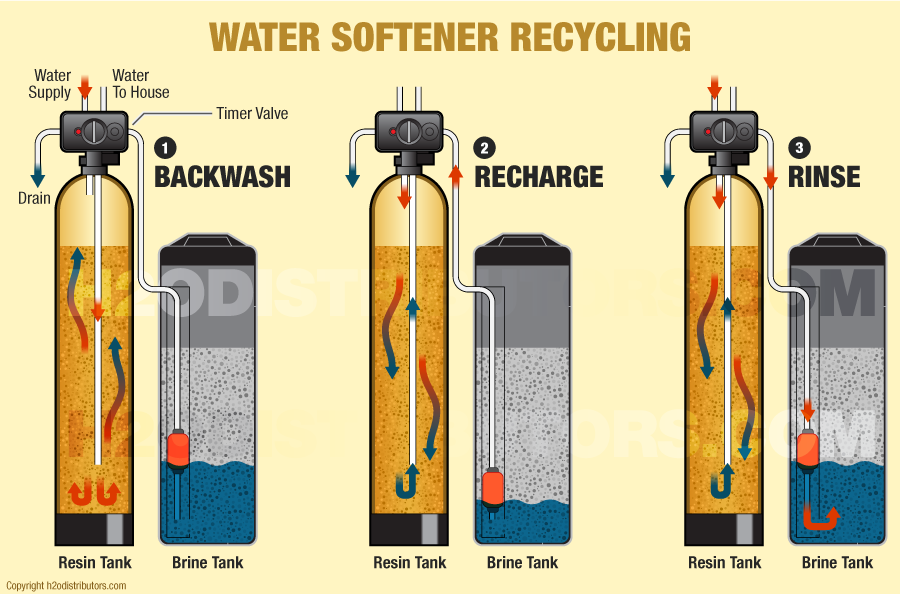
The cycle begins with the backwash stage, which lasts 10 to 15 minutes. Water flows upward through the resin tank at controlled pressure to lift and expand the resin bed. This action dislodges trapped sediment, iron, and organic debris that accumulate over time.
- Why it matters: Without this step, contaminants compact the bed and create channels where water bypasses the resin.
- What to expect: You may hear rushing water as the bed expands and flushes waste to the drain.
- Warning: Low water pressure can prevent proper expansion, leaving the bed dirty and inefficient.
Brine Draw: Recharging with Salt Solution
Next, the system pulls concentrated saltwater from the brine tank into the resin tank. This stage lasts 30 to 60 minutes and is the core chemical phase of regeneration. The high concentration of sodium ions in the brine displaces the calcium and magnesium stuck to the resin beads.
- Ion Exchange: Hardness ions are flushed away while sodium ions reattach to the beads.
- Critical Note: If salt levels are low, the brine will be too weak to fully recharge the resin.
- Result: The resin bed regains its ability to soften water for the next service cycle.
Slow Rinse: Completing the Reaction
Immediately after the brine draw, fresh water flows slowly through the resin bed for 5 to 10 minutes. This slow rinse pushes remaining brine deeper into the tank to ensure the ion exchange reaction finishes completely.
Think of this as letting a chemical solution settle. It guarantees that hardness ions are fully displaced from the bottom of the bed. Skipping or shortening this phase leads to uneven regeneration and reduced softening capacity throughout the tank.
Fast Rinse: Stabilizing the System
The fast rinse stage uses high-flow water running downward for about 10 minutes. This rapid flow flushes out any leftover brine, suspended particles, and displaced hardness minerals. It also compacts the resin bed back into its normal service position.
- Purpose: Prevents salty water from entering your home plumbing.
- Sign of failure: If interrupted, you might taste salt in your water or see cloudy dishes.
- Outcome: The system is now clean, compacted, and ready to deliver soft water.
Brine Refill: Preparing for Next Time
The final step measures and adds a precise volume of water to the salt tank. This water dissolves salt to create the brine solution needed for the next regeneration. The process takes 5 to 10 minutes and may happen at the start or end of the cycle depending on your model.
- Post-Fill Systems: Maintain 3 inches or more of water in the tank at all times.
- Pre-Fill Systems: Keep the tank dry until the cycle begins.
- Balance: Overfilling wastes resources while underfilling creates weak brine.
Differences Between Pre-Fill and Post-Fill Systems
Your water softener manages brine preparation in one of two ways, which affects how the refill stage operates. Identifying your system type helps you know what water levels are normal.
Pre-Fill: Dry Storage Method
In pre-fill systems, the brine tank remains dry when the system is not running. Water enters the tank only at the start of regeneration to dissolve dry salt. These units include a “dissolving pause” to ensure the salt fully saturates before the draw stage begins.
- Best for: Applications requiring precise brine concentration control.
- Visual Check: The bottom of the tank should be dry between cycles.
- Risk: Low water temperature or insufficient pause time can leave undissolved salt.
Post-Fill: Wet Storage Method
Most modern residential units use post-fill systems that keep a standing volume of water in the brine tank. Salt is always submerged, creating a ready-to-use brine solution. When regeneration starts, the system draws immediately without waiting for dissolution.
- Best for: Convenience and faster cycling times.
- Visual Check: You should see 3 inches or more of water during normal operation.
- Risk: Incorrect settings can cause “salt mushing,” a sludge that blocks the brine line.
How Different Controls Trigger Regeneration

The frequency of your cycles of a water softener depends on the control valve technology. Choosing the right trigger method impacts both water quality and resource consumption.
Timer-Based Scheduling
Timer-based systems regenerate on a fixed schedule, such as every three days, regardless of actual water use. This method works well for homes with very consistent usage patterns.
- Downside: The system regenerates even if the resin is not full, wasting water and salt.
- Risk: Heavy usage periods can exhaust the resin before the next scheduled cycle.
- Action: Manually adjust the timer if your household size or usage changes significantly.
Demand-Initiated Regeneration (DIR)
DIR systems use a flow meter to track exactly how much water passes through the unit. The controller calculates remaining capacity based on your programmed hardness level and triggers regeneration only when needed.
- Efficiency: Reduces water and salt waste by up to 50% compared to timer models.
- Adaptability: Adjusts automatically to guests or seasonal usage changes.
- Requirement: You must input the correct water hardness value for accurate calculations.
Smart Sensor Technology
Advanced units employ electronic probes embedded in the resin bed to detect exhaustion in real time. These smart systems measure actual resin status rather than estimating based on flow volume.
- Advantage: Adapts to fluctuating municipal water hardness without reprogramming.
- Performance: Prevents hard water breakthrough by reacting instantly to resin saturation.
- Cost: Higher upfront price offers superior long-term efficiency and reliability.
Factors That Change Cycle Frequency
Several variables determine how often your system must regenerate. Understanding these factors helps you troubleshoot unexpected behavior or high utility bills.
Water Hardness Levels
Higher hardness means more calcium and magnesium per gallon. If your water has 20 grains per gallon (gpg) instead of 10 gpg, the resin saturates twice as fast. Municipal sources often blend water from different wells, causing hardness to fluctuate. Test your water annually and update your system settings.
Household Water Usage
More occupants, long showers, or irrigation systems increase daily water volume. A demand-initiated system tracks this usage and regenerates accordingly. However, sudden increases in frequency often point to hidden leaks like a running toilet.
System Capacity and Size
Softeners are rated by the total grains of hardness they can remove before regeneration. An undersized unit for your home will cycle too frequently, wearing out components faster. Conversely, an oversized unit may not cycle enough, leading to resin stagnation.
Calibration Accuracy
Incorrect programming is a leading cause of poor performance. Setting the hardness too low delays regeneration and delivers hard water. Setting it too high causes unnecessary cycling. Review your settings annually to ensure accuracy.
Troubleshooting Common Regeneration Problems
If your water feels hard or your bills spike, specific symptoms can point to cycle failures.
Return of Hard Water Symptoms
White scale on fixtures, spotted dishes, or dry skin indicate the resin is not recharging.
* Check if the salt level is below half full.
* Ensure the system is not in bypass mode.
* Verify power supply and check for blown fuses.
Excessive Resource Consumption
Frequent cycling wastes water and salt. A typical cycle uses 50 to 100 gallons of water.
* Inspect for leaks that trigger extra cycles.
* Confirm the hardness setting is not inflated.
* Check for brine valve blockages preventing proper draw.
Unusual Noises or Leaks
Gurgling or hissing sounds often signal air in the line or a cracked brine hose.
* Inspect connections around the brine tank.
* Look for wet spots on the floor near the drain line.
* Replace cracked hoses immediately to prevent flooding.
Maintenance Tips for Reliable Cycling
Proper care ensures your cycles of a water softener run smoothly for years. Regular checks prevent minor issues from becoming major failures.
- Check Salt Weekly: Keep the tank at least half full with clean, recommended salt. Avoid rock salt if your manual suggests pellets to prevent clogging.
- Monitor Water Levels: Ensure post-fill tanks maintain 3 to 12 inches of water. Clean the brine line annually to prevent salt mush buildup.
- Test Water Quality: Use a hardness test kit every six months. Hard results indicate a need to verify settings or inspect the resin bed.
- Schedule Professional Service: Have a technician inspect the valve and resin every 2 to 3 years. Resin typically lasts 10 to 15 years but can degrade faster with iron or chlorine exposure.
Frequently Asked Questions About Water Softener Cycles
How long does a complete regeneration cycle take?
A full regeneration typically lasts between 70 and 90 minutes. The exact time varies based on system size, resin volume, and the specific hardness of your water supply.
Why is there water in the bottom of my salt tank?
Most modern post-fill systems maintain 3 inches or more of water in the brine tank at all times. This standing water keeps the salt dissolved and ready for the next regeneration cycle.
Can I use my water while the softener is regenerating?
During regeneration, the system is usually offline. Dual-tank models may provide reserve soft water, but single-tank units often bypass hard water to your home or shut off flow entirely until the cycle finishes.
What causes a water softener to regenerate too often?
Frequent cycling often results from high water usage, hidden leaks, or incorrect hardness settings. A demand-initiated system may also cycle early if the flow meter is miscalibrated or the resin capacity is set too low.
How do I know if my brine draw is working?
Check the salt tank after a cycle. The water level should drop significantly as the system pulls brine. If the level remains high, the brine line or injector valve may be clogged with salt debris.
Key Takeaways for Optimizing Water Softener Cycles
Understanding the cycles of a water softener allows you to maintain consistent water quality and protect your home infrastructure. The five stages of regeneration work together to clean the resin bed, recharge it with sodium, and prepare it for the next service period. Whether your system uses a timer, flow meter, or smart sensors, regular monitoring of salt levels and water hardness ensures efficient operation.
Take action today by checking your brine tank water level and verifying your hardness settings. Small adjustments to your maintenance routine can prevent scale buildup and extend the life of your entire plumbing system.