Imagine turning murky, salty, or chemically contaminated water into clean, safe drinking water without boiling, adding chemicals, or relying on basic filters. That’s exactly what a reverse osmosis membrane does. At the heart of every RO system, this microscopic filter removes up to 99.5% of dissolved solids, heavy metals, bacteria, viruses, and pollutants using only pressure and a marvel of modern materials science.
The secret lies not in a simple sieve, but in a sophisticated, multi-layered membrane that uses physics, chemistry, and engineering to separate pure water from contaminants at the molecular level. In this guide, you’ll learn how reverse osmosis flips nature’s osmosis process on its head, the structure of the ultra-thin membrane that makes it possible, and the real-world performance, maintenance, and limitations of RO systems.
Reverse the Natural Flow of Osmosis
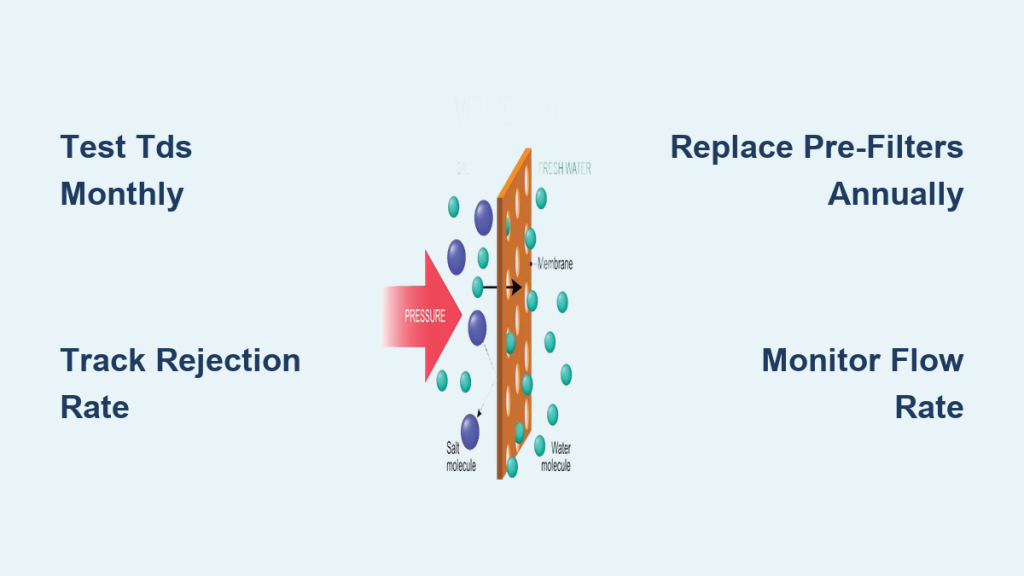
Reverse osmosis works by forcing water against its natural flow using hydraulic pressure. In regular osmosis, water naturally moves from a low-solute solution to a high-solute solution through a semi-permeable membrane. Reverse osmosis reverses this movement by applying external pressure greater than the water’s natural osmotic pressure.
Apply Pressure to Overcome Osmotic Force
When pressure exceeds the osmotic threshold, water molecules are pushed from the dirty feedwater side through the membrane, leaving contaminants behind. The result produces two distinct streams.
The permeate is clean, purified water that passes through the membrane.
The concentrate is the waste stream containing rejected salts, metals, and impurities.
Tap water requires just 15–70 psi of pressure, while seawater needs 700–1,000 psi to overcome its osmotic pressure.
Why Pressure Matters for Purification
Without sufficient pressure, the membrane cannot perform effectively. If pressure is too low, water flow slows and more contaminants slip through, making the system inefficient. This pressure-driven process avoids phase changes like boiling in distillation, making RO one of the most energy-efficient methods for high-purity water production.
Inside the Thin-Film Composite Membrane

The reverse osmosis membrane is not a single material. It is a three-layer sandwich engineered for strength, support, and precision filtration.
Three Layers, One Purpose
The most common type is the thin-film composite membrane, designed to withstand high pressure while delivering near-perfect rejection.
The polyester fabric base provides mechanical strength and durability, enabling the membrane to survive pressures up to 1,000 psi without tearing or collapsing.
The polysulfone intermediate layer acts as a scaffold, supporting the ultra-thin active layer above while allowing water to flow through freely. It has pores around 0.1–0.2 microns.
The polyamide barrier layer is the star of the show. This dense, non-porous film is where filtration happens. With pores as small as 0.0001 microns, it blocks nearly all dissolved ions and molecules larger than a water molecule. The polyamide layer is only about 0.2 microns thick, thinner than a strand of spider silk.
Despite its name, the membrane is not a sieve with holes. Instead, water diffuses through temporary gaps in the polymer network, while contaminants are rejected based on size, charge, and solubility.
How Contaminants Are Actually Rejected
The RO membrane achieves high-efficiency purification through multiple mechanisms beyond simple size-based sieving.
Size Exclusion Blocks Large Molecules
The most intuitive mechanism is size exclusion. Water molecules are tiny, about 0.28 nanometers in diameter, and can squeeze through the polyamide network. But dissolved ions like sodium and chloride, surrounded by hydration shells, are much larger and get stuck.
This blocks bacteria, viruses, colloids, and large organics. Even some small molecules cannot pass because they cannot interact with the membrane material.
Charge Repulsion Enhances Ion Rejection
The polyamide surface carries a slight negative charge at neutral pH. This creates an electrostatic shield called the Donnan effect, which repels negatively charged ions like nitrate, sulfate, chromate, and phosphate. Multivalent anions are rejected more effectively than single-charged ones due to stronger repulsion.
Solubility and Diffusion Control What Passes
For a contaminant to cross the membrane, it must dissolve into the polyamide layer, diffuse across it, and exit into the permeate side. Most inorganic salts have low solubility in the hydrophobic polyamide, so they never get absorbed.
This explains why RO removes 99% of lead, arsenic, and fluoride, but may allow dissolved gases and volatile organics to slip through.
Spiral-Wound Design Maximizes Efficiency
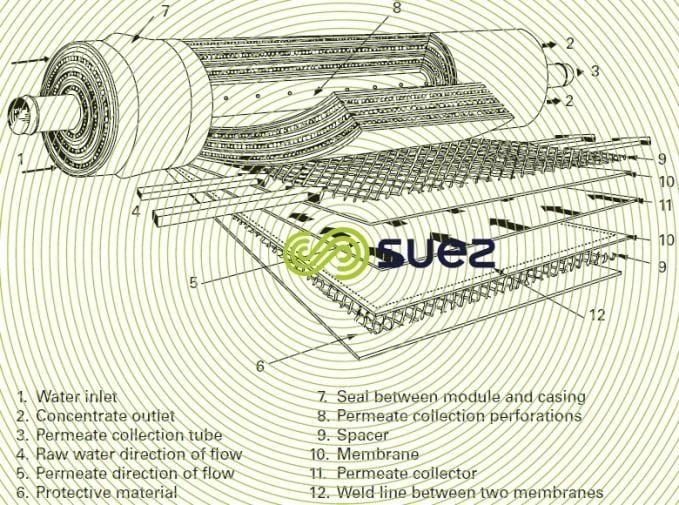
To fit miles of membrane into a small space, RO systems use spiral-wound modules built like a jelly roll.
Compact, High-Surface-Area Configuration
A flat sheet of RO membrane is sealed on three sides. A permeate carrier sheet is placed inside to collect purified water. A feed spacer keeps the channels open for water flow. The entire stack is rolled around a central permeate tube.
This design packs up to 400 square feet of membrane into a single 40-inch element, making it ideal for residential and industrial use.
Why Spiral-Wound Dominates the Market
Spiral-wound modules offer high surface area per volume and are scalable from 2-inch to 8-inch diameters. They are easy to replace in modular systems and compatible with high-pressure operation.
Most home under-sink systems use 2.5-inch diameter spiral elements, while large plants may use 8-inch versions.
Cross-Flow Filtration Prevents Buildup
Unlike coffee filters where water pushes straight through, RO uses cross-flow filtration. Feedwater flows parallel to the membrane surface, not directly into it.
Water Flows Sideways, Not Straight Through
Pressurized water enters the spiral-wound element and moves through the feed channel spacer, brushing against the membrane. 15–50% of the water permeates through the membrane. The rest, now concentrated with contaminants, exits as brine.
This continuous sweeping action prevents contaminants from piling up on the surface, reducing fouling and scaling.
Visual Cues of Proper Flow
A steady concentrate stream means the system is flushing waste. No sudden pressure drops indicate no clogging. Clear permeate means no cloudiness or odor.
If flow becomes sluggish or noisy, it may signal a blockage or failing pump.
Multi-Stage Systems Boost Recovery
Standard RO systems waste 2–4 gallons for every gallon of purified water, but multi-stage designs reduce this by reprocessing the concentrate.
Recycle Waste to Save Water
In a two-stage system, the first stage produces permeate and concentrate. The concentrate is fed into a second set of membranes. More water is recovered, reducing total waste.
Large plants use three or more stages, achieving up to 80% recovery. For example, a seawater desalination plant might use six RO trains, each with multiple stages and energy recovery devices.
Recovery Rate vs. Scaling Risk
Higher recovery means less wastewater but also higher concentrate TDS, increasing the risk of scale. To prevent this, use anti-scalant chemicals, adjust pH levels, and install water softeners upstream.
Without these measures, calcium carbonate or sulfate can coat the membrane, reducing flow and efficiency.
Pre-Filters Protect the Membrane
The RO membrane is powerful but fragile. Two pre-filters are essential.
Sediment and Carbon Filters Are Essential
A sediment filter removes sand, silt, rust, and pipe debris. Without it, particles clog the feed channels, reducing flow and increasing pressure drop.
A carbon filter removes chlorine, chloramines, VOCs, and pesticides. Chlorine is deadly to polyamide membranes. It breaks down the polymer, causing irreversible damage. A carbon filter prevents this, extending membrane life from months to years.
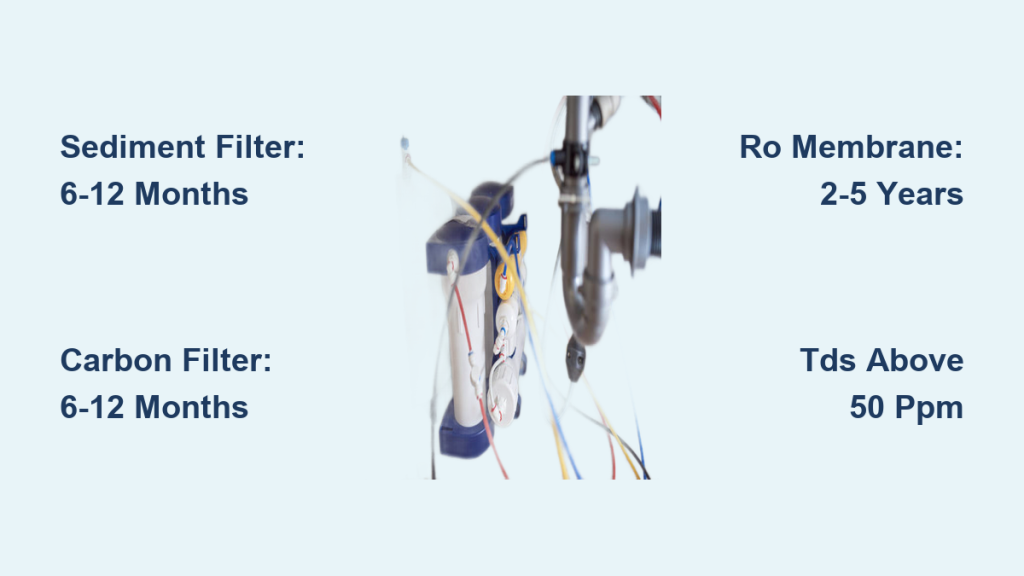
Replace pre-filters every 6–12 months, even if the system seems to work. Clogged filters starve the membrane of pressure.
Post-Treatment Improves Water Quality
RO water is pure but not always ideal. It is often slightly acidic due to dissolved CO2 and lacks minerals like calcium and magnesium.
Remineralization and pH Adjustment
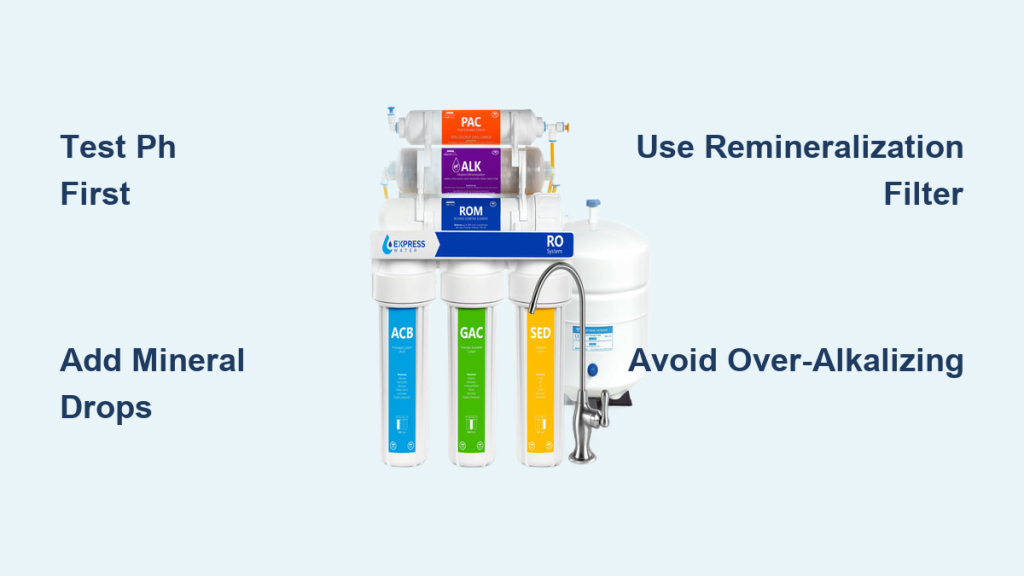
Common post-treatment steps include adding back calcium and magnesium for better taste and safety, raising pH using calcite or magnesium oxide, ensuring no bacteria grow in storage tanks with UV disinfection, and removing any residual taste or odor with a polishing carbon filter.
While RO water is safe to drink, post-treatment makes it taste better and protect plumbing.
Energy Use and Efficiency Gains
RO is far more efficient than distillation, but seawater systems still use significant energy.
ERDs Cut Power Costs by 50%
Energy recovery devices capture energy from the high-pressure concentrate stream and use it to pre-pressurize incoming feedwater. Types include pressure exchangers and turbochargers.
With ERDs, modern plants use 40–60% less energy. Without them, energy use can exceed 10 kWh per cubic meter, making RO cost-prohibitive.
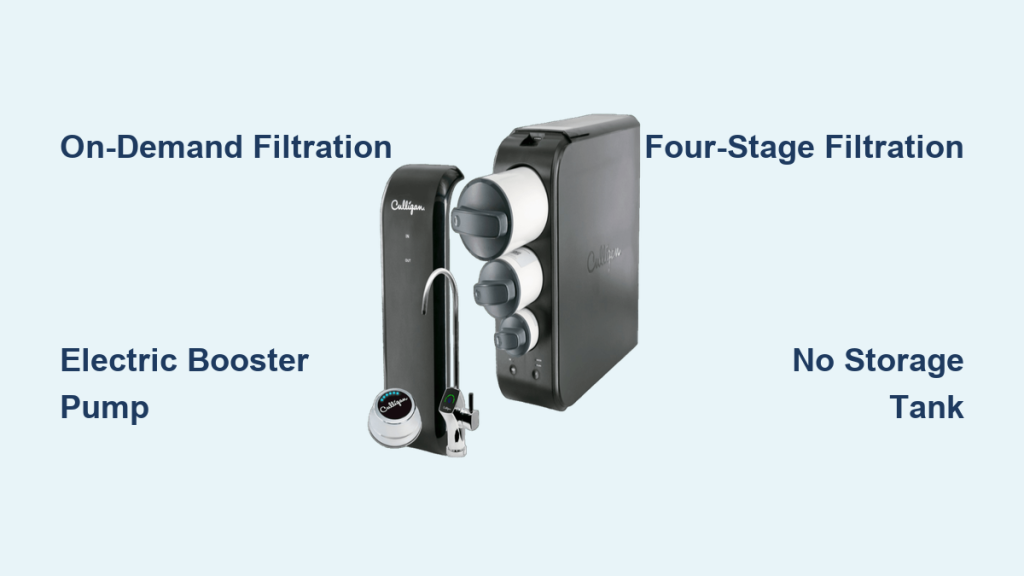
For home systems, line pressure or a small booster pump is enough. No ERD is needed.
Fouling and Scaling Reduce Performance

Even with pre-filters, membranes degrade over time due to fouling and scaling.
Four Main Types of Membrane Damage
Particulate fouling is caused by silt, iron, or clay, with signs including reduced flow and high pressure drop. Prevent it with tighter sediment filters.
Organic fouling from oils or humic acids causes gradual flux decline and frequent cleaning needs. Prevent it with carbon filters and anti-foulant dosing.
Biofouling occurs when bacteria grow into slimy biofilms that clog the membrane. Symptoms include odors, pressure spikes, and irregular flow. Control it with periodic sanitization.
Inorganic scaling happens when minerals like calcium carbonate or sulfate crystallize on the membrane. Signs include reduced flow and increased salt passage. Prevent it with anti-scalants or acid dosing.
Membrane Lifespan and Failure Signs
With proper care, home systems last 2–5 years and industrial systems last 3–7 years.
When to Replace the Membrane
Replace if you see low permeate flow despite clean pre-filters, salty taste or high TDS in output, pinholes, tears, or delamination, or sudden pressure changes.
Never ignore rising TDS. A failing membrane will not protect you from lead, arsenic, or nitrates.
What RO Removes and What It Doesnt
RO is highly effective against TDS, heavy metals, nitrates, sulfates, fluoride, bacteria, viruses, and PFAS.
RO has limited or no removal capability for dissolved gases like CO2 and H2S, some VOCs, chlorine by-products, and small neutral molecules like methanol or ethanol.
For complete protection, pair RO with UV and carbon filters.
Compare RO to Other Filtration Methods
Sediment filters remove particles but not TDS. Carbon filters handle chlorine and taste but not dissolved solids. Ultrafiltration removes bacteria and viruses but not TDS. Nanofiltration provides partial TDS removal. Reverse osmosis is the only membrane process that removes dissolved salts and ions effectively.
Advantages and Limitations
RO removes 99% of contaminants, requires no chemicals or heat, works on brackish, seawater, and tap water, and is scalable from home to city-level.
Drawbacks include producing wastewater, removing beneficial minerals, requiring regular maintenance, having a slow flow rate, and being sensitive to chlorine.
Modern systems now achieve 1:1 waste ratios, closing the efficiency gap.
Future of RO: Smarter, Cleaner, More Efficient
Researchers are working on graphene oxide membranes for ultra-thin, high-flux materials, nanocomposite TFC with embedded silver or TiO2 for anti-biofouling, low-fouling surfaces with hydrophilic coatings, and forward osmosis hybrids using osmotic draw instead of pressure.
While most are still in pilot stages, they promise lower energy use, higher recovery, and longer membrane life.
Choose and Maintain the Right RO System
Match your membrane to your water source. Tap water under 1,000 mg/L TDS needs a brackish TFC membrane at 6–10 bar. Brackish water needs 10–25 bar. Seawater at 35,000 mg/L needs SWRO at 50–70 bar.
For troubleshooting, check pre-filters and test water pressure if flow is low. Test feedwater and inspect the membrane if TDS is high. Bleed air from lines and check for clogs if the pump is noisy.
Meet Standards for Safety and Performance
Look for NSF/ANSI 58 certification. This independent standard verifies TDS reduction, structural integrity, material safety, and contaminant-specific claims.
Certified systems ensure your RO unit performs as advertised.
Final Takeaway: RO Is the Gold Standard
The reverse osmosis membrane works by combining high pressure, a multi-layered TFC structure, and molecular-level rejection to deliver ultra-pure water. It is not just a filter. It is a precision-engineered barrier that uses size, charge, and solubility to block contaminants while letting water through.
From homes to hospitals, RO systems provide safe, clean water when it matters most. With proper pre-filtration, maintenance, and post-treatment, they last years and outperform nearly every other filtration method.
While it produces wastewater and removes minerals, modern designs minimize these issues. And with ongoing advances in membrane science, RO is becoming faster, smarter, and more sustainable.
If you want the highest level of water purity, reverse osmosis is not just an option. It is the standard.
Frequently Asked Questions About Reverse Osmosis Membranes
What is the main mechanism that allows water to pass through an RO membrane?
Water passes through the RO membrane primarily through diffusion rather than mechanical filtration. The polyamide layer has a dense polymer network where water molecules diffuse through temporary molecular-scale voids while larger hydrated ions and contaminants are blocked. This happens alongside mechanisms like size exclusion and charge repulsion.
How long does a reverse osmosis membrane typically last?
A reverse osmosis membrane typically lasts 2–5 years in residential systems and 3–7 years in industrial systems, depending on feedwater quality, maintenance practices, and proper pre-treatment. Regular filter changes and periodic cleaning can extend membrane life significantly.
Why does RO remove some contaminants but not others?
RO removes contaminants based on size, charge, and solubility. It effectively blocks ions, heavy metals, and microorganisms but allows small uncharged molecules like dissolved gases (CO2, H2S) and some volatile organics to pass through because they have high diffusivity and lack charge-based repulsion from the membrane surface.
Can RO membranes remove bacteria and viruses?
Yes, RO membranes remove more than 99% of bacteria and 90–99% of viruses. The polyamide barrier layer has pores small enough to physically block these microorganisms, though the membrane must be intact for this protection to work.
Why does RO water taste flat or slightly acidic?
RO water often tastes flat because it lacks minerals like calcium and magnesium. It may also be slightly acidic due to dissolved CO2 absorbed from the air. This can be corrected with remineralization cartridges or pH adjustment filters to improve taste and prevent pipe corrosion.
What happens if I do not use a carbon pre-filter with my RO system?
Without a carbon pre-filter, chlorine from tap water will destroy the polyamide membrane within months. Chlorine oxidizes the polymer material, causing irreversible damage that reduces rejection efficiency and shortens membrane life dramatically.