
Your Igloo water dispenser keeps everyone hydrated, but skipping the cleanup invites mold and bad odors. Neglecting this task allows bacteria to grow in hidden corners, ruining the taste of your next batch of water.
This guide shows you how to clean an Igloo water dispenser using manufacturer-approved methods. You will learn specific steps to sanitize, deodorize, and maintain your unit for years of fresh use.
Empty and Drain Your Dispenser Immediately
The first step in how to clean an Igloo water dispenser is removing all standing water. Stagnant water creates a perfect environment for bacteria and slime to develop quickly. You must act right after your event or gathering ends.
Remove the Drain Plug
Locate the drain plug at the bottom of your unit and pull it out completely. Tilt the dispenser slightly to ensure every drop flows out of the reservoir. Leaving even a small amount of liquid inside can lead to musty smells later.
Detach Removable Components
Take off the spigot, drip tray, and any internal shelves or dividers. These parts collect the most residue and need individual attention. Soak them in warm soapy water while you focus on the main container.
Choose the Right Cleaning Tier
Your cleaning method depends on how heavily you used the dispenser. Light use requires less effort, while heavy use demands a deeper approach. Selecting the right tier ensures you do not damage the plastic or leave behind residues.
Basic Wipe-Down for Light Use
If you only stored plain water for a short time, a simple wash works best. Mix mild dish soap with warm water and wipe the interior walls and lid. Rinse thoroughly to remove any soapy film before drying.
Deep Clean for Odors and Stains
Use this method if the unit held flavored drinks or sat unused for weeks. This process aligns with the “extra love” directive from Igloo experts to restore freshness. You will need a sanitizing solution to kill hidden germs effectively.
Sanitize with Vinegar or Bleach Solutions
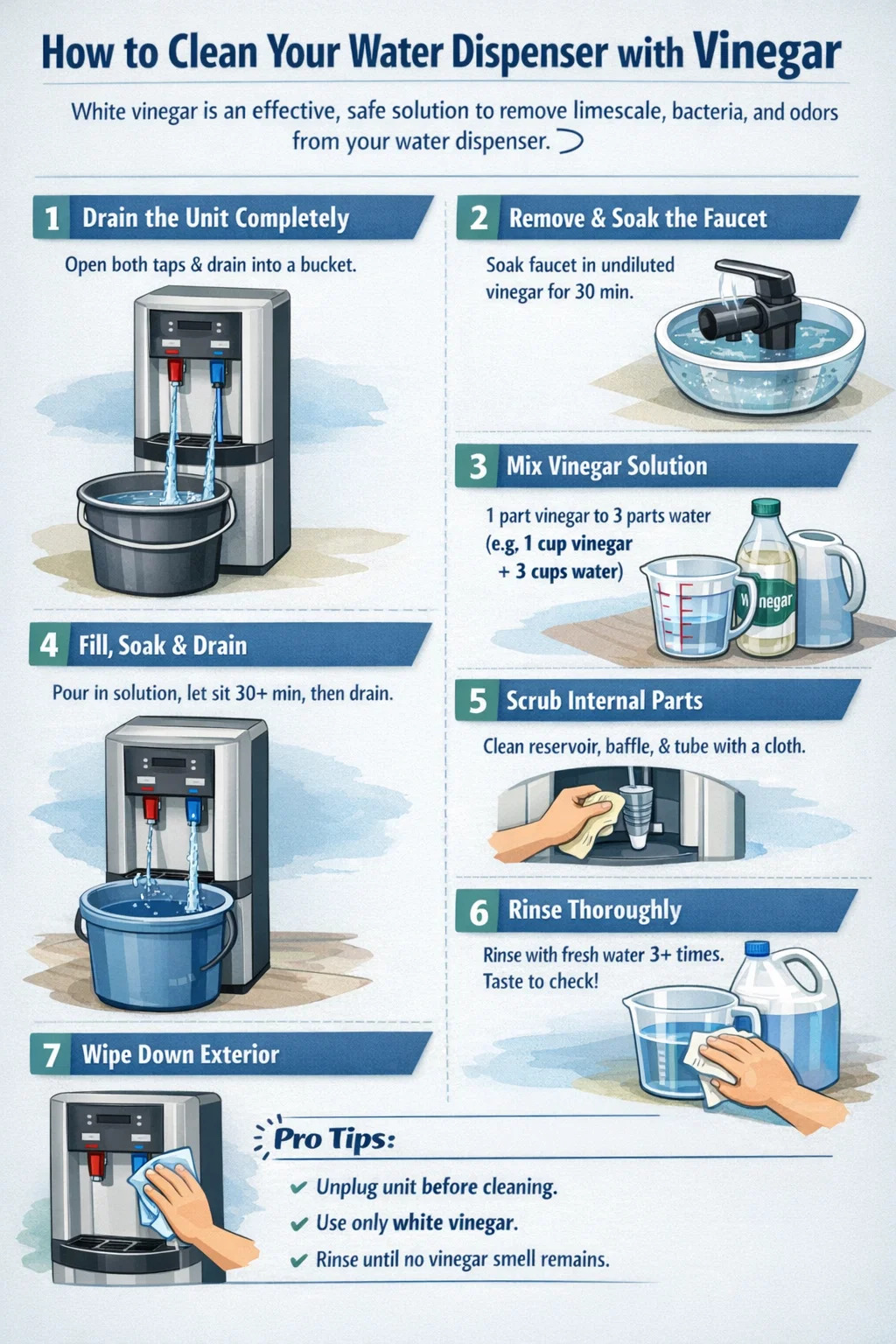
Sanitizing is the core step when you need to know how to clean an Igloo water dispenser thoroughly. You have two main options depending on the level of disinfection required. Both methods are effective when used correctly.
Use White Vinegar for Natural Cleaning
Fill the reservoir with a mix of one part white vinegar and four parts water. Let this solution sit for 30 to 60 minutes to break down mineral deposits. Open the spigot briefly to let the solution flow through the internal tube.
Apply Diluted Bleach for Heavy Disinfection
For severe cases, mix one tablespoon of bleach with one gallon of water. Never use undiluted bleach as it can damage the plastic and seals. Let it sit for 15 to 20 minutes, then rinse extensively with fresh water.
Scrub Hidden Seals and Spigots

Mold loves to hide in tight spaces where water lingers. You must physically scrub these areas to remove biofilm that liquids alone cannot clear. Ignoring these spots often leads to recurring smells.
Focus on Corners and Lid Seals
Use a soft-bristle brush to scrub around the lid seal and bottom corners. These crevices trap moisture and food particles that cause scum buildup. For tough stains, make a paste of baking soda and water to gently lift grime.
Disassemble and Clean the Spigot
Take apart the spigot if possible and soak the pieces in soapy water. Use a small brush like a toothbrush to scrub inside the valve and nozzle. Flush the tube with your cleaning solution using a syringe or baster.
Rinse Thoroughly to Remove Residue
Rinsing is critical when learning how to clean an Igloo water dispenser safely. Any leftover cleaning agent can affect the taste of your water or pose health risks. You must ensure the unit is completely free of chemicals.
Perform Multiple Rinse Cycles
Fill the dispenser halfway with clean water, swish it around, and drain it completely. Repeat this process at least three times to guarantee all soap or bleach is gone. Run water through the spigot during each cycle to flush the tubing.
Check for Soap Smells
Smell the interior air after the final rinse to detect any lingering odors. If you smell vinegar or bleach, continue rinsing until the scent disappears completely. Your water should taste neutral and fresh after this step.
Dry Completely Before Storage
Storing a damp dispenser is the fastest way to grow mold. Proper drying ensures your unit stays fresh until your next adventure. Never put the lid on while moisture remains inside.
Air-Dry with Lid Open
Prop the lid open and place the unit upside down on a clean towel. This position allows air to circulate freely and speeds up evaporation. Leave it in a well-ventilated area for 6 to 12 hours.
Ensure Internal Tubing is Dry
Shake the unit gently to remove water droplets from the spigot tube. You can also use a clean cloth attached to a stick to dab inside hard-to-reach spots. Complete dryness prevents the return of mildew smells.
Prevent Future Mold and Bad Odors
Prevention is easier than curing a smelly dispenser. Adopting a few simple habits keeps your Igloo unit ready for action year-round. These steps extend the life of your cooler significantly.
Store with Lid Ajar
Always store your dispenser with the lid off or slightly open. Closed units trap humidity, which encourages bacterial growth even in clean containers. Keep it in a cool, dry place away from direct sunlight.
Perform Monthly Maintenance Flushes
Run a vinegar rinse every 30 days even if the unit is not in use. This simple habit prevents dormant bacteria from taking hold in the plastic. It keeps the interior fresh and ready for sudden trips.
Troubleshoot Common Cleaning Issues
Sometimes standard cleaning does not solve every problem. You may encounter specific issues like clogs or persistent smells. Here is how to address them effectively.
Fix a Clogged Spigot
Check the intake tube at the bottom if water flow stops. Debris or mineral buildup often blocks the path. Use a pipe cleaner or flush with vinegar to dislodge the obstruction gently.
Eliminate Persistent Bad Smells
Mix warm water with two tablespoons of baking soda if odors remain. Fill the dispenser and let it sit overnight to neutralize deep-set smells. Rinse thoroughly the next day before using again.
Remove Cloudy Interior Walls
Cloudiness usually indicates hard water buildup on the plastic. Soak the area with undiluted white vinegar or a citric acid solution for an hour. Scrub gently with a non-scratch pad to restore clarity.
Extend Dispenser Life with Proper Care
Your cleaning habits directly impact how long your dispenser lasts. Avoiding harsh chemicals and physical damage preserves the unit. Following these tips ensures reliable performance for years.
Avoid Harsh Chemicals and Abrasives
Never use ammonia, steel wool, or undiluted bleach on your dispenser. These substances degrade plastic and compromise the seals over time. Stick to mild soap, vinegar, and baking soda for safety.
Protect from Sun and Physical Damage
UV exposure weakens plastic and causes fading or cracking. Store your unit in a shaded area when not in use. Avoid dropping it or overloading it, especially when full of water.
Final Thoughts on How to Clean Igloo Water Dispenser
Knowing how to clean an Igloo water dispenser ensures your family always has access to fresh, safe water. Regular emptying, proper sanitizing, and thorough drying prevent mold and odors from ruining your gear. By following these steps, you protect your investment and maintain peak performance.
Start your next cleaning session today by gathering vinegar and a soft brush. Your dispenser will thank you with years of reliable service on every adventure.
Frequently Asked Questions About Cleaning Igloo Water Dispensers
How often should I clean my Igloo water dispenser?
You should clean the dispenser after every use to prevent bacteria growth. If stored empty, perform a maintenance rinse with vinegar once a month to keep it fresh.
Can I use bleach to clean my Igloo water dispenser?
Yes, but only when diluted properly. Mix one tablespoon of bleach with one gallon of water and rinse extensively afterward to remove all chemical traces.
What is the best way to remove bad smells from the dispenser?
Create a solution of warm water and baking soda, then let it sit overnight. This neutralizes deep-set odors that vinegar or soap might not eliminate completely.
Should I store my water dispenser with the lid closed?
No, always store it with the lid open or ajar. Closing the lid traps moisture inside, which creates an ideal environment for mold and mildew to grow.
How do I clean the inside of the spigot tube?
Flush the tube with your cleaning solution using a turkey baster or syringe. You can also soak the disassembled spigot parts in warm soapy water and scrub with a small brush.