
If your dishes have spots or your skin feels dry, your water softener regeneration schedule likely needs adjustment. Most homes require a cycle every 3 to 7 days, though this varies based on water hardness and household size.
This guide explains how to calculate your ideal timing, adjust timer settings, and troubleshoot common issues like excessive salt use or returning hard water.
Calculate Your Ideal Regeneration Frequency

Determining the perfect cycle length prevents waste and ensures consistent soft water. You must balance your water hardness against your daily usage and system capacity.
Measure Water Hardness Levels
Hardness measures calcium and magnesium content in grains per gallon (gpg). Higher hardness levels saturate resin beads faster, requiring more frequent cycles.
* Soft water: 0–3 gpg
* Moderately hard: 3–7 gpg
* Hard: 7–10 gpg
* Very hard: 10+ gpg
Municipal sources often blend supplies, causing daily fluctuations that can confuse time-based systems. A professional in-home test provides the most accurate baseline number.
Estimate Daily Household Usage
The average person uses 60 to 80 gallons of water daily. Larger families deplete resin capacity much faster than single occupants.
* Multiply residents by 75 gallons for a rough daily estimate.
* Account for hidden usage like irrigation systems or leaking toilets.
* Demand-based systems track this flow automatically to trigger cycles only when needed.
Determine Resin Capacity Limits
Resin capacity indicates how many grains of hardness your system removes before exhaustion. Common capacities include 32,000 or 64,000 grains.
1. Multiply your hardness (gpg) by daily gallons used.
2. Divide your total resin capacity by this daily grain load.
3. The result is your optimal days between regeneration.
Pro Tip: Aim for a cycle every 3 to 7 days. Regenerating sooner than 3 days suggests an undersized unit, while waiting over 14 days risks hard water breakthrough.
Compare Time-Based vs Demand-Based Systems
Your system technology dictates how the regeneration schedule is set. Older models rely on clocks, while modern units track actual usage.
Time-Based Regeneration Drawbacks
These units regenerate on a fixed timer, such as every Tuesday at 2:00 AM. They do not adjust for actual water consumption.
* Wastes salt and water during low-usage weeks.
* Cannot adapt to sudden changes in household size.
* Common in budget or legacy installations.
This method is like changing your car oil monthly regardless of miles driven. It ensures safety but lacks efficiency.
Demand-Based Metered Advantages
Metered systems count gallons flowing through the unit. They trigger regeneration only after treating a specific volume of water.
* Saves up to 30% on salt and water compared to timers.
* Adapts automatically to guests or seasonal usage changes.
* Prevents unnecessary cycles during vacation periods.
Smart Sensor Technology
Advanced models use electronic probes inside the resin tank to detect exhaustion directly. The Aqua-Sensor® technology initiates regeneration at the precise moment capacity drops.
* Eliminates all guesswork regarding scheduling.
* Monitors resin condition rather than just estimating usage.
* Provides alerts for low salt or service needs via smartphone apps.
Execute the 3-Stage Regeneration Process

Understanding the physical steps helps you verify your system is working correctly. The entire cycle typically takes 70 to 90 minutes.
Stage 1: Brine Draw Operation
The control valve pulls concentrated saltwater from the brine tank into the resin bed. This reverses the ion exchange process.
* Sodium ions replace trapped calcium and magnesium.
* Duration lasts approximately 30 to 60 minutes.
* Check that the water level in the brine tank drops after this stage.
Stage 2: Slow Rinse Cycle
The system slowly flushes residual brine from the resin bed. This step ensures no excess salt enters your drinking water supply.
* Prepares the resin for the final fast rinse.
* Takes about 20 to 30 minutes to complete.
* Critical for preventing salty taste in household taps.
Stage 3: Fast Rinse and Re-bed
Water flows at full pressure to settle the resin beads and remove remaining impurities. The system then returns to service mode.
* Lasts 10 to 20 minutes depending on tank size.
* Restores full flow rate for household use.
* Avoid using hot water during this 90-minute window to prevent unsoftened water from entering your water heater.
Diagnose Regeneration Schedule Problems
Specific symptoms indicate whether your current schedule is too frequent or not frequent enough.
Hard Water Returns Between Cycles
You may notice soap failing to lather, white scale on fixtures, or itchy skin. This suggests the resin is exhausted before the next scheduled regeneration.
* Cause: Timer set for too many days between cycles.
* Cause: Increased household occupancy or water usage.
* Fix: Shorten the interval between regeneration days.
Excessive Salt Consumption
If you refill salt every few weeks or see the system running daily, your settings are likely inefficient.
* Cause: Hardness setting entered too high in the control panel.
* Cause: A running toilet or leak trickling water through the meter.
* Fix: Verify hardness numbers and inspect plumbing for leaks.
System Fails to Regenerate
The unit shows high usage but never initiates a cycle. Hard water persists indefinitely.
* Cause: Power outage reset the clock or disabled the unit.
* Cause: Bypass valve left in the open position.
* Fix: Check power connections and ensure valves are in service mode.
Program Your Regeneration Timer Settings
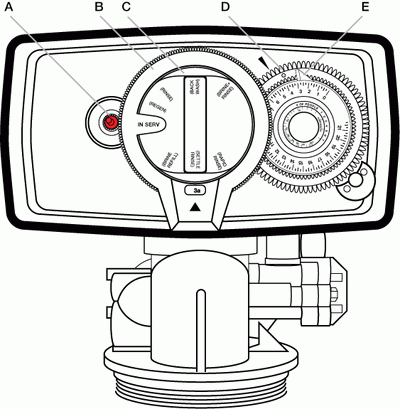
Adjusting your controller requires specific data about your water and home. Follow these steps to optimize your water softener regeneration schedule.
Set Time-Based Controllers
- Test your water hardness and calculate daily grain usage.
- Divide resin capacity by daily usage to find the day count.
- Program the timer to regenerate at that interval.
- Select a time between 2:00 AM and 4:00 AM to minimize disruption.
Configure Demand-Based Units
- Enter the exact hardness number from your water test.
- Input the number of residents in the home if prompted.
- Allow the meter to track usage and auto-schedule cycles.
- Set a maximum day limit (e.g., 14 days) to prevent stagnation.
Optimize Smart System Features
Smart units often self-configure but benefit from manual verification. Ensure the app notifications are enabled for low salt alerts. These systems learn your patterns over time to maximize efficiency.
Maintain Salt Levels for Consistent Performance
Salt is the fuel for regeneration. Without it, the resin cannot recharge, and the system cannot soften water.
Refill the Brine Tank Correctly
Check your salt level monthly. Refill the tank when it is less than one-third full to maintain a consistent brine solution.
* Keep salt levels 4 to 6 inches above the water line.
* Never let the tank run completely empty.
* Break up any salt bridges forming near the top.
Select the Right Salt Type
Using poor-quality salt leads to mushy buildup and clogged injectors.
* Evaporated Pellets: Best for most systems due to high purity.
* Solar Crystals: Good dissolving properties with moderate impurities.
* Rock Salt: Cheapest option but creates significant sludge.
Expert Note: Always follow your manufacturer’s recommendation for salt type to avoid voiding warranties or damaging valves.
Frequently Asked Questions About Water Softener Regeneration
How do I know if my water softener is regenerating?
Listen for the sound of water flowing through the drain line during your scheduled time. You should also see the water level in the brine tank drop after the cycle completes. If the water remains hard, the cycle may have failed.
Can I change the time my softener regenerates?
Yes, you can adjust the clock on time-based systems or the settings on demand-based units. Schedule regeneration during low-usage hours, typically between 2:00 AM and 4:00 AM, to avoid water pressure drops.
What happens if I run out of salt?
The system will continue to pump water, but it will not soften it. Your resin beads cannot recharge without sodium ions, leading to immediate hard water issues until you refill the tank and run a manual regeneration.
Why does my softener regenerate every day?
Daily regeneration usually indicates a setting error, a leak, or extremely hard water. Check if the hardness setting is too high or if a toilet is running continuously, trickling the meter and triggering premature cycles.
How long does a typical regeneration cycle last?
A standard regeneration process takes between 70 and 90 minutes. This duration allows time for the brine draw, slow rinse, and fast rinse stages to fully recharge the resin bed.
Key Takeaways for Your Water Softener Regeneration Schedule

Optimizing your water softener regeneration schedule saves money on salt and water while protecting your appliances. Most households achieve the best results with a cycle every 3 to 7 days, adjusted for their specific hardness levels and usage patterns. Upgrading to a demand-based or smart system eliminates guesswork and ensures regeneration only occurs when necessary.
Check your current settings today to ensure they match your home’s needs. If you are unsure about your water hardness or system capacity, schedule a free in-home water test with a local specialist to get precise data.