Your dishes have white spots, soap refuses to lather, and your skin feels dry after every shower. These are clear signs your water softener is not working, even if the salt tank looks full. Hard water is returning to your home, threatening your appliances with scale buildup and higher energy bills.
Most failures stem from simple issues like salt bridging, clogged drains, or missed regeneration cycles. You can diagnose and fix these problems in under an hour without calling a professional. This guide shows you how to inspect your brine tank, clear blockages, and restore soft water quickly using proven methods.
Identify Hard Water Return Symptoms

The first clues that your water softener is not working appear in your daily routine before you ever check the machine.
Spotting Scale and Poor Lather
White crust on faucets, cloudy glassware, and soap that will not foam indicate hard water has returned. Calcium and magnesium are passing through your system untreated because the resin beads are saturated. You might also notice stiff laundry or a filmy residue on your skin after bathing.
Do not assume the unit is fine just because it makes noise. Many systems continue to cycle mechanically while failing to soften water chemically. A sudden change in water texture is your primary warning sign to investigate further.
Detecting Iron Contamination
A yellowish tint or metallic smell in your water signals iron fouling within the system. This often happens in well water systems where iron coats the resin beads and blocks ion exchange. You may see reddish-brown stains in sinks or brown sludge accumulating in the brine tank.
Iron contamination requires specific cleaning agents rather than just adding more salt. Ignoring this issue can permanently damage your resin bed and reduce system lifespan significantly.
Resolve Salt Bridging and Mushing Issues
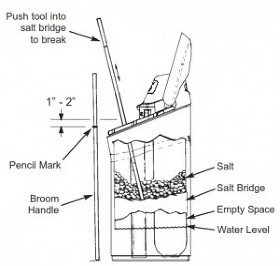
Salt problems cause over 70% of water softener failures by stopping brine formation entirely.
Break Up a Salt Bridge
A salt bridge forms when a hard crust develops across the top of the brine tank while water sits below. The tank appears full, but the salt cannot dissolve to create the necessary brine solution.
How to test: Tap the outside of the tank with a rubber mallet or press gently on the salt surface with a wooden spoon. A hollow sound beneath a solid top layer confirms a bridge.
Fix it fast:
* Use a broom handle or plastic rod to carefully break the crust.
* Avoid metal tools to prevent puncturing the tank walls.
* Remove large chunks and flush with water if needed.
* Refill with high-quality pellet salt and monitor weekly.
Pro Tip: If bridging happens often, check your basement humidity levels or switch salt types, as some crystals absorb moisture and fuse easily.
Clear Salt Mushing Sludge
Salt mushing occurs when dissolved salt recrystallizes into a thick sludge at the bottom of the tank. This blocks the brine intake line and prevents the system from drawing liquid brine into the resin tank.
How to identify: Push a broomstick all the way down. If you hit a sticky, muddy layer that resists pressure, mushing has occurred. Standing water and poor performance confirm this issue.
Clean it out:
1. Shut off power and water supply to the unit.
2. Switch the bypass valve to the bypass position.
3. Scoop out all sludge and discard it properly.
4. Rinse the tank interior with warm water to dissolve residue.
5. Drain completely and refill with fresh pellet salt.
Prevent recurrence: Never overfill the tank. Keep the salt level no more than three-quarters full and check it monthly.
Diagnose Brine Tank Water Levels
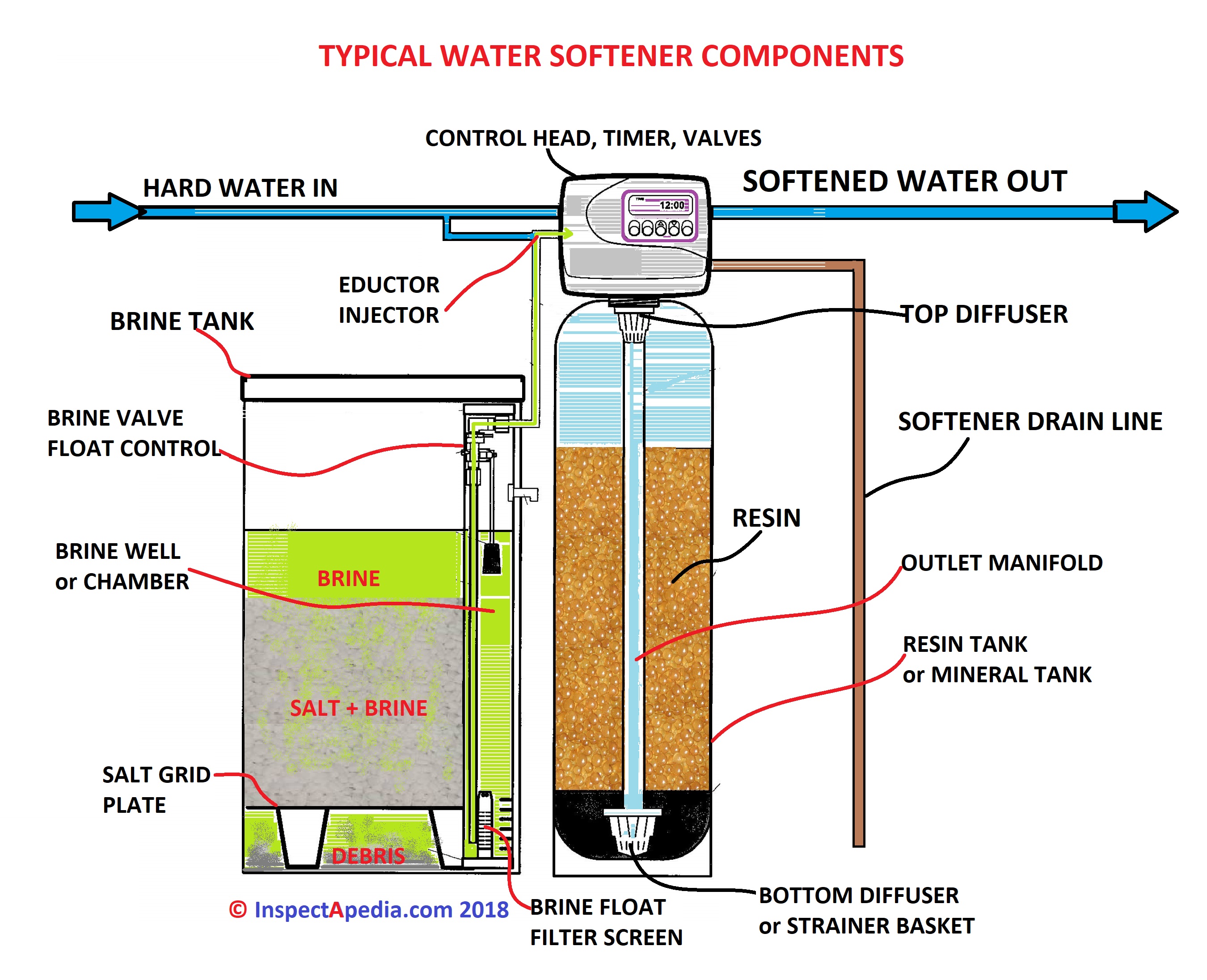
Water levels in your brine tank reveal hidden hydraulic failures before they become catastrophic.
Analyze High Water Levels
A few inches of water is normal, but water sitting near the top of the salt indicates a problem. Common causes include salt bridging, a clogged drain line, or a stuck float valve.
Quick check: After a regeneration cycle, inspect the tank. If water has not drained, follow the drain line from the control head to the floor drain. Look for kinks, clogs, or ice formation in cold basements.
Fix the float valve: Remove the brine well cover and lift the float. It should move freely up and down. If stuck, soak it in warm water to dissolve salt crust. Replace the float if it is cracked or warped.
Stop an Overflow Emergency
Water spilling over the brine tank means a critical failure like a stuck fill valve or broken injector. This poses a flooding risk to your home.
Emergency steps:
* Turn the bypass valve immediately to cut water flow to the unit.
* Unplug the unit to stop electrical components.
* Mop up standing water to prevent electrical hazards.
* Call a technician for seal or circuit board replacement.
Warning: Ignoring an overflow risks flooding, mold growth, and electrical damage. Act fast to mitigate damage.
Verify Regeneration Cycle Function
If salt and water levels look fine but softening fails, the regeneration cycle may be broken.
Confirm System Regeneration
Regeneration flushes hardness minerals from the resin bed using brine. Without this cycle, the system saturates and stops working entirely.
Check the display: Ensure the time is correct and the next regeneration is scheduled. Power outages often reset clocks and throw off cycles.
Listen for clues: During regeneration, you should hear a motor shifting gears, a soft suction sound during brine draw, and water flowing to the drain for 30 to 60 minutes. If you hear nothing, plug the unit into a different outlet and check your breaker panel.
Run a Manual Regeneration Test
Force a cycle to test the system response.
Steps:
1. Press and hold the REGEN or MANUAL button on your model.
2. Listen for the motor to engage and water to flow to the drain.
3. Watch the display to ensure it shows backwash, brine draw, and rinse stages.
If it will not start, the control board may be faulty. If it starts but skips the brine draw, the injector or float valve is likely clogged.
Decode Digital Error Codes
Modern units flash codes for specific faults like power interruptions or sensor failures.
Common alerts:
* E1 or F1: Power interruption detected.
* E2 or F2: Sensor failure within the unit.
* E3 or F3: Drain line blockage present.
Refer to your owner’s manual for specific codes. Smart models allow you to run diagnostics or reset the system remotely via an app.
Clear Drain and Pressure Blockages
Low water pressure or slow drainage points to physical obstructions in your plumbing.
Inspect the Drain Line
The drain line carries wastewater during regeneration. A kink or clog stops the cycle and traps dirty water inside.
How to check:
* Locate the small-diameter tube from the control head.
* Follow it to the floor drain or air gap.
* Look for sharp bends, flattening, or debris blockages.
Clear it: Disconnect both ends and blow air through it. For stubborn clogs, flush with warm water or use a plumber’s snake. Reconnect securely to prevent leaks.
Note: In freezing areas, ensure the line is not iced. Insulate or relocate the line if needed to prevent future freezes.
Test for Internal Clogs
If pressure drops only when the softener is in service, the blockage is internal.
Diagnose:
1. Switch the unit to bypass mode.
2. Run a faucet to see if pressure improves.
3. If yes, the issue is inside, likely from broken resin or sediment.
Fix: Flush the system by running water for several minutes after returning to service. If pressure stays low, the resin bed may be compacted or the control valve clogged, requiring professional service.
Address Resin Bed Contamination

The resin beads are the heart of softening. If they are contaminated or broken, performance plummets.
Clean Iron-Fouled Resin
Iron in well water coats beads and blocks ion exchange. Signs include metallic smells, yellowish water, and brown sludge in the brine tank.
Solution: Use a resin cleaner designed to strip iron buildup. Add the product to the brine tank and initiate a manual regeneration. Repeat monthly if iron levels are high. Install an iron pre-filter for levels above 1 PPM to prevent recurrence.
Replace Broken Resin
Over time, beads break down into fine particles that restrict flow. Symptoms include gradual pressure loss and resin beads appearing in faucets.
Fix: A technician must open the resin tank and replace the media. The typical lifespan is 10 to 15 years. High iron or chlorine levels shorten this lifespan significantly.
Pro Tip: If your unit is over a decade old and underperforming, consider a full system upgrade for better efficiency.
Perform Routine Maintenance Checks
Prevention beats repair. Most failures are avoidable with simple monthly checks.
Monthly Salt and Power Checks
- Check salt level every 4 to 6 weeks and refill when below half.
- Verify power is on, especially after storms or electrical work.
- Tap the tank gently to test for bridging formation.
Use pellet salt or Neusalt as they leave less sludge than rock salt.
Annual Cleaning Tasks
Once a year, clean the float assembly with warm water. Inspect the brine line and injector for clogs. Run a resin cleaner if iron is present in your water source.
Know When to Upgrade
Even well-maintained units wear out. Signs it is time for a new softener include frequent regeneration with poor results, rising salt and water use, and persistent hard water symptoms. High-efficiency models save up to 46% on salt, water, and electricity.
Frequently Asked Questions About Water Softener Failure
Why is there water in my salt tank but the salt is not dissolving?
This usually indicates a salt bridge where a hard crust separates dry salt from the water below. Tap the salt surface with a broom handle to break the crust so the salt can dissolve and form brine.
How often should I add salt to my water softener?
Check your salt level every 4 to 6 weeks and refill when the tank is less than half full. Never overfill the tank past the three-quarters mark to prevent salt mushing.
What causes a water softener to stop regenerating?
Common causes include power outages resetting the clock, a tripped breaker, salt bridging, or a clogged injector. Check your display settings and listen for the motor during the scheduled cycle time.
Can iron in well water ruin a water softener?
Yes, iron can coat resin beads and prevent them from softening water. Use a specialized resin cleaner monthly and consider installing an iron pre-filter if levels exceed 1 PPM.
How do I know if my resin bed needs replacing?
Signs include a gradual loss of water pressure, resin beads in your faucets, and persistent hard water despite proper salt levels. Resin beds typically last 10 to 15 years.
Key Takeaways for Fixing Your Water Softener
A water softener not working is often a fixable issue involving salt bridging, mushing, or simple maintenance lapses. By checking water quality symptoms, inspecting the brine tank, verifying regeneration cycles, and clearing blockages, you can restore soft water in hours.
Regular monthly checks of salt levels and annual cleaning of components extend system life significantly. If your unit is over ten years old or suffers from severe iron fouling, upgrading to a high-efficiency model may be the most cost-effective long-term solution.