
Spots on your dishes and dry skin after showers often signal a failing unit, forcing you to ask how long does a water softener last. Most standard salt-based systems serve homes effectively for 10 to 15 years before needing replacement.
This guide details specific lifespans by system type and explains the key factors that accelerate wear or extend durability. You will learn to spot failure signs early and decide whether a simple repair or a full upgrade is your best next step.
Average Lifespan by System Type

Different technologies offer varying durability levels based on their mechanical complexity. Knowing your specific system type helps predict its expected life and when to plan for replacement.
Salt-Based Softeners: 10–15 Years
Standard salt-based ion exchange softeners are the most common residential choice. They remove hardness minerals by swapping them for sodium ions through a chemical process. With average use and maintenance, these systems last 10 to 15 years.
Lower-end models from retail stores may fail earlier around 8 years due to cheaper resin or weaker valves. Premium brands with professional service plans often exceed 15 years of reliable operation.
Salt-Free Conditioners: 15–20+ Years
Salt-free water conditioners alter mineral structure to prevent scale rather than removing hardness. Because they lack moving parts and do not regenerate with salt brine, they suffer significantly less mechanical wear.
These systems typically last 15 to 20 years or more, making them a longer-lasting alternative for mild to moderate hardness. However, they are less effective in areas with very hard water exceeding 15 grains per gallon.
Industrial and High-End Models
Industrial softeners endure heavier loads and often last 10 to 20 years depending on maintenance schedules. High-end residential models with dual tanks or non-electric designs also reach 15–20 years due to superior engineering and materials.
Key Components and Their Lifespans
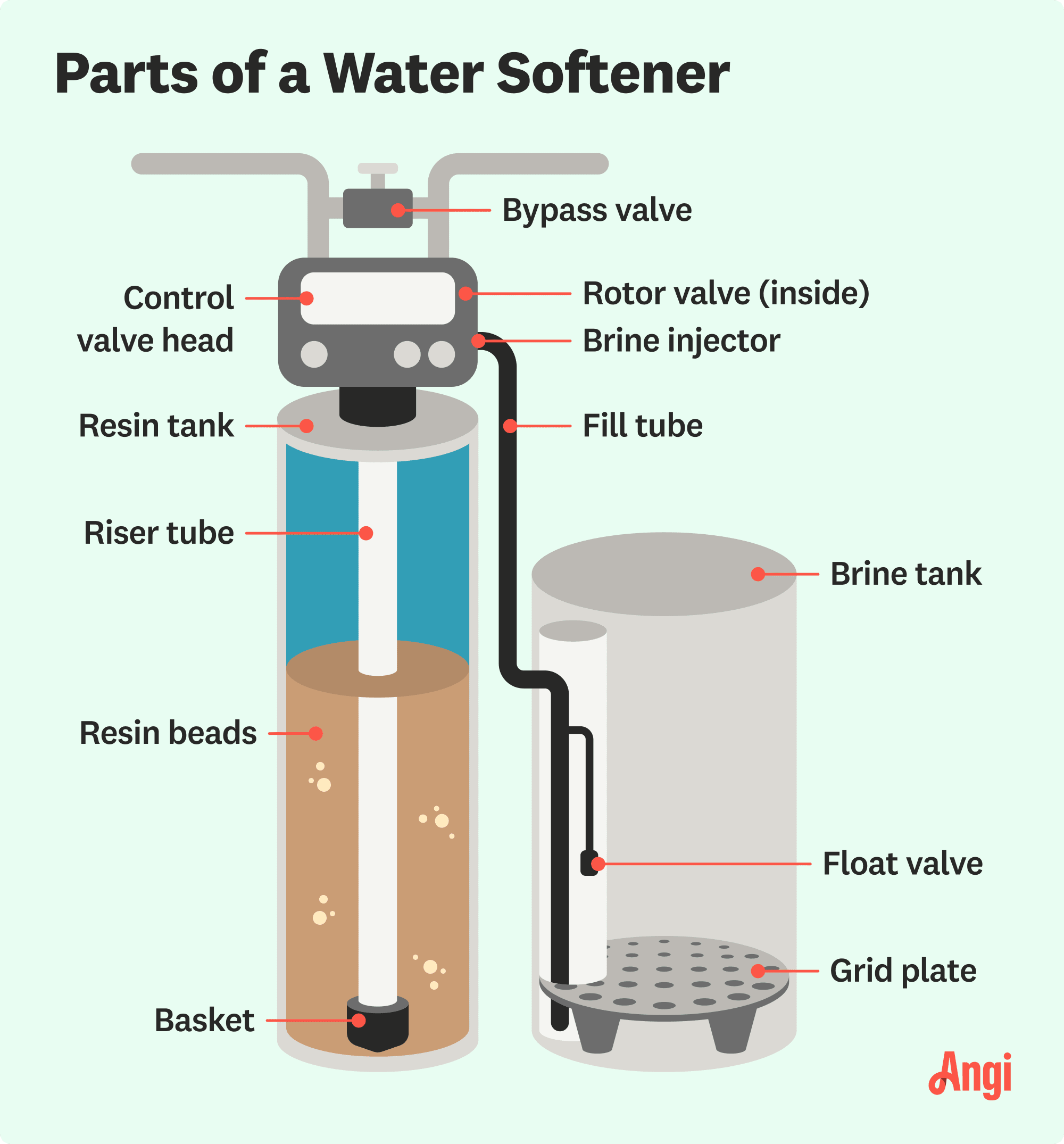
A water softener is an assembly of parts, each with its own degradation timeline. Understanding these components helps determine if a failing system needs a simple part swap or total replacement.
Resin Bed: 10–15 Years
The resin bed is the heart of a salt-based softener where tiny beads trap hardness minerals. Over time, chlorine exposure, iron fouling, and physical wear from backwashing degrade these beads.
After 10–15 years, resin loses capacity and cannot soften water effectively. You can often replace the resin for less than the cost of a new system if the tank remains sound.
Control Valve: 10–15 Years
This component manages water flow and triggers regeneration cycles. It is one of the most failure-prone parts due to moving seals and motors.
Signs of valve failure include:
* System failing to regenerate
* Leaking around the valve body
* Erratic cycling patterns
Valves can usually be replaced independently to extend the unit life.
Brine and Mineral Tanks
The brine tank holds salt and typically lasts 15 to 20 years. Common issues include salt bridging or sludge buildup at the bottom. The mineral tank houses the resin and can last 20+ years unless cracked by freezing or physical impact.
Factors That Shorten or Extend Lifespan
Your softener actual lifespan depends on more than just age. Four specific factors determine whether your system dies at 8 years or thrives past 15.
Water Hardness Level
Hardness is measured in grains per gallon (GPG). The higher the GPG, the harder your softener works to remove calcium and magnesium.
In areas with very hard water, softeners regenerate more frequently. This added stress on the valve and resin can shorten lifespan by 2–5 years compared to regions with softer water.
Household Size and Water Use
More people mean more showers and laundry cycles, resulting in more gallons processed daily. A family of four puts far more strain on a system than a single person.
High usage increases regeneration frequency, which accelerates mechanical wear on the control valve. If your household has grown, your old softener may now be undersized and wearing out faster.
Water Contaminants
Contaminants beyond hardness attack softener components aggressively. Sediment clogs resin beds while iron coats beads and reduces efficiency. Chlorine in city water breaks down resin beads chemically over time.
Solution: Install a pre-filter before the softener to catch sediment and carbon. Replace this filter every 6–9 months to protect your investment.
Installation and Build Quality
Budget units often use thin plastic and low-grade resin that fail sooner. High-end models utilize durable valves and higher-capacity resin beds.
Professional installation ensures correct plumbing and optimal flow. This reduces stress on the system from day one and prevents premature failure caused by poor setup.
Signs It’s Time to Replace Your Softener
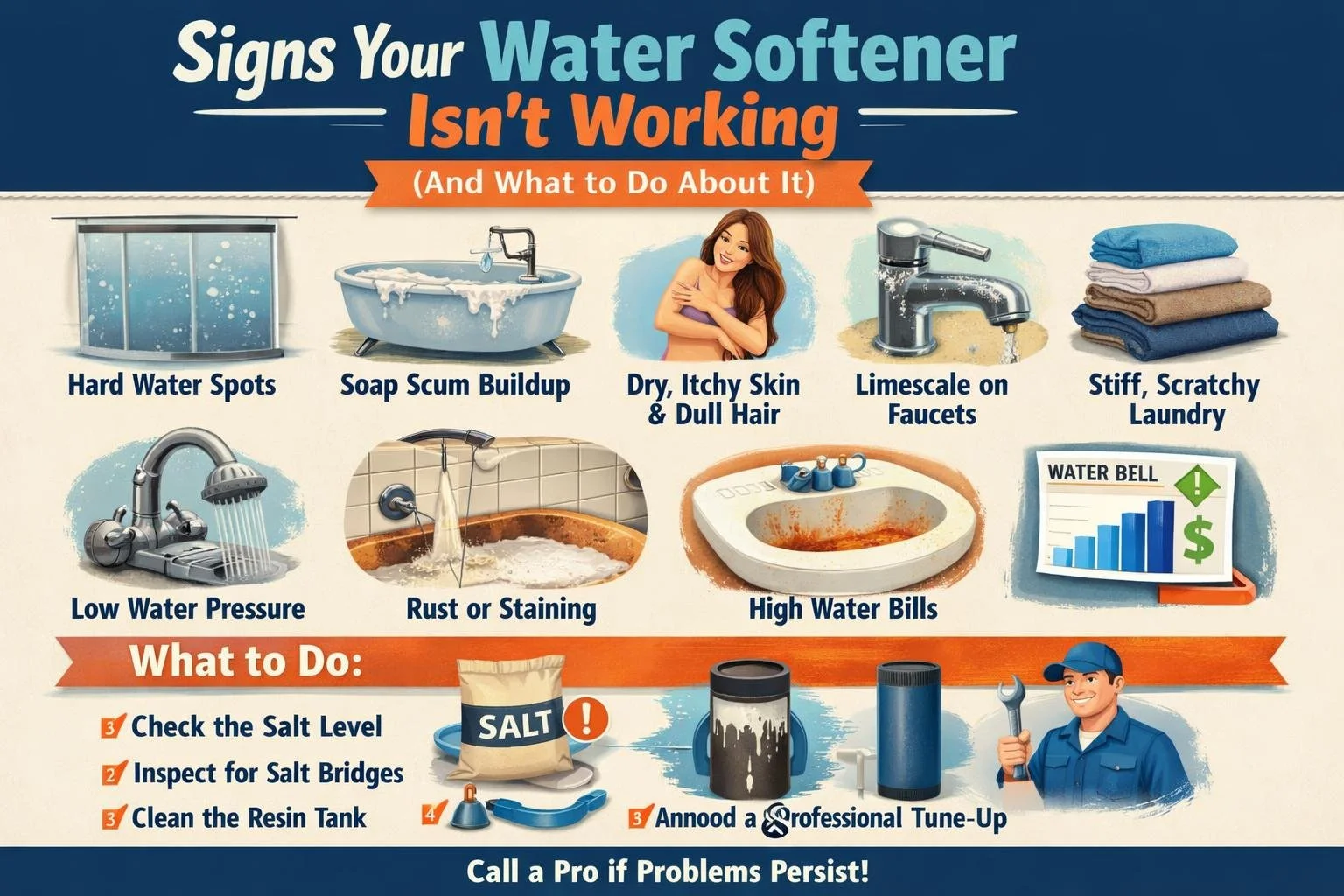
Even with great care, every softener eventually reaches end-of-life. Watch for these red flags to avoid water damage or complete system failure.
Hard Water Symptoms Return
If you start seeing spots on glasses, chalky buildup on faucets, or stiff laundry, your softener is not working. Dry skin and soaps that do not lather well are also primary indicators of resin exhaustion.
Frequent Regeneration Cycles
Your softener should regenerate every few days based on usage. If it regenerates daily or multiple times a week, the resin may be failing to hold a charge.
Excessive cycling wastes salt, water, and electricity while signaling imminent breakdown.
Salt Tank Problems
Check your brine tank monthly for issues like salt bridging or mushing. If the salt level never drops, the unit is not drawing brine due to a blockage or valve failure.
Constant salt tank issues often indicate the system is failing internally.
Unusual Noises and Leaks
Listen for clicking, hissing, or banging sounds which suggest valve malfunction or water hammer. Visible water pooling or cracks in the tank are serious red flags requiring immediate attention.
Minor leaks from seals can be repaired. However, cracks in the tank or widespread corrosion mean replacement is necessary.
Repair vs. Replace: The Decision Guide

Not every problem requires buying a new system. Use this logic to decide the most cost-effective path forward.
Repair If:
- The unit is under 10 years old
- Only one component like the control valve is faulty
- Resin is still effective based on water testing
- Repair cost is under 50% of a new unit price
Replace If:
- The unit is over 10–12 years old
- Multiple repairs have been needed recently
- Resin is exhausted after 10+ years of service
- Tank is cracked or shows severe corrosion
- Repair cost exceeds half the price of a new system
Older units with mechanical timers are also prime candidates for replacement due to inefficiency.
Maximize Lifespan with Proper Maintenance
Maintenance is the number one way to extend your softener life, potentially adding 5–10 years to its service.
Monthly Owner Tasks
- Check salt levels and keep the tank at least one-third full
- Use quality salt pellets to reduce sludge buildup
- Inspect for bridging and break up any hard crusts
- Use bypass mode when watering lawns or filling pools
Annual Maintenance and Servicing
Clean the brine tank annually by draining and scrubbing to remove buildup. Inspect hoses and connections for leaks while checking resin color for degradation.
Schedule a technician visit once a year to test performance and clean the resin. They should inspect seals, lubricate moving parts, and replace pre-filters to ensure optimal operation.
Upgrade Benefits: Why Newer Models Are Better
Replacing an old softener offers efficiency gains and convenience features that older models cannot match.
Save Up to 46% on Operating Costs
Modern high-efficiency softeners use demand-initiated regeneration. They regenerate only when needed based on actual water use rather than a fixed timer.
Upgrading can cut salt use by 30–50% and water use by 40–60% compared to old timer-based models.
Smart Technology Features
New softeners offer WiFi apps to monitor salt levels and usage remotely. You can receive leak alerts on your phone and activate remote bypass for outdoor watering.
These features eliminate guesswork and provide peace of mind regarding your water quality.
Frequently Asked Questions About Water Softener Lifespan
How often should I replace the resin in my water softener?
You should replace the resin bed every 8 to 10 years if the tank and valve are in good condition. This restores softening capacity without the cost of a full system replacement.
Can a water softener last 20 years?
Yes, salt-free conditioners and high-end professionally maintained models can last 20 years or more. Standard salt-based units rarely exceed 15 years without major component replacements.
What causes a water softener to fail prematurely?
High chlorine levels, iron fouling, sediment clogs, and lack of maintenance cause premature failure. Skipping annual cleaning or using low-quality salt also accelerates wear on the system.
Is it worth repairing a 12-year-old water softener?
Usually not, as the unit is near the end of its typical lifespan. If the resin is exhausted or multiple parts need fixing, replacement is more cost-effective than repair.
How do I know if my water softener resin is bad?
Signs include a return of hard water symptoms like spots on dishes and dry skin. If the system regenerates frequently but water remains hard, the resin is likely exhausted.
Key Takeaways for Maximizing Water Softener Lifespan
The average salt-based water softener lasts 10 to 15 years, while salt-free models can run for 20 years or more. Your specific lifespan depends heavily on water hardness, household usage, and consistent maintenance habits.
Proactive care like annual tank cleaning and pre-filter replacement can add years to your system. If your unit is over a decade old and showing signs of struggle, upgrading to a high-efficiency model will save you money and provide better water quality.