Hard water acts as a silent threat to your plumbing, appliances, and skin by depositing damaging scale. With over 200 mg/L of minerals common in Ohio, selecting the right water softener types is essential for protecting your home investment.
This guide details every major system option to help you choose the perfect fit for your budget. You will learn exactly how salt-based, salt-free, and dual-tank units differ to solve your specific hardness problems.
Salt-Based Ion Exchange Systems Remove Hardness Minerals

Salt-based ion exchange units represent the gold standard for treating severe hard water issues effectively. These systems physically remove calcium and magnesium ions that cause scale buildup throughout your plumbing network.
How the Ion Exchange Process Works
Hard water flows through a resin tank where polystyrene beads trap hardness minerals instantly. The system releases sodium ions into the water stream while capturing the problematic calcium and magnesium.
* Resin beads attract and hold mineral ions tightly
* Sodium ions replace hardness minerals in the water
* System flushes collected minerals during regeneration cycles
Ideal Households for Salt-Based Units
Families with three or more people benefit most from the high capacity of these robust systems. Homes experiencing water hardness above 15 grains per gallon require this level of filtration for full protection.
* Residents seeking silky smooth skin and hair
* Homeowners wanting maximum appliance lifespan
* Properties with visible scale on fixtures already
Advantages and Disadvantages
These units remove 99 percent of hardness minerals to deliver consistently soft water results. However, they do add small amounts of sodium and require regular salt refills every month.
* Pros: Proven technology, complete scale removal, reliable performance
* Cons: Adds sodium, uses water during regeneration, needs salt refills
Salt-Free Water Conditioners Prevent Scale Buildup

Salt-free conditioners offer a low-maintenance alternative for those who cannot add sodium to their water supply. These systems use Template Assisted Crystallization to alter mineral structure rather than removing them.
TAC Technology Explained Simply
Water passes through a special media that forces minerals to form microscopic crystals instead of sticky scale. These crystals remain suspended in the flow and wash away without sticking to pipes.
* Minerals change structure to prevent adhesion
* No brine tank or drain line required
* Zero wastewater produced during operation
Who Benefits From Conditioning Systems
Renters and DIY enthusiasts prefer these compact units because they need no plumbing modifications. Households with mild hardness below 15 grains per gallon find this solution sufficient for their needs.
* People on strict low-sodium dietary restrictions
* Homes with moderate mineral content only
* Users seeking eco-friendly water treatment options
Limitations of Salt-Free Models
These systems do not remove hardness minerals so the water does not feel slippery or soft. Effectiveness drops significantly in areas with extreme hardness like many parts of Ohio.
* Pros: No salt usage, minimal maintenance, environmentally friendly
* Cons: Does not soften water, limited scale prevention, ineffective on very hard water
Dual-Tank Water Softeners Ensure Continuous Soft Water

Dual-tank softeners solve the interruption problem found in single-tank models during regeneration cycles. Two resin tanks alternate operations to guarantee soft water flows 24 hours a day.
Eliminating Downtime During Regeneration
One tank provides soft water while the second tank regenerates or recharges itself automatically. This design prevents hard water spikes even when multiple showers run simultaneously.
* Tank A serves home while Tank B regenerates
* Seamless switching ensures constant pressure
* No scheduling needed for regeneration times
Best Applications for Dual Systems
Large families with five or more members generate enough demand to justify the extra investment. Homes with multiple bathrooms often experience peak usage that overwhelms single-tank capacity.
* Households running laundry and showers together
* Properties with high daily water consumption
* Businesses needing uninterrupted soft water supply
Cost and Space Considerations
You must have adequate floor space since these units have a larger footprint than standard models. The upfront cost ranges from $1,500 to $3,000 installed but offers superior reliability.
* Pros: Always-on soft water, handles peak demand, no hard water surges
* Cons: Higher initial cost, requires more installation space
Magnetic and Electronic Conditioners Offer Low-Cost Alternatives
Magnetic and electronic devices claim to treat water using electromagnetic fields attached to your main pipe. These inexpensive units attempt to alter mineral charges to prevent scale formation.
Scientific Reality of Magnetic Treatment
Independent studies show inconsistent results regarding the long-term effectiveness of these devices. Most plumbing professionals do not recommend them as a primary solution for serious hard water problems.
* Device clamps onto existing water line
* Claims to alter mineral charge electronically
* Lacks robust scientific backing for efficacy
Situations Where They Might Help
These units may provide minor benefits in areas with very mild hardness under 10 grains per gallon. They serve best as temporary solutions for rental properties where permanent installation is impossible.
* Supplemental use alongside other filtration
* Temporary housing situations
* Extremely low mineral content water sources
Why Experts Remain Skeptical
The low upfront cost between $50 and $150 makes them attractive despite their limitations. However, they produce no measurable change in water feel or quality compared to ion exchange systems.
* Pros: Cheap purchase price, no plumbing changes, zero electricity use
* Cons: Unproven effectiveness, not for hard water, no quality improvement
Reverse Osmosis Combos Deliver Pure Drinking Water

Combining a whole-home softener with an under-sink reverse osmosis system provides comprehensive water treatment. This setup softens all water while removing contaminants from your drinking supply.
Whole-Home Protection Plus Purity
A salt-based softener treats water entering the house to protect pipes and appliances effectively. A reverse osmosis unit at the kitchen sink then removes sodium and heavy metals for drinking.
* Soft water protects plumbing and appliances
* RO membrane removes 99 percent of dissolved solids
* Drinking water tastes clean and fresh
Ideal Candidates for Combo Systems
Health-conscious families want to eliminate sodium from their drinking water while keeping soft water for bathing. Homes with well water or high contaminant levels benefit from this dual approach.
* Households tired of buying bottled water
* Properties with specific health concerns
* Users demanding highest water quality standards
Investment and Maintenance Requirements
Total costs range from $2,000 to $4,000 depending on system size and features. You must change RO filters every 6 to 12 months to maintain optimal performance levels.
* Pros: Soft water everywhere, pure drinking water, removes contaminants
* Cons: High total cost, RO wastes some water, requires filter changes
Salt-Based vs Salt-Free Water Softener Comparison
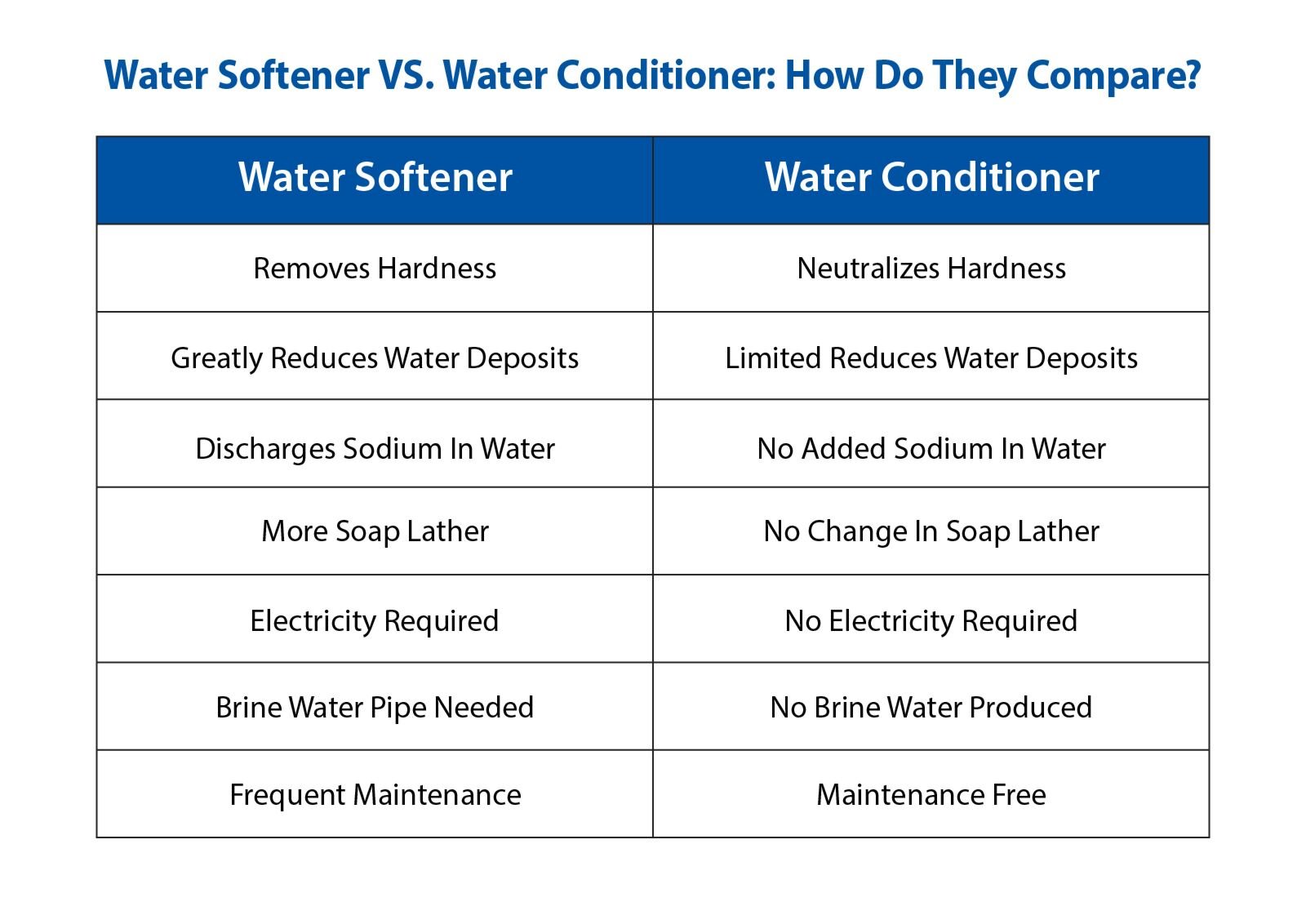
Choosing between salt-based and salt-free options depends on your specific water hardness levels. Understanding the key differences helps you avoid buying the wrong system for your home.
Performance and Maintenance Differences
Salt-based units remove minerals completely while salt-free models only condition the water to prevent scaling. Maintenance routines differ significantly between adding salt monthly versus checking media annually.
* Salt-based removes minerals; salt-free does not
* Salt-based water feels slippery; salt-free does not
* Salt-based needs salt; salt-free needs media replacement
Cost and Effectiveness Analysis
Upfront costs for salt-free systems are lower but they offer limited protection in hard water regions. Salt-based systems cost more initially but provide decades of reliable hardness removal.
* Salt-Based: $800–$2,500, highly effective, adds sodium
* Salt-Free: $400–$1,200, moderate effectiveness, no sodium
How to Choose the Right Water Softener Types
Selecting the correct system requires accurate data about your water hardness and household usage patterns. Follow these steps to ensure you buy a unit sized correctly for your needs.
Test Your Water Hardness Levels First
Get a professional water test to determine exact grains per gallon of hardness in your supply. Results above 10 gpg indicate you need a salt-based system for effective treatment.
* 0–3 gpg indicates soft water naturally
* 7–10 gpg suggests hard water issues
* 10+ gpg requires strong ion exchange treatment
Match Capacity to Household Size
Calculate your daily water usage by multiplying the number of residents by 70 gallons per person. Choose a unit with enough grain capacity to handle your demand between regeneration cycles.
* 1–2 people need 30,000 grain capacity
* 3–4 people need 40,000 grain capacity
* 5+ people need 64,000+ grain capacity
Evaluate Installation Space and Budget
Measure your available utility space before purchasing to ensure the unit fits properly. Factor in long-term costs like salt purchases and electricity when comparing different water softener types.
* Confirm access to drain and power outlet
* Budget for ongoing maintenance expenses
* Consider professional installation for warranty
Frequently Asked Questions About Water Softener Types
Which water softener types work best in Ohio?
Salt-based ion exchange systems are the most effective choice for Ohio due to extreme hardness levels often exceeding 15 grains per gallon.
Do salt-free softeners really remove hardness minerals?
No, salt-free systems do not remove minerals but rather change their structure to prevent them from sticking to surfaces and forming scale.
How often must I add salt to my softener?
Most homeowners need to refill salt every 4 to 6 weeks depending on household size and water hardness levels.
Can I install a water softener myself?
While DIY installation is possible, professional setup ensures correct sizing, code compliance, and valid warranty coverage for your system.
Do water softeners require regular maintenance?
Yes, salt-based units need salt refills and annual tank cleaning while salt-free models require media replacement every few years.
How much does a typical water softener cost?
Installed systems typically range from $500 to $3,000 depending on capacity, features, and whether professional installation is included.
Key Takeaways for Choosing Water Softener Types
Selecting the right water softener types protects your home from costly scale damage and extends appliance life significantly. Salt-based ion exchange systems offer the most reliable solution for hard water areas like Ohio.
Start by testing your water hardness to determine the exact system capacity your home requires. Invest in a quality unit that matches your household size to enjoy soft water and peace of mind for years.