
If your shower leaves skin feeling dry or faucets show white crust, your water softener likely needs salt. Adding salt to your water softener keeps it running, but the schedule depends on your home. Most experts suggest checking the brine tank monthly and refilling when levels drop below half.
You will learn exactly how household size and water hardness change your refill needs. This guide covers monthly checks, preventing common issues like salt bridging, and choosing the right salt type for your system.
Check Salt Levels Monthly to Prevent Failure
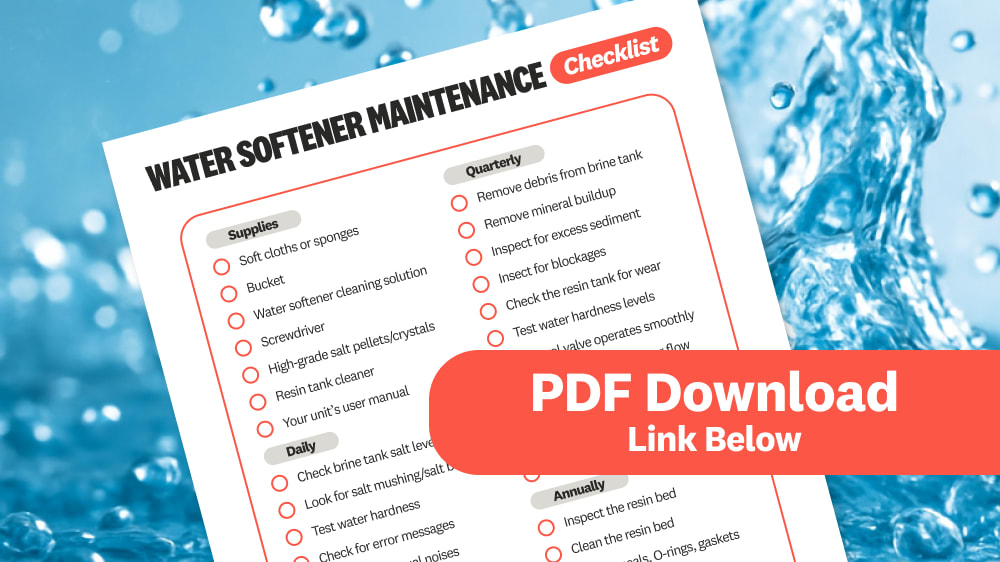
Skipping monthly inspections risks sudden hard water exposure that damages appliances. A monthly check is the minimum standard to catch low levels before the system stops softening. This habit helps you spot early warning signs like salt bridging or mushing that can disable your unit even if the tank looks full.
During each visit, visually assess both the salt volume and its condition. Look for a hard crust across the top or sludge at the bottom of the tank. Verify that the water level sits slightly below the salt line to ensure proper brine formation.
What to Inspect During Your Monthly Visit
- Salt Level: Ensure the tank is between half and three-quarters full.
- Water Level: Keep salt 3–4 inches above the water line at all times.
- Salt Condition: Pellets should be loose and dry rather than clumped.
- Tank Walls: Wipe away any buildup to prevent future bridging issues.
Set a recurring reminder on your phone or pair this task with changing HVAC filters. Consistency prevents the system from running dry and failing to regenerate.
Refill When Salt Drops Below the Halfway Mark

The golden rule for maintenance is to add salt when the brine tank falls below 50% capacity. This threshold ensures there is always enough salt to support the next regeneration cycle without interruption. Waiting until the tank is nearly empty increases the risk of running out mid-cycle.
Maintaining salt between half and three-quarters full optimizes performance effectively. It provides a sufficient reserve without overfilling, which can cause mechanical stress or salt bridging. Never let the salt drop below the water line as this prevents proper brine formation.
Steps to Refill Your Brine Tank Correctly
- Turn off the system if required by your specific manufacturer instructions.
- Remove the lid and inspect the interior for bridging or sludge buildup.
- Gently break up any crusts using a broom handle if necessary.
- Pour in high-purity salt pellets while avoiding spills into the overflow tube.
- Wipe down tank walls to remove any residue or dust accumulation.
- Replace the lid securely and resume normal system operation.
Always use the salt type recommended in your softener manual. Most homes require sodium chloride pellets for best results.
Household Size Determines Your Salt Usage
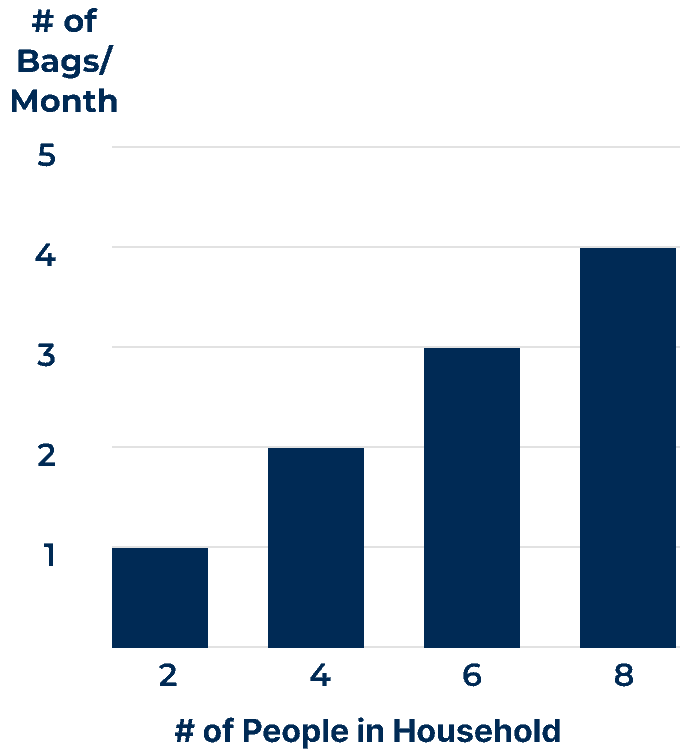
Water usage is the primary driver of how often you must add salt. Larger households generate more wastewater, causing the resin bed to saturate faster and requiring more frequent regeneration cycles. Understanding your specific consumption profile helps you predict refill needs accurately.
Small Households With One or Two People
With lower water usage, small households often consume just 13–15 pounds of salt per month. A single 40-pound bag typically lasts up to three months in areas with low to moderate hardness.
Even with infrequent use, monthly checks remain critical. Infrequent regeneration can lead to salt compaction or mushing inside the tank. Do not overfill trying to get ahead, as excess salt increases bridging risk.
Medium Households With Three to Four People
This is the most common scenario for residential systems. A family of four using moderately hard water will typically go through one 40-pound bag per month. Daily activities like showering, laundry, and dishwashing drive frequent regeneration cycles.
Stick to the monthly check-and-refill rhythm strictly. If you notice soap scum returning or clothes feeling stiff, check salt levels immediately even if it has not been 30 days.
Large Households With Six or More People
High water demand means heavy salt consumption up to 80 pounds per month in very hard water. These homes may need to refill every two weeks to maintain soft water production.
Consider setting up automated salt delivery to avoid running out unexpectedly. Some smart softeners send alerts when levels are low, which is ideal for large families managing busy schedules.
Water Hardness Dictates Refill Frequency
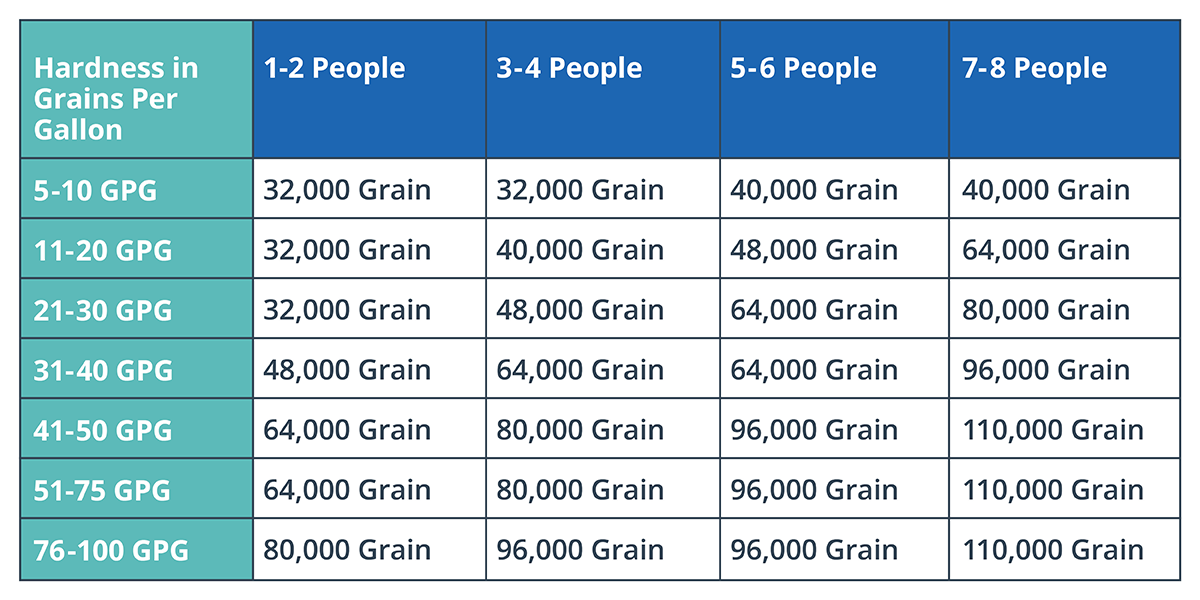
The harder your water, the faster your softener regenerates and the more salt it uses. Water hardness is measured in grains per gallon (gpg). You can find this number from local water quality reports or at-home test kits.
Once you know your gpg, match it to expected salt use:
* Less than 7 gpg: Low salt use required.
* 7–10 gpg: Standard use of about 40 lbs per month for four people.
* 10–15 gpg: Increased use requiring more frequent refills.
* Over 20 gpg: Double the salt needed compared to moderate zones.
Adjust Settings for Hard Water Zones
If your water exceeds 15 gpg, ensure your softener is set to handle it correctly. Many models allow you to input hardness levels so they regenerate only when necessary. This prevents wasted salt while maintaining effectiveness.
For very hard water, consider using iron-removing salt if iron content is also high. You might also increase the brine tank fill level to three-quarters full to ensure sufficient reserve.
Choose the Right Salt Type for Efficiency
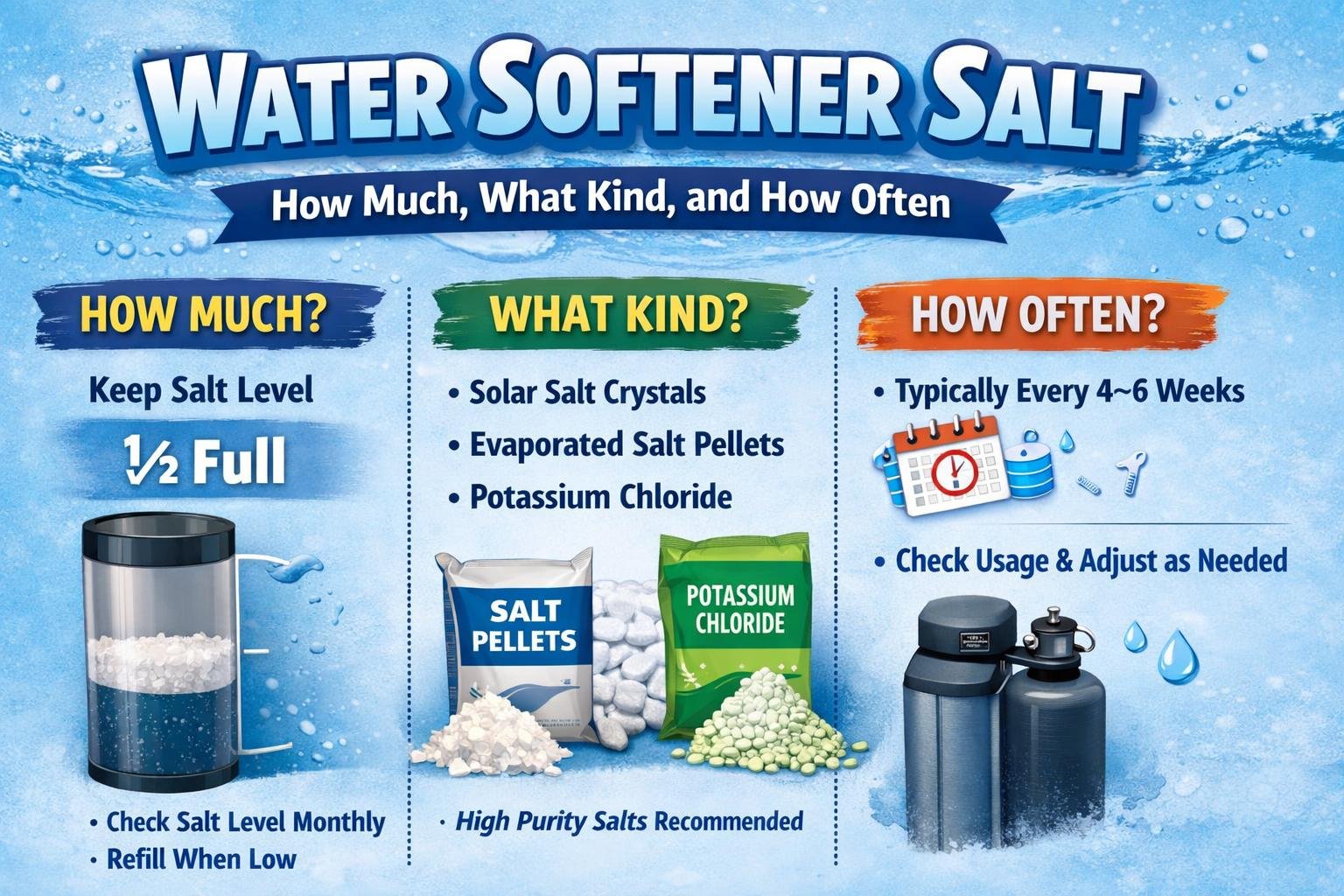
Not all salts are equal in performance. The type you use affects efficiency, maintenance frequency, and system longevity significantly. Selecting the wrong type can lead to clogged injectors or excessive sludge.
| Salt Type | Purity | Residue | Best For |
|---|---|---|---|
| Pellets | High | Very low | Most residential systems |
| Solar Salt | Medium | Moderate | Standard systems with moderate use |
| Rock Salt | Low | High | Budget use but not recommended |
Pellets are the top choice for modern softeners due to high purity. Solar salt works but may require more frequent tank cleaning. Rock salt contains up to 20% impurities leading to heavy sediment buildup.
Sodium Chloride Versus Potassium Chloride
Sodium chloride (NaCl) is standard and effective for most homes. However, if you are on a low-sodium diet, potassium chloride (KCl) is a viable alternative.
Keep these factors in mind:
* Potassium chloride costs 2–3 times more than sodium chloride.
* It is about 10–15% less efficient, so you will use more product.
* You may need to adjust your softener’s salt dosage setting.
Run a manual regeneration cycle after switching types to flush old brine from the system.
Prevent Salt Bridging and Mushing Issues
Regular inspections help you avoid two common problems that stop softeners from working. These issues can make a full tank appear empty to the system, halting soft water production entirely.
Understanding and Fixing Salt Bridging
Salt bridging occurs when a hard crust forms across the brine tank, creating a false ceiling. Below the bridge, the tank may be empty even though it looks full. Water cannot dissolve salt through the crust, so no brine is made.
Causes:
* High humidity in the utility room.
* Using low-quality or crystal salt forms.
* Overfilling the tank with salt.
Fix it:
1. Turn off the softener unit completely.
2. Use a broom handle to gently break the crust.
3. Pour warm water over stubborn areas to dissolve the bond.
4. Refill with fresh pellets, keeping the level below three-quarters full.
Understanding and Fixing Salt Mushing
Mushing happens when salt dissolves and re-crystallizes into a thick, sludge-like layer at the bottom. This clogs the brine well and stops brine draw entirely.
Causes:
* Poor-quality salt with many impurities.
* Frequent wet and dry cycles in the tank.
* Infrequent regeneration allowing compaction.
Fix it:
1. Shut down the system and remove all salt and water.
2. Scrub the tank with a mild bleach solution.
3. Rinse thoroughly and refill with high-purity pellets only.
To prevent both issues, use salt pellets, avoid overfilling, and inspect monthly.
Recognize Signs of Salt Depletion Early
If your softener is not regenerating due to low salt, hard water returns fast. Watching for these signs helps you act before damage occurs to your plumbing or appliances.
Hard Water Symptoms Returning to Fixtures
Watch for these early warning signs that your salt is low:
* Soaps do not lather well in showers or sinks.
* Skin feels dry or itchy after bathing.
* Hair feels dull or stiff to the touch.
* White scale appears on shower doors and faucets.
* Clothes come out stiff or grayish after washing.
* Water heater makes popping noises due to scale.
These are not just annoyances but signals of ongoing damage to plumbing.
Tank-Level Red Flags to Watch
Check the brine tank for physical clues of failure:
* Water level above salt: Salt cannot dissolve properly in this state.
* Tank full of water with no salt visible: Immediate refill is needed.
* Salt stuck in corners or clumped on walls: Break it up during the next refill.
If you see standing water and no salt consumption over weeks, the system may not be drawing brine. Call a technician if breaking bridges does not solve the issue.
Protect Appliances From Scale Damage
Without soft water, calcium and magnesium form scale inside pipes and water heaters. This scale reduces water flow and insulates heating elements, making water heaters work harder.
Scale buildup can reduce efficiency by up to 30 percent. A failed water heater due to scale can cost over $1,000 to replace. This is far more than the annual cost of salt maintenance.
Soft Water Saves on Cleaning Products
Soft water improves daily life and reduces costs:
* Uses up to 50 percent less soap and detergent.
* Keeps clothes brighter and softer for longer.
* Eliminates soap scum on showers and sinks.
* Prevents spotting on glassware and dishes.
These savings add up fast, especially for large households with high water usage.
Upgrade to Smart Monitoring Systems
Modern technology can eliminate the guesswork of maintenance schedules. Smart features send salt level alerts directly to your phone.
Brands like Fleck, GE, and Pelican offer models with app connectivity. Some even integrate with Alexa or Google Home for voice updates.
High-Efficiency Models Save Salt
Newer demand-initiated regeneration (DIR) systems only regenerate when needed. Older timer-based models run on a fixed schedule, often wasting salt.
Upgrading can cut salt use by 20–40 percent annually. This is especially true in homes with variable water use patterns throughout the year.
Schedule Salt Delivery for Convenience
Carrying 40-pound bags is difficult for many homeowners. Salt delivery services solve this problem effectively.
Benefits include:
* Delivered right to your softener location.
* Scheduled based on your specific usage patterns.
* Ensures correct salt type every time.
Many water treatment companies offer this for free with purchase or maintenance plans.
Store Salt Properly to Prevent Clumping
Keep unused salt in a cool, dry place. Moisture causes clumping and bridging before it even enters the tank. Avoid storing bags directly on concrete floors. Use a plastic pallet or shelf instead.
When refilling, pour slowly to minimize dust and spills into the brine well.
Frequently Asked Questions About Water Softener Salt
How often should I check my water softener salt level?
You should check your brine tank at least once a month. This monthly inspection ensures you catch low levels before the system runs dry. It also allows you to spot issues like salt bridging early.
Can I put too much salt in my water softener?
Yes, overfilling increases the risk of salt bridging and mechanical stress. Keep the tank between half and three-quarters full for optimal performance. A completely full tank does not improve softening efficiency.
What happens if my water softener runs out of salt?
Soft water production stops immediately if salt runs out. Hard water will flow through your pipes until you refill the tank. It may take several days and multiple regeneration cycles to restore soft water throughout your home.
Why is there water in the bottom of my salt tank?
Some water is normal as the system uses it to make brine. However, the water level should always be below the salt level. If water rises above the salt, the system cannot create concentrated brine effectively.
Does rain affect how often I need to add salt?
Rain does not directly change salt usage, but high humidity can cause salt bridging. Store salt in a dry place and inspect your tank more often during humid seasons. Household size and water hardness are the main drivers of usage.
Can I switch from sodium chloride to potassium chloride?
Yes, you can switch to potassium chloride if you need a sodium-free option. However, it costs more and is less efficient. You may need to adjust your softener settings and run a manual regeneration cycle after switching.
Key Takeaways for Adding Salt to Your Water Softener
Maintaining your water softener requires checking the tank monthly and refilling when levels drop below half. Household size and water hardness dictate your specific schedule, ranging from every two weeks to every three months. Using high-purity pellets and preventing bridging ensures your system protects your plumbing effectively.
Start by inspecting your brine tank today to see if you are due for a refill. If you have not checked in a month, now is the perfect time to prevent hard water issues. Consistent care extends the life of your softener and keeps your water soft and clean.