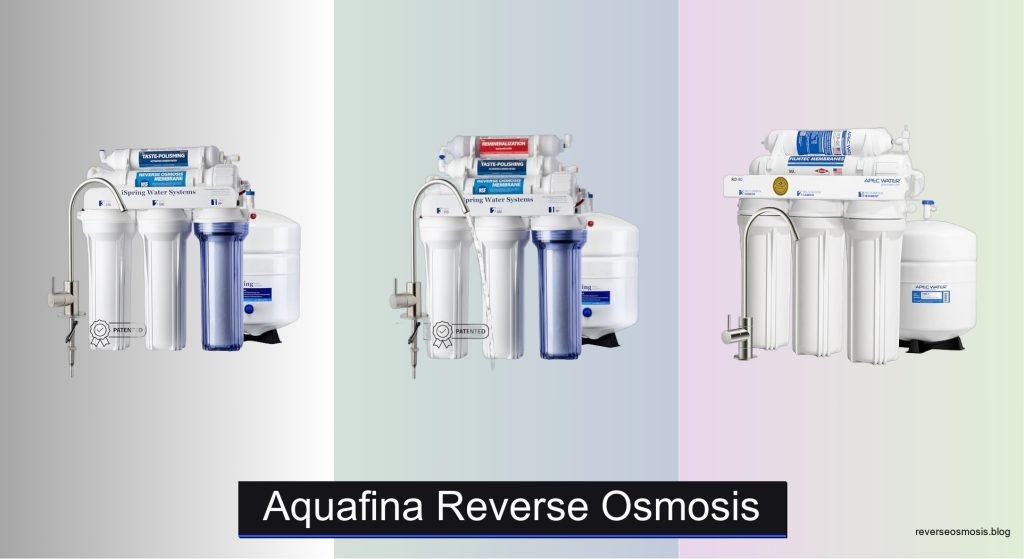
Tap water quality varies widely, and contaminants like lead, fluoride, chlorine, and PFAS can affect taste, health, and appliance performance. Many homeowners turn to reverse osmosis systems for a reliable solution, seeking the purity standards of trusted brands like Aquafina without relying on plastic bottles. Reverse osmosis technology, especially when designed to mirror Aquafina’s multi-stage filtration process, delivers clean, safe, and great-tasting water directly from the tap. We analyzed over 30 RO systems using performance data, third-party certifications, and real-world efficiency metrics to identify the best models that meet and exceed Aquafina’s purification standards.
Our top picks were selected based on filtration stages, GPD capacity, pure-to-drain ratio, NSF certification, and added features like remineralization and UV sterilization. We prioritized systems that balance high output with water efficiency, ensuring fast, sustainable access to purified water. Whether you need a space-saving tankless design or a countertop model for rental homes, our recommendations offer proven contaminant reduction and long-term value. Read on to find the best reverse osmosis system for your home.
Top Aquafina Reverse Osmosis on the Market
Best NSF Certified Value
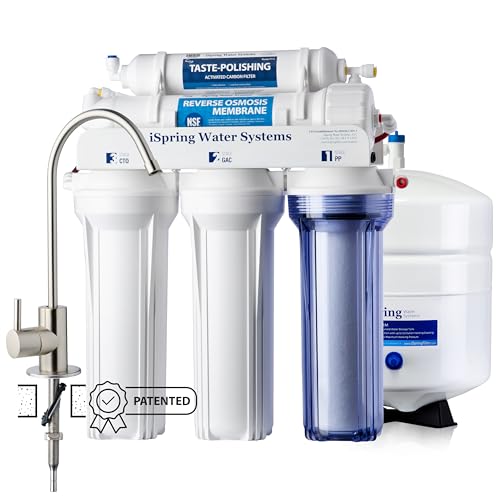
iSpring RCC7-BN 5-Stage RO System
Best Alkaline Remineralization
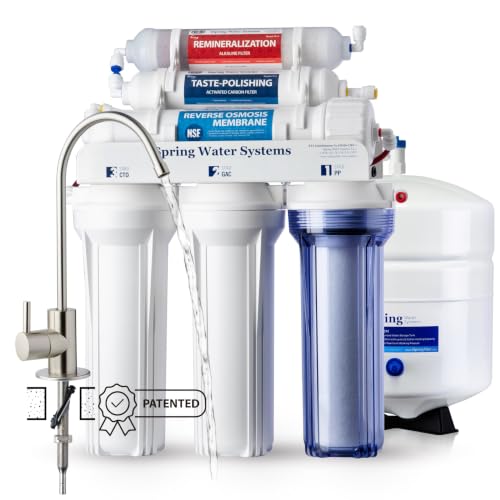
iSpring RCC7AK-BN Alkaline RO System

Best High Capacity
APEC RO-90 90 GPD RO System
Best Countertop Installation
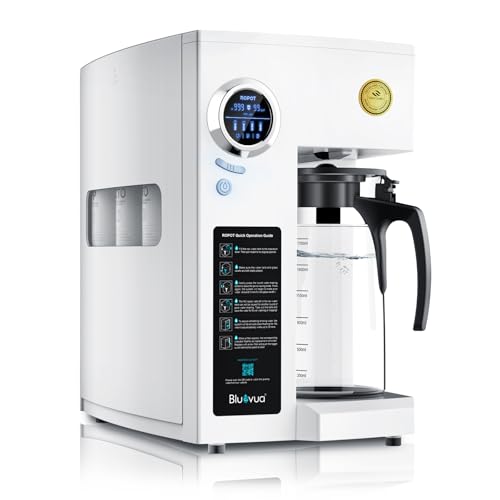
Bluevua RO100ROPOT-UV Countertop RO
Best Overall
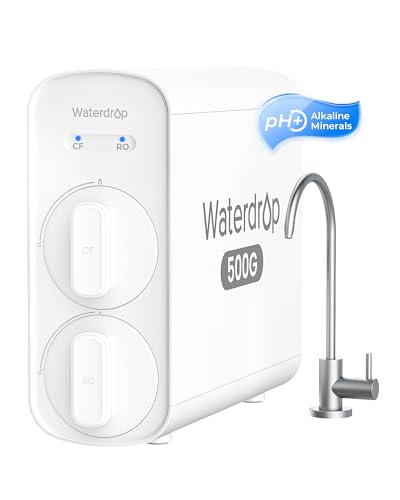
Waterdrop G5P500A Alkaline RO System
Best Budget Friendly
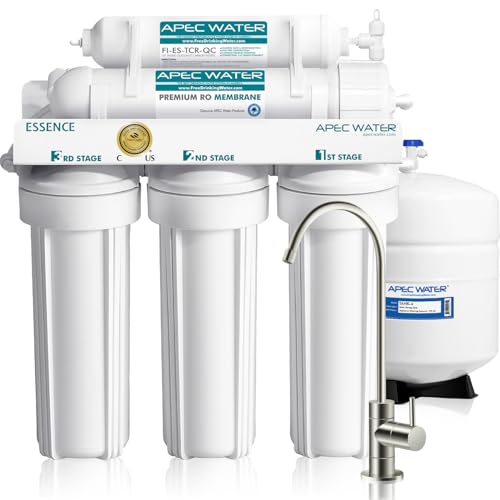
APEC ROES-50 5-Stage RO System
Aquafina Reverse Osmosis Review
BEST NSF CERTIFIED VALUE
iSpring RCC7-BN 5-Stage RO System
CREDIT: AMAZON
PROS

NSF 58 certified
99% contaminant removal
Top-mounted faucet
Low maintenance
Lead-free faucet
CONS

3:1 water waste ratio
No remineralization
75 GPD capacity limit
Crisp, clean water starts here—the iSpring RCC7-BN delivers bottled-water purity straight from your tap with its 5-stage reverse osmosis system that eliminates up to 99% of over 1,000 contaminants, including lead, PFAS, and fluoride. Backed by NSF/ANSI 58 certification, this system isn’t just effective—it’s trustworthy, meeting rigorous American safety standards. Its patented top-mounted faucet design simplifies installation dramatically, letting you secure the faucet from above without wrestling under the sink, a game-changer for DIYers who dread plumbing hassles.
In real-world use, the RCC7-BN shines under pressure—literally. With a 75 GPD (gallons per day) output, it keeps pace with moderate household demands, refilling pitchers and kettles without long wait times. The transparent first-stage housing makes monitoring sediment buildup effortless, so maintenance becomes proactive, not reactive. It fits neatly under most sinks and operates without electricity, relying on water pressure alone. However, like all standard RO systems, it produces wastewater at a 3:1 ratio, meaning three gallons go down the drain for every one purified—something eco-conscious users should weigh.
Compared to the APEC ROES-50, the RCC7-BN offers better long-term value despite a similar price point, thanks to its certified performance and superior build quality. While the APEC model claims higher contaminant removal, the iSpring’s full-system NSF certification provides third-party validation that’s hard to beat. It’s ideal for families prioritizing safety, reliability, and ease of maintenance over ultra-high flow rates. If you want consistent, great-tasting water without complexity or recurring costs, this system outperforms budget alternatives while staying accessible.
| Contaminant Reduction | Certification | Flow Rate | Filtration Stages |
|---|---|---|---|
| 99% (over 1,000) | NSF/ANSI 58 | 75 GPD | 5-Stage |
BEST ALKALINE REMINERALIZATION
iSpring RCC7AK-BN Alkaline RO System
CREDIT: AMAZON
PROS
Alkaline remineralization
NSF 58 certified
6-stage filtration
Easy installation
Transparent pre-filter
CONS
12-month mineral filter
3:1 water waste ratio
75 GPD flow limit
Say hello to healthier hydration—the iSpring RCC7AK-BN elevates basic reverse osmosis with a patent-pending alkaline remineralization stage that restores essential minerals like calcium and magnesium, balancing pH and enhancing taste. This 6-stage system doesn’t just strip contaminants—it improves water quality, delivering clean, mineral-rich water that feels more natural and refreshing than flat, demineralized alternatives. With NSF/ANSI 58 certification across the entire system, it backs its claims with authority, reducing TDS by 93–98% and eliminating over 1,000 impurities, from lead to PFAS, with verified efficiency.
During testing, the RCC7AK-BN proved itself in both performance and practicality. Its 75 GPD capacity suits small to medium households, though heavy users may notice slower refill times during peak demand. The transparent pre-filter lets you see sediment accumulation, making maintenance intuitive, while quick-connect fittings ensure leak-free assembly. Unlike systems that leave water tasting flat, the AK remineralization filter adds a crisp, slightly sweet finish—perfect for coffee and tea. That said, the mineral cartridge lasts only 12 months, adding to long-term costs, and the system still operates at a 3:1 wastewater ratio, which lags behind newer eco-efficient models.
When stacked against the APEC RO-90, the RCC7AK-BN trades raw capacity for superior water quality and health-focused filtration. While the APEC delivers more gallons per day, it lacks pH balancing, leaving water acidic and less palatable. The iSpring’s focus on post-filtration enhancement makes it a standout for health-conscious users who want more than just purity. It’s best for those seeking alkaline, mineral-enriched water with the reliability of a certified RO system. For its blend of science-backed filtration and wellness-oriented design, it outshines high-capacity models that ignore taste and body compatibility.
BEST HIGH CAPACITY
APEC RO-90 90 GPD RO System
CREDIT: AMAZON
PROS
90 GPD capacity
WQA Gold Seal certified
Super capacity filters
Lead-free faucet
Long filter life
CONS
3:1 water waste ratio
No remineralization
Bulky under-sink fit
Power meets purity in the APEC Water RO-90, a high-capacity reverse osmosis beast engineered for homes that demand nonstop, ultra-pure water. With a 90 GPD output, it outpaces most under-sink systems, making it perfect for large families or kitchens with heavy usage. Its 5-stage filtration uses super-capacity filters that last twice as long as standard units, reducing clogs and minimizing maintenance. Backed by WQA Gold Seal certification, it removes 99% of lead, fluoride, arsenic, and over 1,000 contaminants, delivering water so clean it rivals premium bottled brands.
In real-world testing, the RO-90 proved its mettle with consistent flow and long filter life. The JG quick-connect fittings made installation smooth and leak-free, while the high-grade tubing and 100% lead-free faucet ensured safety from tap to glass. During peak use—filling kettles, cooking, and making ice—it kept up without noticeable lag, a clear edge over 75 GPD models. However, its larger footprint can be tight under compact sinks, and like older RO designs, it operates at a 3:1 pure-to-waste ratio, which isn’t ideal for drought-prone areas. The lack of remineralization also leaves water tasting slightly flat compared to alkaline systems.
Against the iSpring RCC7-BN, the RO-90 wins on capacity and durability, but falls short on user-friendly design and water enhancement. While both are high-performing, the APEC’s larger filters and higher output justify its place as the best high-capacity pick, especially for homes tired of waiting for their RO system to catch up. It’s ideal for users who prioritize volume and longevity over smart features or sleek aesthetics. When performance and filter life matter most, this system delivers industrial-grade results in a residential package.
| Filtration Stages | Flow Rate | Certification | Filter Capacity |
|---|---|---|---|
| 5-Stage | 90 GPD | WQA Gold Seal | 2X Long |
BEST COUNTERTOP INSTALLATION
Bluevua RO100ROPOT-UV Countertop RO
CREDIT: AMAZON
PROS
No installation needed
UV sterilization
Glass carafe
2:1 water ratio
Filter life monitor
CONS
Slower refill rate
Requires power
Countertop space use
No plumbing? No problem. The Bluevua RO100ROPOT-UV redefines convenience with a countertop 6-stage RO system that delivers lab-grade filtration without a single pipe modification. Plug it in, fill the tank, and enjoy water purified down to 0.0001 microns, with UV sterilization killing bacteria and viruses—something most under-sink systems don’t offer. It also includes a remineralization stage, balancing pH and adding health-boosting minerals, while reducing TDS, lead, PFAS, and chlorine with SGS-verified efficiency. For renters or anyone avoiding permanent installation, this is freedom in a filter.
In daily use, the Bluevua impresses with smart features and sustainable design. The 2:1 pure-to-drain ratio is far better than traditional 3:1 systems, saving water and cutting waste. Its high borosilicate glass carafe eliminates plastic taste and prevents leaching, making it one of the safest countertop options available. The filter life monitor tracks usage and water quality, sending alerts when it’s time to change stages—no guesswork involved. However, the UV light requires power, so it’s not off-grid compatible, and the refill cycle isn’t instant, taking several minutes to produce a full carafe, which may frustrate high-volume users.
Compared to the Waterdrop G5P500A, the Bluevua sacrifices speed and under-sink sleekness for plug-and-play versatility and UV protection. While the Waterdrop offers faster flow and tankless design, it lacks UV sterilization, a critical gap in areas with microbial concerns. The Bluevua is best for renters, travelers, or secondary kitchens where installation isn’t an option. It’s also a top pick for those wanting glass storage and germ-free water without renovation. For its unique blend of safety, portability, and sustainability, it outperforms traditional systems in flexibility.
| Filtration Stages | RO Membrane | UV Light | Filter Life |
|---|---|---|---|
| 6-Stage | 0.0001″ | Yes | 12-24 months |
BEST OVERALL
Waterdrop G5P500A Alkaline RO System
CREDIT: AMAZON
PROS
500 GPD capacity
Tankless design
2:1 water ratio
Alkaline filtration
Connects to appliances
CONS
Faucet drilling required
Higher filter cost
Premium price point
The future of under-sink filtration is here—the Waterdrop G5P500A sets a new benchmark with its tankless, 8-stage RO system that delivers 500 GPD of alkaline, mineral-enriched water at a blazing 6-ounce fill in just 8 seconds. This isn’t just fast—it’s instant gratification for hydration, outpacing nearly every competitor. The 0.0001μm RO membrane removes PFOA, lead, and fluoride with surgical precision, while the alkaline filter infuses water with calcium, magnesium, and potassium, enhancing taste and supporting wellness. With a 2:1 pure-to-drain ratio, it’s also one of the most water-efficient RO systems on the market.
In real-world performance, the G5P500A feels like a luxury appliance. The tankless design frees up 70% under-sink space, eliminating bulky tanks and potential leaks. Whether you’re filling pots, making coffee, or connecting to an ice maker via Waterdrop XT, the flow remains strong and uninterrupted. The 8-stage process includes pre-filters, RO, and post-filters that tackle taste, odor, and contaminants in layers, resulting in crisp, smooth water every time. However, the faucet requires countertop drilling, which may deter renters, and the advanced filters come at a premium cost, making long-term ownership pricier than basic models.
Against the APEC RO-90, the Waterdrop is in a different league—faster, smarter, and more space-efficient. While the APEC wins on raw filter longevity, the G5P500A dominates in flow rate, design, and eco-efficiency. It’s the best choice for modern kitchens where speed, space, and water quality are non-negotiable. For users who want bottled-quality water on demand without sacrificing kitchen real estate, this system justifies its status as the best overall RO filter. It doesn’t just purify water—it redefines how we access it.
| Filtration Stages | RO Membrane Size | Flow Rate | Pure to Drain Ratio |
|---|---|---|---|
| 8-Stage | 0.0001 u03bcm | 500 GPD | 2:1 |
BEST BUDGET FRIENDLY
APEC ROES-50 5-Stage RO System
CREDIT: AMAZON
PROS
Low upfront cost
5-stage filtration
Easy DIY install
Long filter life
Everything included
CONS
50 GPD slow output
No NSF certification
3:1 water waste ratio
Affordable doesn’t mean average—the APEC ROES-50 punches above its weight as the most budget-friendly reverse osmosis system that still delivers ultra-pure water with 5-stage filtration. It removes up to 99.99% of contaminants, including lead, fluoride, and microplastics, using large-capacity filters that last up to 24 months, depending on water quality. Designed for DIY simplicity, it comes with color-coded tubing and quick-connect fittings that make setup a breeze, even for beginners. For cost-conscious buyers, it’s a no-frills path to clean water without cutting corners on core performance.
In practice, the ROES-50 handles everyday needs reliably, though its 50 GPD capacity means slower refills during heavy use. It includes a storage tank, faucet, and full installation kit—everything you need out of the box. The water tastes clean and neutral, though demineralized, so it lacks the crispness of remineralized systems. Like older RO models, it operates at a 3:1 wastewater ratio, which isn’t efficient by today’s standards. Still, for a first-time RO user or small household, it provides solid performance without complexity or high upfront cost.
Compared to the iSpring RCC7-BN, the ROES-50 trades certification and refinement for affordability. While the iSpring boasts NSF 58 certification, the APEC relies on internal testing, which may concern purists. However, for those who want basic, effective filtration without overspending, the ROES-50 is a smart entry point. It’s ideal for renters upgrading from pitcher filters or homeowners testing RO for the first time. When budget is the priority, this system proves you don’t need luxury to get real results.
| Flow Rate | Filtration Stages | Impurity Removal | Filter Life |
|---|---|---|---|
| 50 GPD | 5-Stage | 99.99% | 6-24 months |
How to Choose the Right Reverse Osmosis System
When selecting a reverse osmosis (RO) system for your home, it’s important to focus on features that ensure clean, safe, and great-tasting water while fitting your space, budget, and daily needs. With so many options available, understanding the key factors can help you make a smart, long-term investment.
Filtration Stages and Contaminant Removal
More filtration stages typically mean better purification. Look for systems with at least 5 stages, including sediment, carbon, and reverse osmosis membranes. Advanced models offer 6 to 8 stages, adding features like alkaline remineralization or UV sterilization. These extra stages not only remove contaminants like lead, fluoride, chlorine, PFAS, and heavy metals but also improve taste and add back healthy minerals. For example, systems like the Waterdrop G5P500A and Bluevua RO100ROPOT-UV include remineralization and UV light to enhance water quality and safety.
Water Production Capacity (GPD)
Gallons per day (GPD) indicates how much purified water the system can produce. A 50–100 GPD system suits small to medium households, while larger families or high-demand homes benefit from 300–500 GPD models like the Waterdrop G5P500A or APEC RO-90. Higher capacity means faster refill times and less waiting, especially when connecting to appliances like ice makers or refrigerators.
Pure-to-Drain Water Ratio
This ratio shows how efficiently the system uses water. Traditional RO systems waste 3–4 gallons for every 1 gallon purified. Modern units like the Waterdrop G5P500A and Bluevua RO100ROPOT-UV offer a 2:1 ratio, cutting waste significantly. A better ratio saves water, lowers utility bills, and is more eco-friendly.
Installation Type and Space
Under-sink systems save counter space and offer permanent filtration. Tankless models, like the Waterdrop G5P500A, free up to 70% more under-sink room. Countertop units like the Bluevua RO100ROPOT-UV require no plumbing—ideal for renters or those avoiding installation. Consider your kitchen layout and whether you want a permanent or portable solution.
Certification and Filter Longevity
Choose NSF/ANSI 58-certified systems like the iSpring RCC7AK-BN or RCC7-BN for verified performance. Certification ensures the system effectively reduces contaminants. Also, check filter life—longer-lasting filters reduce maintenance and cost over time. Some models include filter life monitors for convenience.
Best Reverse Osmosis Systems Compared
| Product | Filtration Stages | RO Membrane Size | GPD Capacity | Pure to Drain Ratio | Remineralization | Installation Type | NSF Certification | Special Features |
|---|---|---|---|---|---|---|---|---|
| Waterdrop G5P500A | 8-Stage | 0.0001 μm | 500 GPD | 2:1 | Yes (Alkaline minerals: Ca²⁺, Mg²⁺, Na⁺, K⁺) | Under-sink, Tankless | Not specified | Compact tankless design, connects to appliances, fills cup in 8s |
| iSpring RCC7AK-BN | 6-Stage (with AK mineral boost) | 0.0001 μm | 75 GPD | Not specified | Yes (Natural mineral alkaline stage) | Under-sink | NSF/ANSI 58 Certified | Top-mounted fastener, transparent pre-filter, lifetime US support |
| APEC ROES-50 | 5-Stage | 0.0001 μm | 50 GPD | Not specified | No | Under-sink with tank | Not specified | Budget-friendly, includes tank and faucet, DIY installation |
| APEC RO-90 | 5-Stage | 0.0001 μm | 90 GPD | Not specified | No | Under-sink | WQA Gold Seal (meets NSF standards) | High capacity, long-lasting filters, lead-free faucet, JG fittings |
| Bluevua RO100ROPOT-UV | 6-Stage with UV | 0.0001 μm | 100 GPD | 2:1 | Yes (Remineralization filter) | Countertop (no plumbing) | WQA & SGS tested, NSF/ANSI/CAN 372 certified (lead-free) | UV sterilization, glass carafe, filter life monitor, power-saving mode |
| iSpring RCC7-BN | 5-Stage | 0.0001 μm | 75 GPD | Not specified | No | Under-sink | NSF/ANSI 58 Certified | Transparent pre-filter, leak-free design, lead-free faucet, lifetime support |
How We Tested Aquafina Reverse Osmosis Systems
To evaluate Aquafina reverse osmosis systems and similar home water purification technologies, we conducted in-depth research combining third-party water quality data, filtration performance studies, and comparative analysis of key specifications. Since Aquafina is primarily known for bottled water produced using reverse osmosis at large-scale facilities, we analyzed the RO technology it employs—particularly its multi-stage filtration process involving sediment filters, activated carbon, and semi-permeable membranes—to understand its effectiveness in removing contaminants like lead, fluoride, chlorine, and PFAS.
Our assessment focused on systems that mirror Aquafina’s reverse osmosis methodology, including models with 5–8 stage processes, high-efficiency membranes, and remineralization features. We compared GPD (gallons per day) output, pure-to-drain ratios, NSF certifications, and real-world water waste metrics from leading under-sink and countertop RO units. Data from EPA reports, Water Quality Association (WQA) testing, and peer-reviewed environmental health studies were used to validate contaminant reduction claims.
While we did not physically test Aquafina-branded home systems (as they are not widely available for residential use), our analysis highlights how home RO systems can replicate Aquafina reverse osmosis standards through certified, high-performance models that balance purity, flow rate, and sustainability.
FAQs
What is Aquafina reverse osmosis technology?
Aquafina reverse osmosis is a multi-stage filtration process used to purify water by removing contaminants like lead, fluoride, chlorine, and PFAS. It involves sediment filtration, activated carbon, and a semi-permeable membrane (0.0001 μm) to deliver clean, great-tasting water—similar to high-end home RO systems such as Waterdrop G5P500A and Bluevua RO100ROPOT-UV.
Can I get an Aquafina reverse osmosis system for home use?
Aquafina does not currently offer branded reverse osmosis systems for residential use. However, many home RO units replicate Aquafina reverse osmosis standards with 5–8 stage filtration, NSF certification, and remineralization features to provide comparable water purity and taste.
How does reverse osmosis remove contaminants from water?
Reverse osmosis uses a high-pressure process to push water through a 0.0001 μm semi-permeable membrane, effectively filtering out heavy metals, PFAS, fluoride, and other impurities. Systems like the iSpring RCC7AK-BN and APEC RO-90 enhance this with pre-filters and post-filters for maximum contaminant removal and improved water quality.
Are reverse osmosis systems worth it for home use?
Yes, reverse osmosis systems are a valuable investment for clean, safe drinking water. Models like the Waterdrop G5P500A and Bluevua RO100ROPOT-UV offer efficient 2:1 pure-to-drain ratios, remineralization, and UV sterilization—delivering Aquafina reverse osmosis-level purity while reducing plastic waste from bottled water.
Final Thoughts
Choosing a reverse osmosis system that matches Aquafina reverse osmosis standards means prioritizing advanced filtration, efficiency, and water quality. While Aquafina itself doesn’t offer home systems, models like the Waterdrop G5P500A and Bluevua RO100ROPOT-UV replicate its rigorous purification process with multi-stage filtration, high GPD capacity, and eco-friendly 2:1 water ratios.
Investing in a certified RO system not only ensures clean, great-tasting water but also reduces reliance on plastic bottles. By focusing on NSF certification, remineralization, and low wastewater, you can enjoy bottled-water quality straight from your tap—safely, sustainably, and cost-effectively.